
by Eric Bowman
Last updated: 7:00 AM ET, Wed April 15, 2026
Fresh off the momentum of the 2026 Dominican Republic Trade Show in Miami, which saw record-breaking engagement, Minister of Tourism David Collado is steering the nation toward a new horizon.
At the event, he highlighted how vital tourism is to the Dominican economy, quoting an estimated $15 billion impact on GDP.
We caught up with Collado to learn more about the country’s latest tourism developments and initiatives, along with how they help support travel advisors.
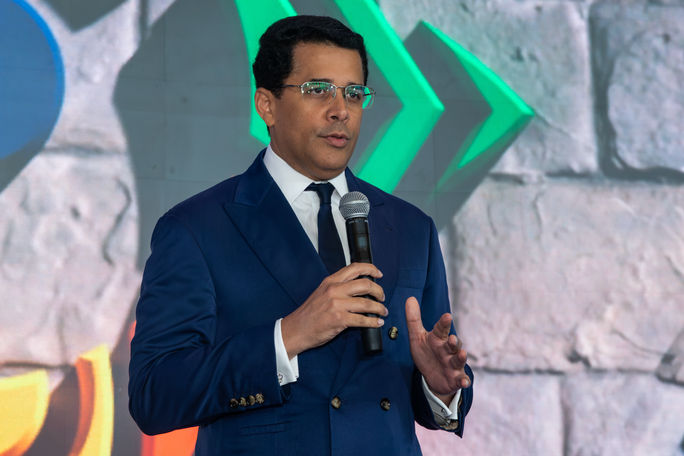
David Collado, the Minister of Tourism for the Dominican Republic (Photo Credit: Dominican Republic Ministry of Tourism)
TravelPulse: How would you assess the state of tourism for the Dominican Republic right now?
David Collado: The Dominican Republic it is actively redefining what leadership in Caribbean tourism looks like.
What we are seeing is a shift from volume-driven growth to value-driven performance. Demand remains strong across our core markets, but more importantly, traveler behavior is evolving in our favor: visitors are staying longer, spending more, and increasingly seeking experiences that connect them to the country beyond the resort.
This momentum is also being validated by the industry itself. Our Trade Show 2026 in Miami brought together over 1,200 tourism leaders and generated more than 1,800 business meetings—clear evidence that the Dominican Republic is not just a destination, but a platform for tourism investment, partnerships, and innovation in the region.
TP: What are your expectations and goals for the rest of 2026 ahead?
DC: Looking ahead, our ambition is not simply to grow—it is to grow with intention.
We are focused on deepening the economic impact of tourism by increasing per-visitor spend, expanding into higher-value segments, and ensuring that growth translates into tangible benefits for local communities. At the same time, we are working to further diversify our source markets and strengthen our positioning in long-haul and emerging regions.
Equally important is resilience. The global travel landscape is evolving rapidly, and our strategy is built around data, flexibility, and strong public-private collaboration, allowing us to anticipate trends rather than react to them.
Ultimately, 2026 is about consolidating the Dominican Republic as a destination that delivers not just scale, but consistency, quality, and forward-looking vision.
TP: What are some recent, new, and upcoming developments that excite you the most?
DC: What is most exciting right now is the simultaneous evolution of the destination at multiple levels.
On one end, we are seeing a strong wave of luxury and upper-upscale investment, with brands like St. Regis, W Punta Cana, and Four Seasons entering the market—signaling growing confidence in the country’s ability to compete in the most sophisticated segments of global travel.
At the same time, we are strengthening the ecosystem around tourism through strategic alliances, such as our collaboration with Visa to better understand traveler behavior through data, and with the Miami Marlins to tap into cultural and sports-driven audiences.
But perhaps most importantly, we are investing in the intangible layer of the destination—its culture. During our Trade Show, we showcased experiences like cacao workshops, casabe making, and traditional music not as entertainment, but as a core part of our tourism value proposition. That shift—from showcasing to integrating culture—is where the future lies.
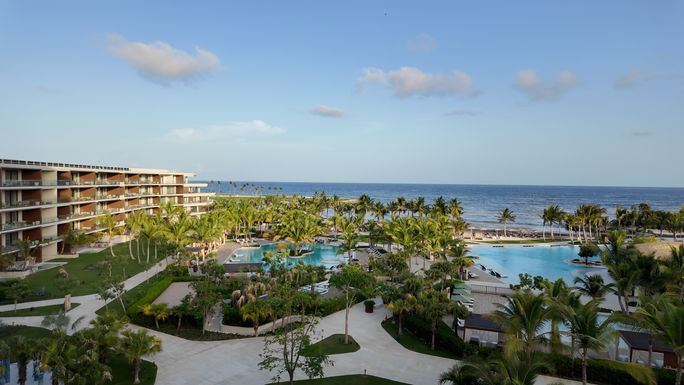
St. Regis Cap Cana, Dominican Republic (Photo Credit: Eric Bowman)
TP: Travelers are spending more on personalized experiences. How are you moving beyond the all-inclusive model?
DC: The all-inclusive model has been a cornerstone of the Dominican Republic’s success, and it continues to be highly relevant. However, what we are doing now is expanding the narrative around it.
Today’s traveler is not looking to replace comfort—they are looking to enrich it. Our approach has been to create a more connected tourism ecosystem, where resorts, local operators, and communities are not operating in silos, but as part of a shared experience journey.
We are working closely with DMCs, tour operators, and small businesses to develop authentic, community-led experiences—whether that’s gastronomy, crafts, music, or nature. At the same time, we are encouraging hotels to open pathways for guests to explore beyond their properties.
The goal is to move from a model of containment to one of connection, where tourism becomes a bridge between visitors and the cultural identity of the country.
TP: What do you believe separates the Dominican Republic from others in the Caribbean?
DC: What truly differentiates the Dominican Republic is its ability to combine scale with diversity—and infrastructure with authenticity.
Few destinations can offer, within a single country, the range that we do: from world-class beaches and luxury resorts to mountains, colonial history, gastronomy, and vibrant local culture. This diversity allows us to cater to a wide spectrum of travelers without losing a cohesive identity.
Accessibility is another key factor. Strong air connectivity and well-developed infrastructure make the destination easy to reach and navigate, which is critical in today’s competitive landscape.
But beyond all of that, what consistently resonates with visitors is something less tangible: the warmth of the Dominican people and the authenticity of the experience. That human element is not easily replicated—and it is one of our strongest competitive advantages.
TP: In an age of AI-driven booking, how are you supporting travel advisors?
DC: In a world increasingly driven by automation, travel advisors are becoming more—not less—relevant. They represent curation, trust, and human insight, which are precisely the elements travelers are seeking as options become more overwhelming.
Our role is to empower them to do that more effectively.
Through initiatives like our Trade Show, we are creating direct, high-value connections between advisors and over 100 Dominican suppliers. We are also investing in training, certification, and immersive experiences, ensuring that advisors don’t just sell the destination—they truly understand it.
Additionally, partnerships like the one with Visa are allowing us to provide more data-driven insights, helping advisors anticipate traveler preferences and tailor their recommendations.
Ultimately, while AI can facilitate transactions, travel advisors create meaningful journeys—and the Dominican Republic is fully committed to being one of their most valuable and best-supported destinations.
For the latest travel news, updates and deals, subscribe to the daily TravelPulse newsletter.
Topics From This Article to Explore


