Jeff Weinstein is a medical operations associate manager at Global Rescue, with 18 years of combined experience in emergency and disaster response, critical care paramedicine, and emergency management. With specialty training in austere medicine and mountain rescue from The School of Medicine at UNM and is a Certified Wilderness Paramedic (WP-C) from the International Board of Specialty Certifications (IBSC).
Fall is here and with the colorful explosion of turning leaves comes an assortment of seasonal challenges. From stinging insects and biting bugs to slippery leaves and darker trails, fall hikes are filled with hidden risks.
Of all the things you think of when you picture fall, stinging insects probably aren't one of them. But every autumn there’s a natural rise in the aggressive nature of such insects. If you’re not careful, you could find yourself on the wrong end of an attack – and what you think is the right thing to do may be the worst plan of all.
Yellowjackets, bald-faced hornets and paper wasps are much more active during the fall season because hive development is completed and colonies are at their maximum size, leading to increased activity in and outside their homes, according to Joe Boggs, an entomologist with Ohio State University’s Buckeye Yard and Garden Online.
“The populations are very high. Their behavior is only bad late in the season,” he said, noting that, stings aside, these insects are beneficial because they eat plant pests.
Yellowjacket stingers are not barbed, making them capable of repeatedly pricking their victim without killing themselves. Honeybees have barbed stingers. After the sting, the honeybee tries to pull out the stinger and ends up rupturing its lower abdomen and dying.
Anaphylaxis or a deadly allergic reaction to a sting is a limited threat. It is rare, but some people are extra sensitive to stings. If you know you are at risk for anaphylaxis from a sting you should be carrying your prescribed epinephrine auto-injector with you any time you go outdoors during spring, summer or fall.
Hikers should keep a bottle of Benadryl handy on the trail. If you’re stung and start itching or hives appear, you can take some and mitigate your body’s histamine response.
The best way to prevent unpleasant encounters with social wasps, such as yellowjackets, is to avoid them, according to Marcia Anderson, EPA’s Center of Expertise for School Integrated Pest Management.
Anderson advises avoiding wearing bright colors and sweet-smelling shampoos, lotions, perfumes and soaps that attract yellowjackets. “Avoid swatting and squashing yellowjackets because it is counterproductive. When a yellowjacket is squashed, a chemical (pheromone) is released that attracts and incites nearby yellowjackets,” she added.
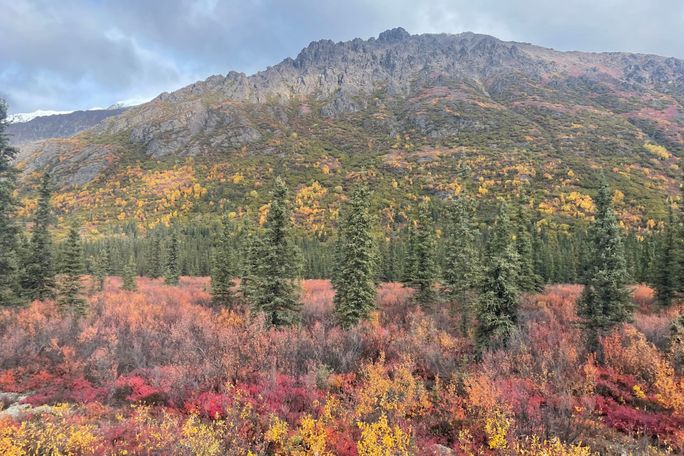
Fall foliage in Denali, Alaska. (photo by Patrick Clarke)
Ticks thrive in humidity. If you have a wet year, mild winter and early spring then you have ideal conditions for an increase in the tick population. Tick populations are growing across many parts of the U.S. and abroad in places like Europe, Africa, the Middle East and Asia. That translates to higher possibilities of tick-borne diseases — most notoriously Lyme disease — and the need to be ever vigilant to spot these arachnids, often as small as a sesame seed, before they attach to you or another host in your household, like a child or a pet.
Consider using a tick repellent, especially if you’re going to be in the backcountry for a few days. It’s a good idea to apply insecticide permethrin to your gear and clothing as it will remain protected after several washes (in case things get damp out there). You can also use repellent sprays on skin not covered by clothing but make sure they’re EPA-registered repellents.
Pretty Leaves Camouflage Trail Dangers
When leaves fall from tree branches and litter the ground, they can turn your trekking route into a hiking hazard.
Leaves on the ground hide rocks, roots and holes, and they’re slippery, especially when wet. Hiking enthusiast and author Aislinn Sarnacki admits when she falls it’s usually when she’s descending mountains, and not climbing up.
“I think a lot of factors play into that: tired legs, a faster pace, downhill momentum plus gravity. And I don’t think I’m the only one,” she said. “I’ve witnessed a few hiking buddies fall on their butts, and it always seems to be while heading downhill."
John “Jed” Williamson agrees. He’s a member of the Global Rescue Mountain Advisory Council and has been collecting data on climbing and trekking accidents in North America for 40 years.
“Wet leaves are slippery — even without rocks underneath. They also hide sticks that you might catch with a boot at ankle height – and could cause you to trip easily. Mud and wet ground are seasonal hazards, too,” he said.
When the trail is covered with leaves, the best course of action is to tread carefully. Wearing appropriate hiking footwear with good ankle support can mitigate the risk of ankle injury from hidden obstacles. “Adjustable trekking poles are a good idea. Running shoes are a bad idea for wet, slippery conditions. I prefer hiking boots that come above the ankle,” Williamson said.
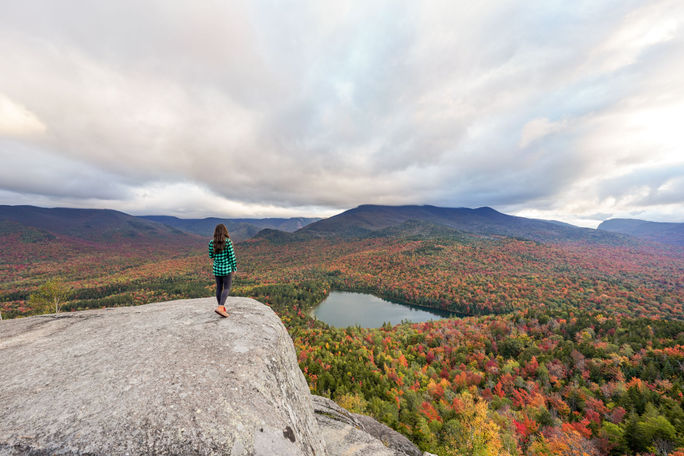
Fall Foliage in the Adirondacks, New York. (Photo by Lauren Breedlove)
The Dark Trail
Fall brings earlier sunsets, blinding trail paths sooner and making your “on-the-trail” time shorter — unless you’re prepared for nighttime conditions.
If it’s fall then it’s getting darker sooner and that means less daylight to reach your endpoint, faster temperature drops, increased likelihood of getting lost and a higher probability of stumbling over unseen objects on the path.
“Darkness comes earlier, so plan your trip accordingly, and bring a few extra items just for safety: a headlamp, extra clothing, food and water,” said mountaineering legend and Global Rescue Mountain Advisory Council member Ed Viesturs.
Adapting your outdoor climbing, trekking and hiking for the fall season is essential for safety and ensuring a good time. Basic tactics include modifying your outings to match the shorter day, improving your lighting resources and including extra layers for temperature drops.
Fall weather can be deadly if you become lost or have to spend a night in the elements. If you are going remote, make sure you have the appropriate gear and equipment to navigate, call for help and survive the cold if needed.
Most people who I’ve treated for exposure to the elements and hypothermia did not expect to become lost and did not prepare to be. In most cases, if they had the means to obtain water, call for help and stay warm they would have been in a much better condition when we found them.
Prepare and Protect Yourself This Fall
For many people, fall is the best time to explore the outdoors. The weather is cooler than the dog days of summer; there are fewer crowds on the trails; wildlife is much more active as they prepare for the winter. Take advantage of this time of year by planning your excursions around the shorter days and preparing with the right attitude and appropriate gear.
For the latest travel news, updates and deals, subscribe to the daily TravelPulse newsletter.


