Yellowstone National Park has been the site of a string of troubling incidents that travelers can and must learn from this summer.
Wildlife Remains Wild
They don't call it wildlife for nothing.
National parks certainly aren't zoos and therefore it remains imperative that park visitors brush up on and try to remember safety rules and distance guidelines. At Yellowstone, that means staying at least 100 yards from bears and wolves and no fewer than 25 yards from bison and elk.
Nonetheless, these are only guidelines and maintaining this distance doesn't guarantee safety, especially on vast protected lands like Yellowstone.
A recent bison attack at one of the park's campgrounds that sent an elderly man flying through the air proves that these animals are unpredictable. Their dangerous combination of speed and size means that maximizing distance between you and them ensures the safest experience possible.
Another viral video showing a bison briefly chasing a child at Yellowstone is a good reminder to stay alert and take this guidance seriously.
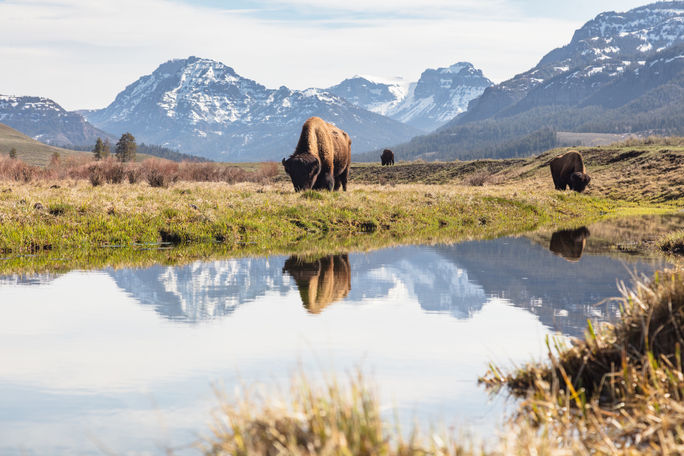
Bull bison grazing in Yellowstone's Lamar Valley. (Photo Credit: Abercrombie & Kent/Jacob W Frank)
Just Because You Can Doesn't Mean You Should
Last month, tourists at Yellowstone were filmed walking dangerously close to the park's iconic hot springs, surely in an attempt to gain social media clout as they were seen with smartphones in hand (more on that later).
Venturing off boardwalks and paths can not only result in serious punishment like jail time, but also significant injuries or death from scalding waters.
"Burns from thermal features are a common cause of serious injury and death in the park," according to the National Park Service, which says more than 20 people have died from thermal burns after falling into or entering Yellowstone’s hot springs.
You Don't Have to Record Everything
Cameras are omnipresent in the smartphone era, but that doesn't mean travelers have to view everything through an iPhone or Android lens.
The only reason we even know about these recent Yellowstone incidents is that they were recorded by fellow park goers who more than likely (and unfortunately) racked up immense screen time on vacation.
It's your right to photograph and record your travel experiences, but the potential payoff of capturing every moment hardly mirrors the risk associated with bending the rules in hopes of going viral.
There's nothing wrong with adding to your photo library so you can relive these exciting memories years down the road, but travelers who know when to put the device away and live in the moment rather than always trying to document it are going to be more aware of their surroundings and get more from their experience every time.
For the latest travel news, updates and deals, subscribe to the daily TravelPulse newsletter.
Topics From This Article to Explore


