Travel Weekly, with the help of sister brand and travel research company Phocuswright, has published its highly anticipated annual Travel Industry Survey.
The 2026 iteration is built on approximately 1,430 responses from travel agency owners and managers, in addition to staff employees and independent contractors affiliated with agencies.
Here are some of the more noteworthy findings from the latest in-depth research.
A Hot Career Path
Travel advisors continue to be in high demand in the wake of the COVID pandemic. One of the most notable trends uncovered by the 2026 Travel Industry Survey is that many travel professionals are relatively new to the industry.
"The share of advisors in business for five years or less has grown more than fivefold since 2021, from 9% to 47% this year," the study states. "Also striking? The share of advisors who have been selling travel for two years or less, which leaped from 5% in 2021 to 27% now."
The early part of the decade showcased the importance of travel expertise and agencies changed the way they recruit and hire to make this a more accessible career path.
Add on more widespread training and newcomers who are eager to learn, and you get an influx of reliable talent.
Luxury Travel, Ocean Cruises Drive Business
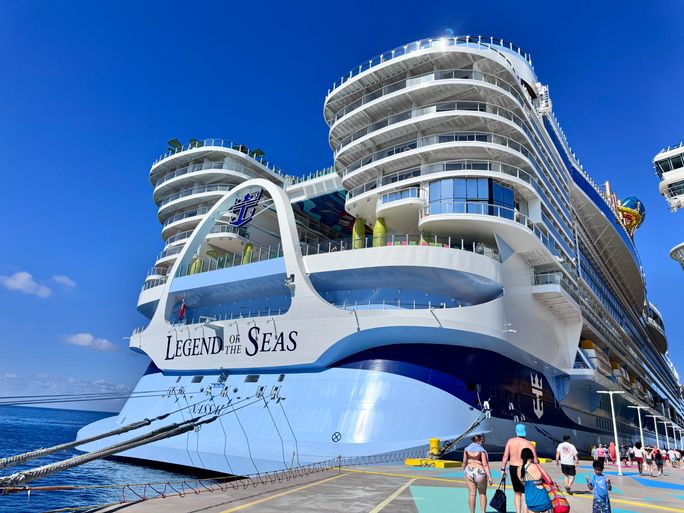
Royal Caribbean's Legend of the Seas docked at CocoCay (Photo Credit: Patrick Clarke)
"Business remains positive, or at least on par, with the previous 12 months for the vast majority of advisors; those selling luxury travel are doing especially well," according to the 2026 Travel Industry Survey.
When it comes to the most popular agency specialization, family travel leads the way, followed by exclusive or high-end/luxury travel.
Ocean cruises continue to be the top specialization for travel advisors, the survey found, with 66% of advisors reporting it as a specialization in 2026 and it accounting for nearly one-third (31%) of agency gross bookings.
"The cruise industry is seeing the greatest growth in its family and luxury products, with new megaships debuting annually and several new luxury cruise lines entering the market in recent years," the study states. "Cruise companies are also continuing to invest in their land-based portfolios and are designing features that attract families, like waterparks."
After ocean cruises, all-inclusive resorts (12%), hotels (11%) and air (9%) are the top products by agency gross bookings.
Preferred Suppliers Still Play a Key Role
When it comes to the biggest reasons for using a host agency, 91% of respondents say it's access to preferred suppliers.

Travel advisor working from a laptop. (Photo Credit: Alessandro Biascioli - stock.adobe.com)
"Booking with a preferred supplier often means a higher commission, which 72% of survey respondents said is the most important benefit to booking a preferred supplier," the study states. “Other benefits include access to a business development manager (59%), educational programs (59%) and familiarization trips (57%).”
The survey found that ocean and river cruises had the greatest share of bookings through preferred suppliers in 2026. Ocean cruises departing from the U.S. saw the largest share, with preferred suppliers garnering 76% of bookings.
Another notable finding was a dip in international demand this year.
"For the first time since the pandemic, the share of bookings from international travel decreased by three percentage points. The change mirrors what many travel agencies have reported this year: that geopolitical tensions, rising fuel costs and economic uncertainty were keeping American travelers closer to home," according to the survey.
AI Is Everywhere, But Advisors Want Control
According to this year's Travel Industry Survey, advisors using AI tools have grown by 32 percentage points since 2024, with users saying it helps them provide more personalized service to their clients (38%) and reduces the time they spend on administrative work (38%).
Respondents are most interested in using AI for tasks such as creating emails, marketing materials and website content; generating custom itineraries based on clients' travel history and preferences and curating packages to cater to clients with specific interests.

Travel advisor using AI tool. (Photo Credit: Wanan - stock.adobe.com)
Advisors' biggest concerns when it comes to AI are the degree of accuracy (70%), lack of personal touch (64%) and clients relying on inaccurate AI-generated information (60%).
One-quarter say they don't trust generative AI, while one-fifth say it's “too new.”
"While some advisors did say they were comfortable with AI assisting them with tasks (ranging from 28% to 47%, never reaching a majority), it seems they aren’t ready to let some of the highest-stakes parts of their jobs—booking and modifying travel—go," according to the study.
Advisors Remain Indifferent Toward NDC
More than half of advisors polled in 2026 said they're unfamiliar with NDC (New Distribution Capability). The 52% figure is up nine percentage points from 2024.
What's more, 45% neither agree nor disagree that NDC has been a positive development for travel agencies.
This stagnation can be attributed to a change in strategy by airlines, which are no longer pushing NDC after American Airlines received heavy backlash years ago.
"When American was in market with a strategy that took half of their Edifact fares off the table and added ancillary benefits for NDC bookings, and then they announced frequent flyer benefits that they never ended up implementing, those are the kinds of things that drive travel agency focus on the issue," said airline distribution consultant Cory Garner.
Click here to read the complete 2026 Travel Industry Survey.
For the latest travel news, updates and deals, subscribe to the daily TravelPulse newsletter.
Topics From This Article to Explore


