The magnificent but somewhat hidden gem destination of Loreto,
Baja California Sur, situated between the Pacific Ocean and the Gulf of
California is a delightful surprise.
Steeped in history, Loreto, the first capital of the
California’s (Mexico and the U.S.) was the first settlement in Baja, California
Sur. The breathtaking region is renowned for its scenery – from stunning ocean
views to dramatic desert landscapes. Where Loreto shines however, is its
incredible biodiversity, nature and wildlife, and having one of the best
conservation stories in
Mexico, as its surrounding waters are fiercely protected. It’s no wonder
that renowned explorer Jacques Cousteau called Baja “the world’s aquarium.”
The marine park (Parque Nacional Bahía de Loreto) is the
centerpiece of ocean conservation in the region. It covers over 800 square
miles of sea and includes five major islands. It’s also part of the broader
UNESCO World Heritage Site designation for Islands and Protected Areas of the
Gulf of California.
I had the pleasure of visiting this region during one of its
most exciting times of year, the impressive whale watching season.
Whale Watching in Loreto
Loreto’s whale season runs from mid-December to April, with
its peak from January to March. This is when the waters of the Loreto Bay
National Marine Park become a seasonal gathering place for some of the largest
animals on Earth. Food availability, migration patterns and ideal ocean
conditions contribute to the number of whales seen in these waters during this
time period.
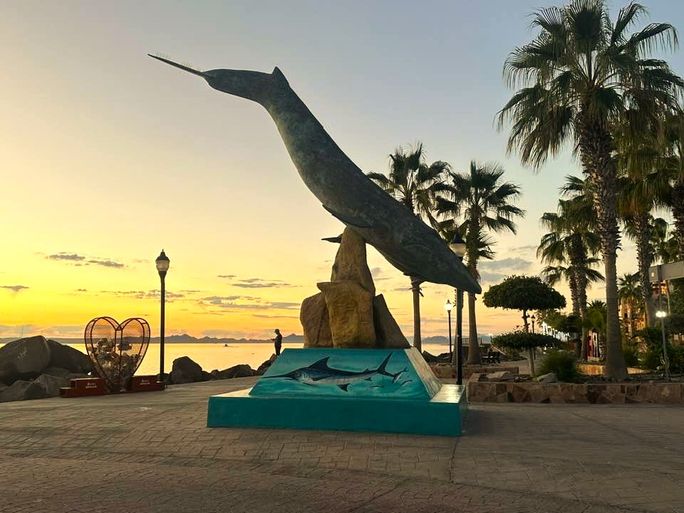
Loreto Marina at sunrise (Photo Credit: Noreen Kompanik)
In Search of the Blue Whale
Our first day’s adventure began as our group boarded a small
boat from the marina in downtown Loreto and headed to Loreto Bay National
Marine Park to see the blue whales in their natural habitat, during their
winter-spring migration.
Early morning is the best time to get out on the water, and
we did just that, arriving at the marina just before sunrise, and heading out
to the calmness of the Bay. Within 15 minutes of departure, our boat captain
spotted the fin of a blue whale. He slowed the boat, explaining that only a
small number of vessels are allowed near the whales and must maintain mandatory
distances. These measures are guided by the expertise of Dr. Diane Gedron’s
work in Baja that has studied the migratory behaviors and conservation of blue
and grey whales.
And did we see more blue whales? Many more, along with their
smaller cousins, the humpbacks. The oohs and aahs of my fellow boat mates said
it all. These magnificent ocean giants gave us quite a show with their fins and
tails rising from the water as they dipped down in search of krill for their
breakfast.
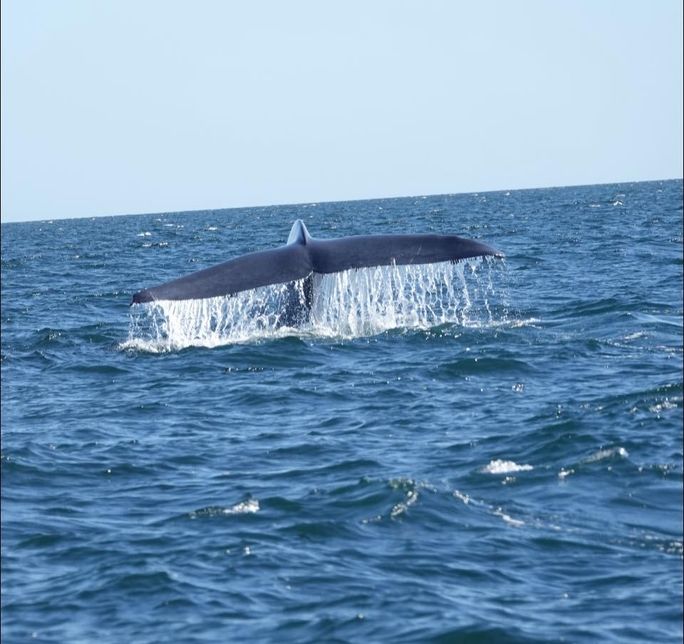
Blue whale fluke in Loreto (Photo Credit: Noreen Kompanik)
Grey Whale Exploration
On the following day, our group of six crossed the Baja Peninsula
to board a small boat called a “panga” for a close-up encounter with grey
whales in Magdalena Bay. After departing from Lopez Mateos Pier, we headed out
to the open, wild, and deep choppy waters of the Pacific to observe these
gentle giants as they migrated and played.
Unlike the blue whales, the grey whales have no distance
restriction and they are not shy, often approaching vessels on their own terms.
Some visitors even have the chance to reach out and touch them. No one
understand completely why they seem to choose interaction with humans, and our
guide explained that some whales will actually bring their calves right up to
the boats.
The grey whales are famous for having one of the longest
migrations of any mammal, traveling 10,000 to 20,000 miles from Alaska to breed
and give birth in the warmer waters of the Pacific.
What an impressive entertaining spectacle we were treated
to- so many grey whales, it was difficult to keep count. The most exciting part
was watching the whales fluke (tails up in the air) before heading into a deep
dive. Others exhibited playful behaviors, rolling sideways and waving or
slapping their pectoral fins against the water.
After two days of seeing a variety of whales, I totally
understand why the region is known as a “whale watcher’s paradise.”
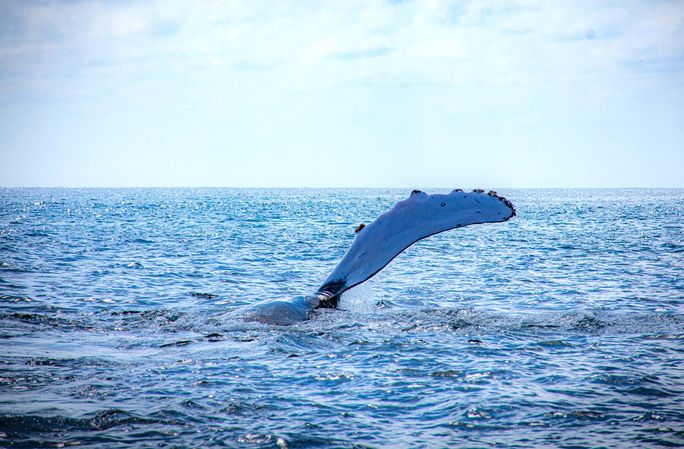
Grey whale exploration in Sea of Cortez (Photo Credit: Noreen Kompanik)
The Islands of Loreto
Five separate and spectacular small volcanic-created islands
are located within the protected tourmaline waters of Bahía de Loreto National
Park. Isla del Carmen is the largest with dramatic cliffs, salt flats and
desert landscapes. Isla Danzante is rugged with steep peaks and is less
visited. Isla Monserrate represents a historic site, once home to a small
settlement with a rare freshwater spring and hiking opportunities. Isla Santa Catalina is more remote and known for its biodiversity, isolation and unique,
endemic plant life.
The most popular and easiest to visit of the five islands is
Isla Coronados, the iconic “postcard” island with white sand beaches,
crystal-clear waters and areas ideal for swimming and snorkeling.
A half-day adventure boat trip out to Isla Coronados was
unforgettable, as the journey is just as splendid as the destination. Our
vessel pulled away from the marina backed by the Sierra de la Giganta Mountains
before passing towering dramatic rock outcroppings with colonies of sea lions
lounging on rocks, barking vociferously before slipping into the water.
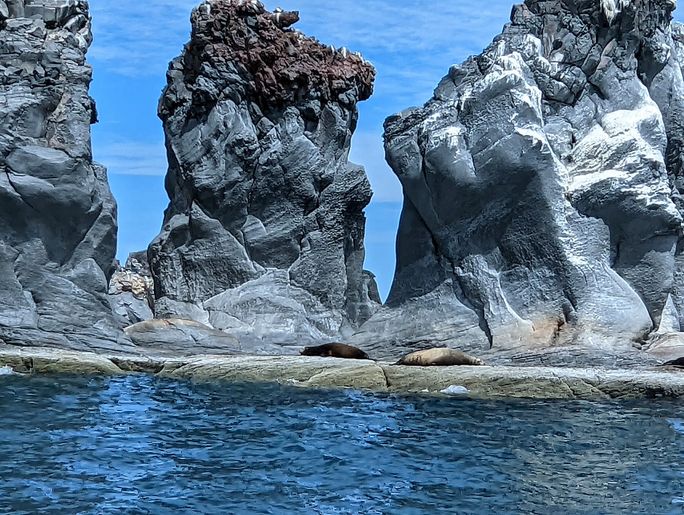
Dramatic cliffs of Loreto in Bahía de Loreto National Park (Photo Credit: Noreen Kompanik)
Dolphins effortlessly rode the bow wave of our boat then
played in the waters alongside our vessel as the captain slowed to point out
the scenery and other wildlife. Sea turtles surfaced briefly and a few Mobula
rays leaped playfully out of the water. Multiple species of birds were seen
along the way, but the most exciting was spotting the Blue-footed booby, found
only in this region of Baja and the Galápagos Islands. They are so named for
their signature feature- bright blue feet and their clumsiness on land.
As we got closer to Isla Coronados, the Sea of Cortez waters
changed from azure blue to turquoise, but all along the way, we were in awe of
the clarity of the water, so crystalline, it was impossible to gauge its depth.
Isla Coronados' crescent-shaped beach features soft white
sand, shallow, calm, swimmable water and great snorkeling along the rocky reefs
teeming with colorful fish. Our guide beached the vessel, then pitched a canopy
tent and chairs where we enjoyed lunch on the beach.
Our return trip was just as impressive as the departure. The
light shifted across the mountains, the water became a bit more textured from
the afternoon winds, and we continued to spot wildlife in and out of the water.
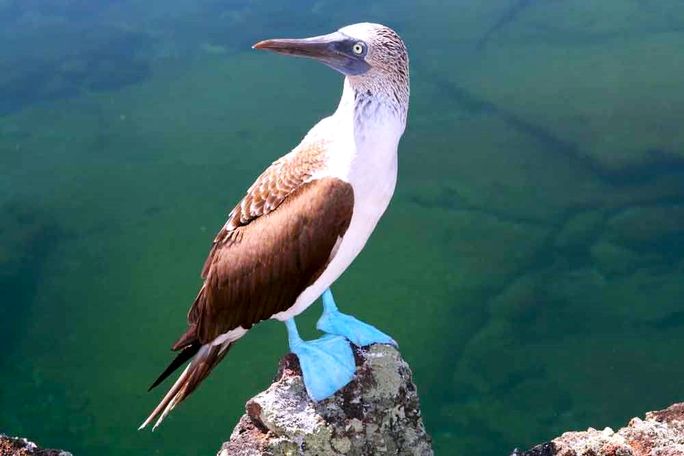
Blue-Footed Booby off Danzante Island (Photo Credit: Noreen Kompanik)
Other Stunning Scenery
While whale watching and a trip to Isla Coronados are considered
the top, must-do adventures, the Baja region is blessed with so much natural
beauty, there are many other options for the outdoor explorer.
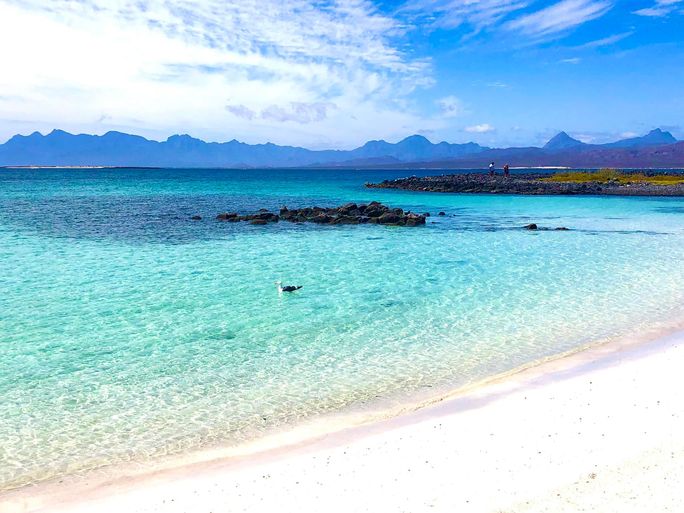
Isla Coronado shoreline (Photo Credit: Noreen Kompanik)
Loreto is a dream destination for kayak lovers. The calm,
clear lagoons of the Sea of Cortez provide ideal conditions for paddling
through mangroves, exploring small islands and discovering hidden beaches. The
Coronados Islands, Carmen Island and Danzante Island are premier spots for kayak
enthusiasts where every paddle stroke unveils unforgettable landscapes and a
vibrant marine world full of life and color.
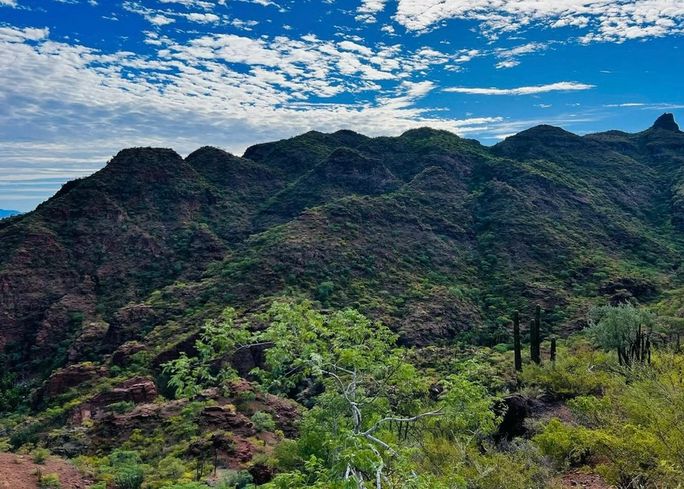
Hiking Views in Loreto (Photo Credit: Noreen Kompanik)
The region’s wide variety of terrain is perfect for hiking. Though
there are many venues, one of the preferred destinations is trekking through
the lush valleys of the Sierra de Guadalupe. Here you will discover the
historic San Javier Mission. one of the oldest, most beautiful and
best-preserved Spanish missions in all of Baja. Founded in 1699 by Jesuit
missionaries and surrounded by palms, orchards and desert cliffs, it beckons
visitors from all over the peninsula.
For those into golf, it’s hard to find a place that offers
such stunning ocean views. TPC Danzante Bay Golf is ranked one of the best courses
in Mexico and one of the most photographed courses in Latin America. It sports
dramatic desert fairways with cactus and arroyos, canyon holes carved into
cliffs, mountain backdrops and the famous 17th hole set cliffside
with the tee shot over the ocean. It’s so picturesque and awe-inspiring, even
non-golfers ride up to see it.
Loreto stands out as one of the most unique destinations in
Mexico, the ideal combination of adventure and relaxation. Though it’s not far
from the U.S., a mere two-hour flight from Southern California, the nature-lovers’
paradise where the desert meets the sea feels like a world away.

TPC Danzante Bay Golf Course (Photo Credit: Noreen Kompanik)
For the latest travel news, updates and deals, subscribe to the daily TravelPulse newsletter.
Topics From This Article to Explore


