International Women’s Month in March celebrates the
contributions and achievements
of women throughout history who have done much to shape our world.
Over the years, women have contributed to advancements
across all areas of society with hard work, skill and perseverance. And history
reminds us it hasn’t been easy. Women have been subjected to discrimination,
abuse and persecution merely for advocating for equal rights, equal pay and justice
for all. As a result, they have more than earned
their place in the annals of history.
Here are some top historical destinations around the U.S.
and lesser-known gems to honor famous women in history and their contributions
to the betterment of our world.
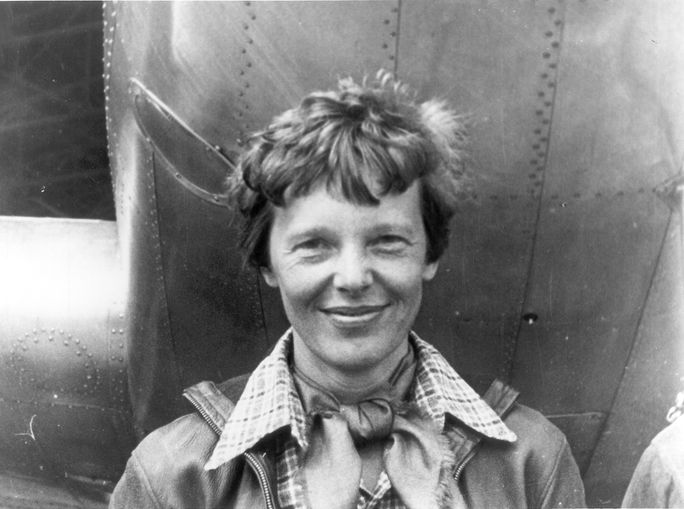
Amelia Earhart standing under the nose of her Lockheed Model 10-E Electra. Gelatin silver print, 1937. National Portrait Gallery, Smithsonian Institution. (photo via Wikimedia Commons/ Underwood & Underwood)
Washington, DC
Our nation’s capital is one of the most meaningful places to
honor International Women’s Month as it sits at the heart of U.S. political
power and preserves key landmarks of the women’s rights movement.
Belmont-Paul Women’s Equality National Monument’s historic
house was the headquarters of the National Woman’s Party, led by Alice Paul.
From here, activists organized protests, marches, and White House pickets that
helped secure the 19th Amendment granting women the right to vote in 1920.
DC’s Smithsonian museums feature extensive exhibits covering
women in politics, science, culture and activism to include The National Museum
of American History and The National Portrait Gallery. Daughters of the
American Revolution Museum showcases women’s contributions to American history
through decorative art, exhibits and historic artifacts.
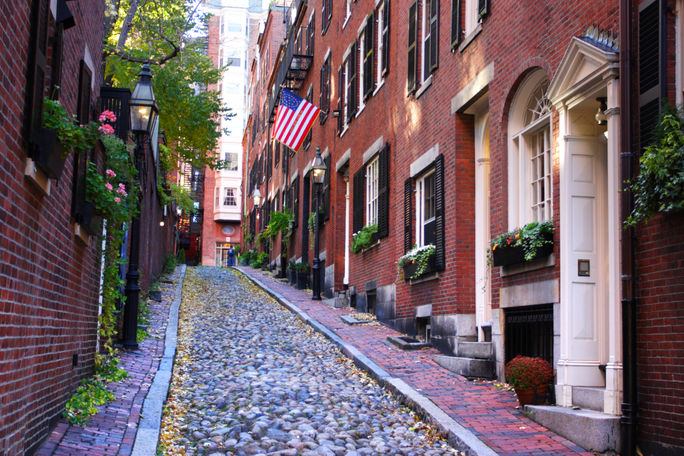
The historic Beacon Hill neighborhood in Boston. (Photo Credit: Chee-Onn Leong / Adobe Stock)
Boston, MA
The center of women’s activism, education, literature, labor
reform and political change for nearly two centuries, Boston stands out as a
destination to explore the achievements and contributions of women throughout
history.
The city is home to some of the national’s earliest
institutions dedicated to women’s higher education such as Boston University
and Simmons University. Boston was a major hub of abolitionism and women’s
suffrage with leaders like Julia Ward Howe and Lucy Stone. The Massachusetts
State House was home to suffrage petition debates and historic Beacon Hill was
the center of reformers and abolitionists who linked anti-slavery and women’s
right causes. Its north slope was the heart of Boston’s 19th-century
Black community who played vital roles in activism, education and community
leadership. Boston’s Women’s Heritage Trail offers a series of 12 walking tours
showcasing homes and sites connected to the city’s most influential women.
New York State
To walk in the shoes of some of the most influential women
in U.S. history, a visit to the state of New York is a must.
In Rochester, the Susan B. Anthony Museum & House was
once the headquarters of the National Suffrage Association pushing for passage
of the 19th Amendment granting women the right to vote. Harriett
Tubman National Historical Park in Auburn is the home of the African American
abolitionist, now a visitor center celebrating her life and impressive
accomplishments which include bringing hundreds of slaves to freedom on the
Underground Railroad.
In Seneca Falls, the Women’s Rights National Historic Park
is often known as the birthplace of the women’s rights movement, hosting the
first women’s rights convention in 1848. The Park includes figures such as
Elizabeth Cady Stanton, Lucrecia Mott, and more.
Additionally, the Eleanor Roosevelt Historic Site in Hyde
Park commemorates the life and work of America’s first lady.
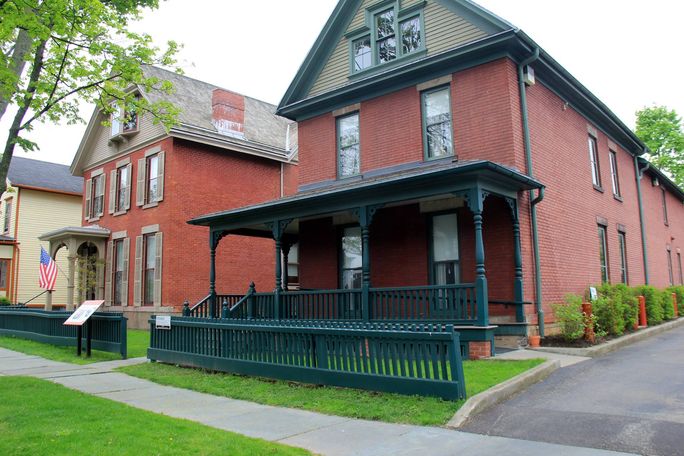
Susan B. Anthony House & Museum (Photo Credit: Noreen Kompanik)
Gettysburg, PA
Gettysburg is filled with stories of men who fought in the
fateful Civil War battle. However, it was the women of Gettysburg who carried
on when the men left for war, women who nursed the wounded back to health, and
women who buried the dead, weeping for those who never made it home.
Elizabeth Thorn, wife of the first Evergreen Cemetery
caretaker buried 91 soldiers while approximately six months pregnant in the
summer heat after the Battle of Gettysburg. A statue of the pregnant Elizabeth
at the cemetery is known as the Gettysburg Women's Memorial.
Mag Palm, a free Black woman fought off kidnappers who
likely would have sold her into slavery and testified against them in court.
Her story is highlighted at the Gettysburg Beyond the Battle Museum along with other
women’s historic tales.
Jennie Wade, the only civilian killed during the battle was
struck by a bullet while making bread for soldiers. Her story is told at the
Jennie Wade House Museum (the oldest museum in Gettysburg) and the newly opened
Jennie Wade Birthplace. Hettie Shriver cared for two young daughters during
some of the battle’s worst fighting, assisted wounded soldiers, and had her
home infiltrated by enemy forces. Her story is highlighted at the Shriver House
Museum.
Lesser-Known Gems
These lesser-known destinations offer a nod to some
incredible pioneering women who trailblazed against all odds, broke barriers,
and ultimately changed the face of history in their own unique way.
Atchison, Kansas
Travelers can visit the childhood home of Amelia Earhart,
the first woman to fly solo across the Atlantic and U.S. nonstop. The Amelia
Earhart Hangar Museum weaves the worlds of aviation, education and mystery into
one interactive museum in the pioneer’s hometown.
The Amelia Earhart Birthplace Museum is a turn of the 20th
century Gothic Revival Home where the world-renowned aviator was born and spent
most of her childhood.
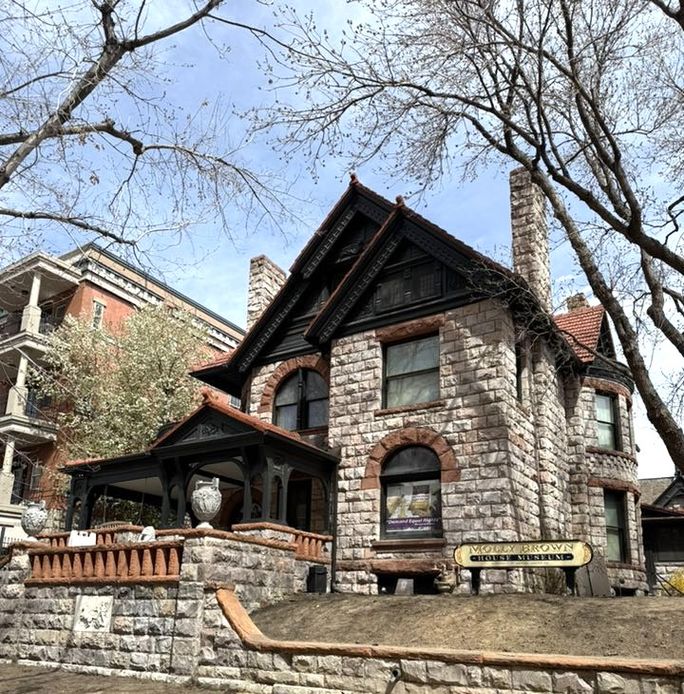
Molly Brown House Museum (Photo Credit: Noreen Kompanik)
Denver, Colorado
The Molly Brown House Museum is the restored Victorian home
of Margaret “Molly” Brown, a remarkable American philanthropist, activist and
social figure, likely best known for surviving the sinking of the RMS Titanic
in 1912.
While Brown earned famed as the “Unsinkable Molly Brown” for
helping others during the Titanic disaster, her life extended well beyond that
disastrous event. She was not only a philanthropist, but a social reformer and
women’s rights supporter.
Sonoma County, CA
Sonoma County is one of California’s most renowned wine
regions, but as Women’s History Month goes, there’s no better time than to
shine a light on a place where it all began.
Women’s History Month launched in the late ‘70s in Santa
Rosa, becoming a transformative and nationally recognized event in 1980, the
year President Jimmy Carter officially proclaimed the creation of National
Women’s History Week. London State Historic Park celebrates women whose lives,
work, and creativity helped shaped the history and landscape of what it is
today.
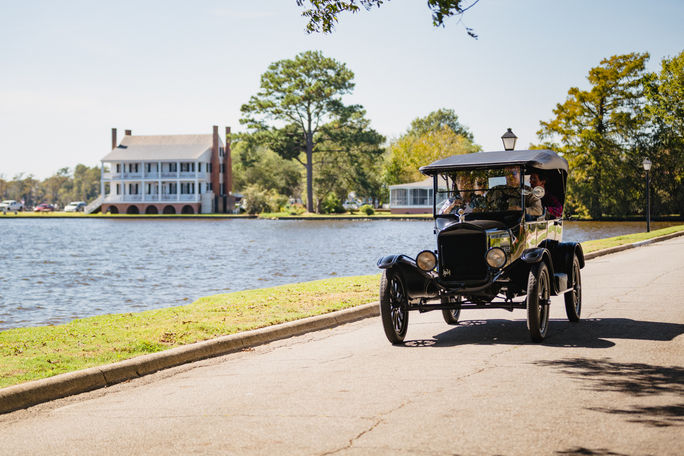
Barker House Exterior with Trolley (Photo Credit: Visit NC)
Edenton, NC
In this Colonial-era capital known for its waterside beauty
and remarkable architecture, socialite Penelope Barker became the first
American woman to organize a political act, the Edenton Tea Party of 1774.
Barker enlisted 50 other women to sign a resolution boycotting British imports.
Barker house is the location that she and her husband built on Albemarle Sound
after the Revolutionary War.
Another notable woman, Harriott Jacobs, was born into
slavery, escaped slavery, then published a fugitive slave novel. Edenton
visitors can follow a self-guided tour to locations from her story.
Fort Worth, TX
The National Cowgirl Museum and Hall of Fame in Fort Worth,
Texas honors over 750 women who shaped the American West showing extraordinary
courage, trailblazing spirit, and major influences in rodeo, ranching,
activism, the arts and more.
Notable figures such as Sacagawea (the Shoshone guide on the
Lewis and Clark Expedition), legendary sharpshooter Annie Oakley, influential modernist
painter Georgia O’Keefe, known for her works inspired by the American Southwest
and Laura Ingalls Wilder, Little House on the Prairie books author chronicling frontier
life.
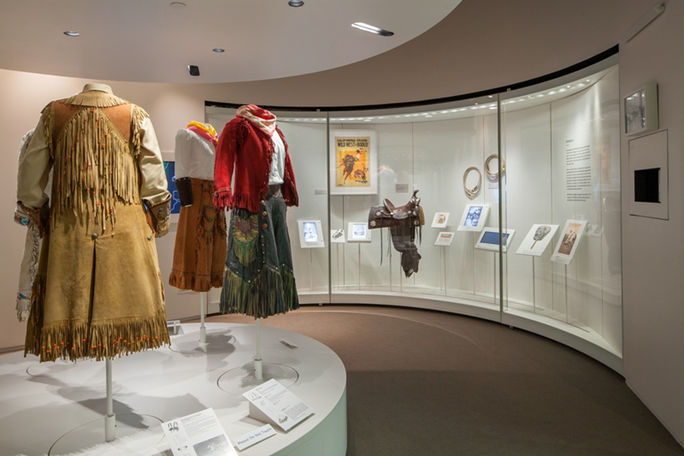
The women of the West are celebrated at the National Cowgirl Museum and Hall of Fame. (National Cowgirl Museum and Hall of Fame)
Chicago, IL
Hull House is a National Historic Landmark that serves as a
memorial museum to Jane Addams – the first American woman to win the Nobel
Peace Prize. Addams founded the settlement house with American social reformer
and activist, Ellen Gates Starr in 1889 to provide local immigrant communities
with social services and child care for working mothers.
Aadams also championed social reform, fought to end
exploitative child labor, supported women’s suffrage and equality, and later
became the NAACP’s co-founder.
Nashville, TN
From the fight to vote to women who reshaped American music,
Nashville offers a meaningful and memorable way to celebrate the achievements,
resilience, and cultural impact of women throughout history.
Visitors can experience the luxury and background of The
Hermitage Hotel; a National Historic Landmark that played a significant role in
the ratification of the 19th amendment.
During the hot summer heat in 1920, both suffragists and
anti-suffrage campaigners gathered in Nashville as Tennessee became the final
state needed to secure women the right to vote. The Hermitage served as
headquarters for leaders of the movement, including the president of the
National American Woman Suffrage Association, placing the hotel at the center
of this historic turning point.
The Patsy Cline Museum celebrates the life and legacy of the
pioneer of the “Nashville Sound,” who helped bridge country and pop music, paving
the way for generations of female artists. Raise a glass at Dolly's Rooftop
Bar, inspired by global icon Dolly Parton, before exploring exhibits at the
Country Music Hall of Fame and Museum, including tributes to groundbreaking
artists such as Taylor Swift.
For the latest travel news, updates and deals, subscribe to the daily TravelPulse newsletter.
Topics From This Article to Explore


