
by Mia Taylor
Last updated: 9:10 AM ET, Thu January 4, 2024
Not only was 2023 the hottest year on record for the planet, but it was also one punctuated by a series of deadly natural disasters around the world.
From catastrophic earthquakes in Morocco, Turkey, Nepal, and Syria to raging wildfires in Maui, 2023 was marked by record loss and destruction.
In the wake of such devastation, travelers often shy away from visiting the impacted country or region. While that’s generally the best move in the immediate days and weeks following a disaster, over the long term, it can lead to a secondary setback: Economic free-fall.
“When a destination suffers from a disaster—be it natural or otherwise—the immediate aftermath often sees a decline in tourism, a key economic driver for many places,” says Kristin Winkaffe, of Winkaffe Global Travel, who has a background in international development and human rights programming.
It’s certainly natural to have questions about whether a destination is safe to visit after a catastrophic event or to be concerned about what the travel experience will be like. But it’s also important that tourists eventually do return, in order to help support the destination’s rebound.
“Encouraging travel to these areas during their recovery phase is crucial,” Winkaffe continues. “It's not just about the economic boost, although that's significant. Tourism can play a pivotal role in rebuilding communities, restoring livelihoods, and instilling a sense of hope and normalcy for the local people.”
With these critical benefits in mind, here are three of the destinations that experienced high-profile natural disasters in 2023 and why they should be on your radar for 2024.
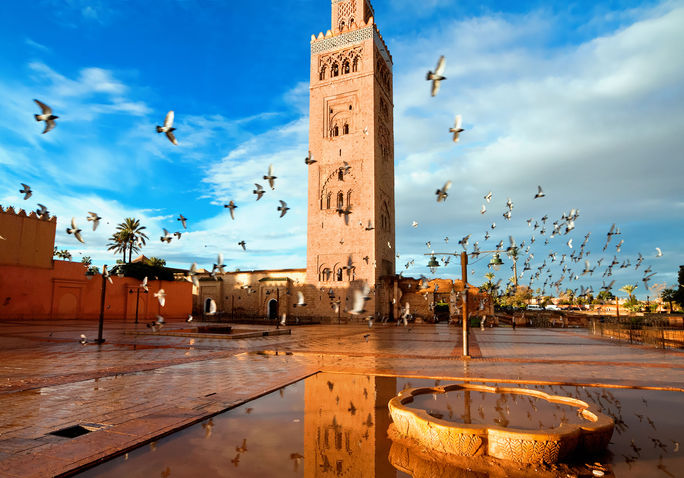
Koutoubia mosque, Marrakech, Morocco (mmeee / iStock / Getty Images Plus)
Morocco
Shortly after 11 p.m. on September 8, 2023, a 6.8-magnitude earthquake struck the High Atlas Mountains in Morocco.
Thousands of lives were lost as a result of the disaster, which was the strongest earthquake ever recorded in the region. At least 2,946 people died and an additional 5,674 were injured, according to the National Centers for Environmental Information. Scores of people were also left homeless in the aftermath and parts of the medina in the historic city of Marrakech were badly damaged.
All of this took place at a time when many businesses within the tourism sector—hotels, restaurants, and shops—were still recovering from the COVID-19 pandemic.
Booking a vacation to Morocco now is an important way to show compassion for the country and to aid its continued recovery, says Brian FitzGerald, CEO of Overseas Adventure Travel (O.A.T.).
"After the September 2023 earthquake...it’s important to show our support to the Moroccan people—many of whom rely on the tourism industry for their livelihoods,” says FitzGerald. “Visiting Morocco and spending your travel dollars there is one of the best ways to help.”
Indeed, travel and tourism makes up 7 percent of the country's gross domestic product and generates more than 500,000 jobs annually.
By visiting Morocco and taking part in activities such as eating tagine at a local restaurant in Fez or buying artisanal crafts at Marrakech’s souk, tourists help ensure the continuation of this vital source of economic activity.
Engaging in community-based tourism activities is another important choice, which has the added benefit of providing a deeper look at Moroccan culture. This could take many forms including a homestay with locals, guided tours led by locals, or participation in community projects.
"When travelers visit
Morocco, they directly support local businesses, artisans, and service
workers," says Brady Binstadt, CEO of the luxury tour company Geographic Expeditions. "Their spending goes back into the local communities to fund
schools, conservation, and development programs."
What's more, visiting and participating in such activities says to the Moroccan people: We see you and we haven’t forgotten about you.
Travelers who take the time to explore Morocco in 2024 will find a country that's more than ready to welcome and accommodate them—and that includes Marrakech. Landmarks, hotels, restaurants, shops, and attractions are all open.
"The city is looking better than ever," says Ignacio Maza, of Signature Travel Network. "There are more hotel options throughout Morocco than ever before, including The Oberoi, Selman and newly refreshed La Mamounia in Marrakech; The Fairmont Tazi Palace in Tangiers, and many other great resorts throughout the country."
"For anyone interested in culture, fine dining, history, adventures, shopping, memorable places to stay and unique experiences, Morocco is waiting for you," adds Maza.
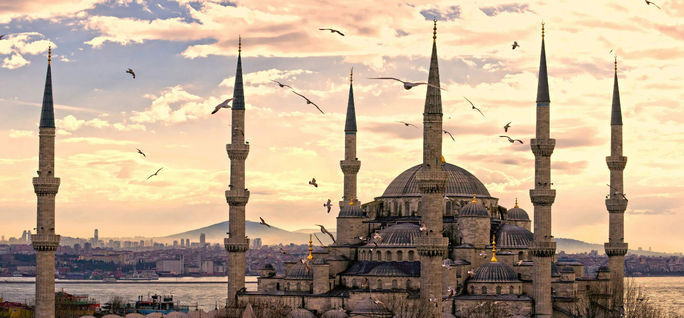
Sunset over The Blue Mosque in Sultanahmet district, Istanbul, Turkey. (Photo Credit: MasterLu / iStock / Getty Images Plus)
Turkey
More than 55,000 people perished as a result of the 7.8-magnitude
earthquake that took place in Southeast Turkey in February 2023. The
initial earthquake was followed by a 7.5-magnitude aftershock that
further compounded the devastation.
In addition to the death
toll, hundreds of thousands of people were displaced by the disaster,
which impacted 11 provinces and left many buildings uninhabitable.
Since
then, the country has been working steadfastly to rebuild and while
much remains to be done, there are important signs of progress.
“Turkey's recovery has been a story of determination and unity,” says Matteo Valentini, CEO, of Pantheon Tickets.
“Its
recovery from the earthquake has been impressive,” he adds. “Most
affected historical sites and urban areas have been repaired, though
some reconstruction is still ongoing.”
A recent visit to the
country provided Valentini with a first-hand view of restoration
efforts, which he says are being carried out with respect for historical
integrity. Tourists who visit in 2024 will find a nation that’s rebuilding with hope and unity.
“Its
historical sites, bustling bazaars, and breathtaking natural scenery
are regaining their former glory,” says Valentini. “Visitors will
experience the seamless blend of Asia and Europe with the unique warmth
and hospitality that Turkey is known for.”
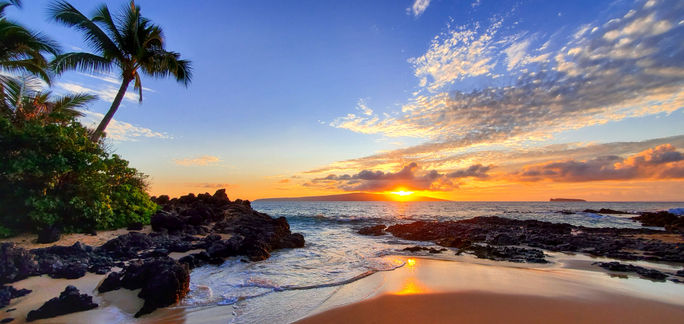
Makena Secret Beach at sunset in Maui, Hawaii. (photo via paulacobleigh / iStock / Getty Images Plus)
Maui
Following the wildfires that impacted Maui, the local hospitality
industry experienced an avalanche of reservation cancellations.
Initially driven by respect for the local community and a desire to let
recovery take place, travelers were also swayed to go elsewhere by
concerns for the unknown.
What would a vacation to Maui be like
after such a significant disaster? Would accommodations be available?
And businesses open?
The result of such hesitation among would-be travelers was devastating. During the normally busy December holiday travel season on the island,
domestic passenger arrivals for the first week of the month were down 20 to 30
percent compared to 2022 levels, according to state travel data. At the same time, hotel occupancy, usually between 70 and 80 percent at
Christmas, was near 25 percent for December 2023.
“An
island largely dependent on tourism, locals were not only losing loved
ones and homes but losing their jobs and security due to the halt in our
economy,” says Jon Benson, the general manager at Hana-Maui Resort.
Tourism,
however, has a critical role to play in the island’s recovery and it
wasn’t long before area officials and tourism leaders were urging
travelers to come back and to make Maui a priority in 2024.
Travelers
who heed this call will help the island regain some stability, says
Benson, who adds that Maui is still healing, but is not closed.
“In
addition to welcoming tourists back to the island with Aloha, many
locals are setting up ‘pop-up’ shops in different areas of the island to
help support small businesses, artists, artisans, and farmers on the
road to recovery,” adds Benson.
Not only should travelers put Maui on their to-do list for 2024, but when exploring the island, make it a point to seek out these local pop-ups and buy their creations and goods.
“Any donations or money spent on the island is helping our island recover,” says Benson.
Tips for Visiting a Recovering Destination
While it’s not unusual for travelers to feel helpless in the face of
massive natural disasters around the world, the reality is that we can
all play a small part in helping to support recovery.
“Alongside direct aid and international support, we can practice intentional tourism,” says Masa.
“We can choose to visit destinations impacted by natural disasters
responsibly—that is, [visiting] locations where our presence will not
disrupt relief efforts and will generate commerce for impacted small
businesses and the economy at large.”
That could include:
- Opting for locally-owned accommodations
- Participating in tours led by local guides
- Spending money in ways that directly benefit locals
Visiting responsibly also involves being considerate and respectful
while exploring a region or country and consistently remaining mindful
of the recent events that have impacted locals.
And finally, when planning trips, stay informed about the current situation on the ground and the needs of the community.
“That
might mean adjusting itineraries to avoid overburdening areas that are
still recovering or focusing on activities that promote sustainable
development,” says Winkaffe. “The goal is to have a positive experience,
while also respecting what the community needs after a disaster.”
For the latest travel news, updates and deals, subscribe to the daily TravelPulse newsletter.
Topics From This Article to Explore


