Often describes as a “mini continent” due the island’s wide variety of experiences and landscapes, Gran Canaria is far more than beaches, boasting some pleasant surprises for visitors across its mountainous interior. And with new Air Transat direct flights from Toronto and Montreal to starting December 12, 2026, more visitors than ever have easy access to the intriguing island.
Venturing even a few miles into the island’s interior brings some of the most authentic experiences, with a variety of stunning overlooks, a calmer and slow pace of life, and plenty of traditional villages, a marked contrast to the busier life (and vacation types) that you’ll find along the coastal routes.
In the island’s northern highlands, the historic town of Teror is beloved for its cobbled streets, local market, charming square, and Basílica de Nuestra Señora del Pino, home to the patron saint of the Canarian diocese and said to be Gran Canaria’s most important church. This is definitely not a place on the traditional tourism circuit, which is one of the reasons visitors looking for authenticity come to this part of the island.
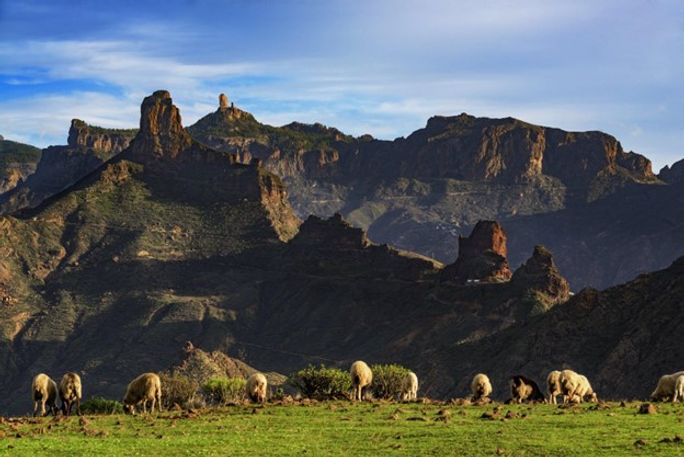
The Caldera de Tejeda at golden hour, with Roque Nublo and Roque Bentayga on the skyline.
Roque Nublo is one of the island’s iconic landmarks, a 262-foot rocky monolith that’s the third highest point on Gran Canaria. There’s a popular trail that ascends toward the volcanic feature. But a visit here should include a side trip to the beautiful village of Tejeda, which is set inside a volcanic crater called Caldera de Tejeda at an elevation of about 3,400 feet. Views here are spectacular in all directions, and clear days allow for views of distant Mount Teide, located on the neighboring island of Tenerife. Another thing visitors find when visiting Tejeda is that the temperature at this altitude are much cooler, making it a welcome respite in hotter weather.
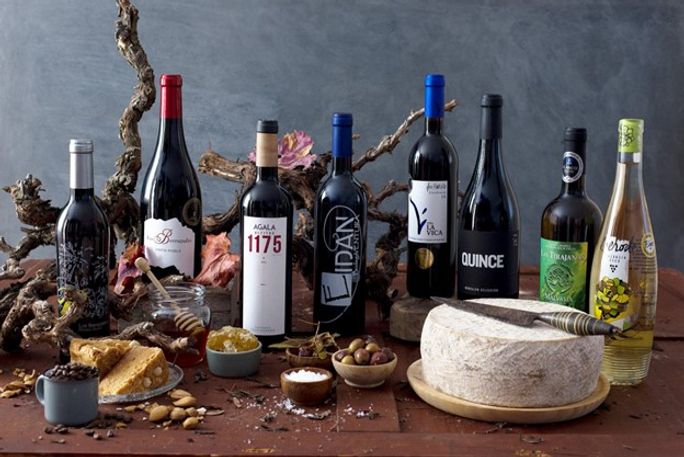
Gran Canaria's many wines.
Wine lovers will also enjoy Gran Canaria’s interior, as the island has its own Protected Designation of Origin (unifying Gran Canaria and Monte Lentiscal). Here, vineyards are planted as high as 2,600 feet in elevation, a somewhat unusual situation. Monte Lentiscal, next to the volcanic Bandama crater, it known for its red wine production, while white wines, made from Listán Blanco, Moscatel, and Malvasía, are generally grown in the island’s south and on higher ground.
Century-old wineries can be found here, such as Bodega San Juan, founded in 1912. It is still run by the same family, now five generations in. Take the Gran Canaria Wine Route, to experience fifty wineries, restaurants, wine shops, estates, and cheese shops.
For the latest travel news, updates and deals, subscribe to the daily TravelPulse newsletter.
Topics From This Article to Explore


