My first sign that this city deserves your consideration as an A-list European destination was the huge, Hollywood-style ‘M-A-R-S-E-I-L-L-E’ sign I spotted from the train on the ride into town during a recent European rail adventure. I later found out that the sign was put up to promote a TV series, but it has become a part of the cityscape.
Regardless, it’s a fun flex and a signal that big things are waiting.
That was just the first half of a two-part grand arrival, and soon after spotting the sign atop a hill, my train was gliding into Saint-Charles station, home to an outdoor terrace with tremendous views of the city. You may be tempted to make tracks to the Metro immediately after arriving in Marseille, but I’m telling you, don’t do that before you’ve taken in this terrace, as there you will be richly rewarded with a vista that makes it one of the best arrivals I’ve ever experienced in Europe, period.
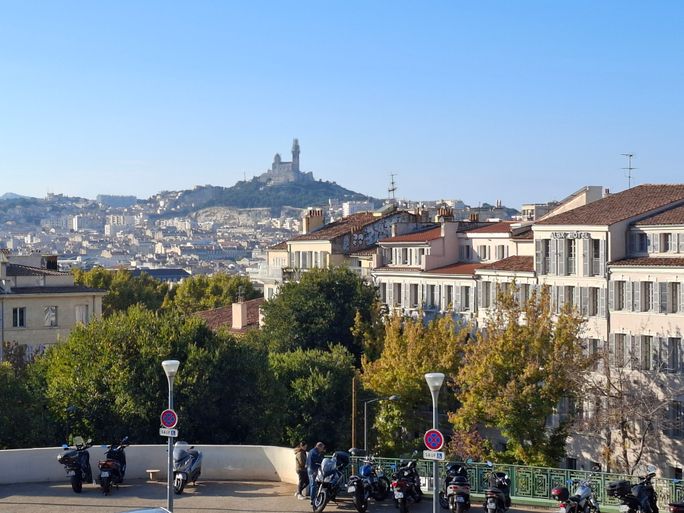
View of Marseille from the rail station (Photo Credit: Scott Hartbeck)
The terrace is connected to the streets below by a plendid staircase, with statues flanking the sun-faded steps, the figures telling the story of the port city’s maritime power and global connections. In truth, the staircase feels less like an exit from the station and more like a grand welcome, as at the bottom, the bustling Boulevard d'Athènes marks your official introduction into the city.
Turn the corner onto La Canebière, one of Marseille’s most magnificent streets, and walk for a few minutes, and soon the Vieux Port (the Old Port) appears as a mix of bobbing masts, working fishing vessels and pleasure craft clinking against their moorings. The Mediterranean Sea lies just beyond, with the famous Notre-Dame de la Garde basilica sitting sentry atop the city’s highest point.
A spectacular second impression, to say the least.
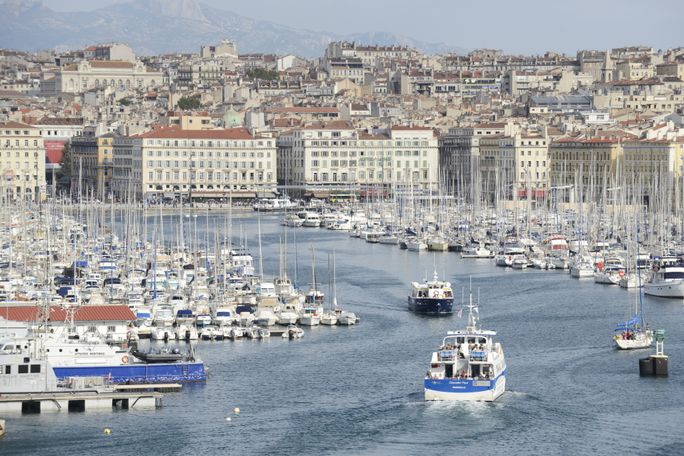
Vieux Port in Marseille, France (Photo via Atout France)
A little background: Marseille is France’s oldest city, founded by Greek sailors more than 2,600 years ago, and it still feels defined by the sea, which has brought people, goods and good ideas to town. Here, North African grocers, Provençal soap makers, fishmongers and hip artists all share space, creating a city that feels real. Which is exactly what many of us are desperate for in today’s European travel scene, full of too many saccharin-sweet spots swamped by social media.
After settling in at Hotel Amista (more on this cool spot later), I remembered that my pre-trip scouting had told me that Chez Madie Les Galinettes was a good spot for traditional local cooking, so I made a beeline back to the port for some sensational seafood soup there. Rich, briny and comforting, the service was watched over by the smiling matriarch of the restaurant, which was another fine introduction to a city where food offers a true sense of place.
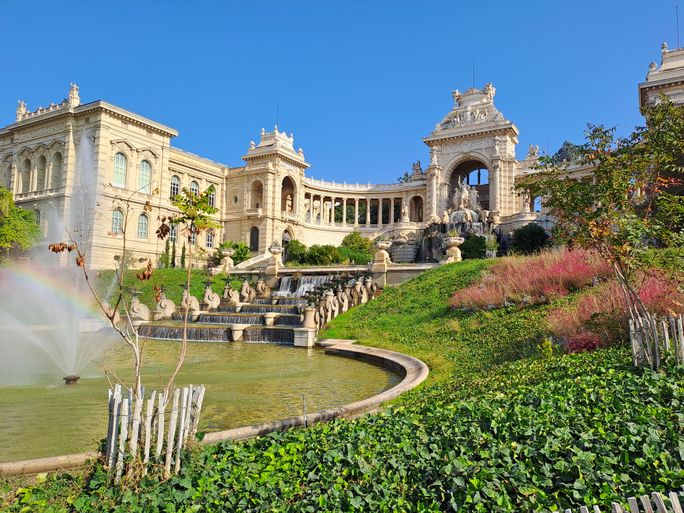
Palais Longchamp in Marseille (Photo Credit: Scott Hartbeck)
Culture in Marseille runs the gamut. With pétanque courts (think a cousin of shuffleboard, but with metal balls) tucked into shady squares, it’s easy to take in this local pastime, or, if you’re like me, after lurking on the fringes of a game, some locals will let you have a throw. My skills clearly needed work, but the laughter (not just at my technique!) and easy camaraderie felt like a small window into local life.
The Musée d’Histoire de Marseille, near the Old Port, offers an engaging look at the city’s layered past, from Greek origins to modern life. Then there’s MuCEM, a striking waterfront museum dedicated to the civilizations of Europe and the Mediterranean. Its exhibitions explore this fascinating region’s shared histories, traditions and cultural exchanges, all set within a dramatic contemporary building by the water. Elsewhere, Palais Longchamp and its surrounding park provided a great change of pace: colonnades, fountains and green lawns where families linger.
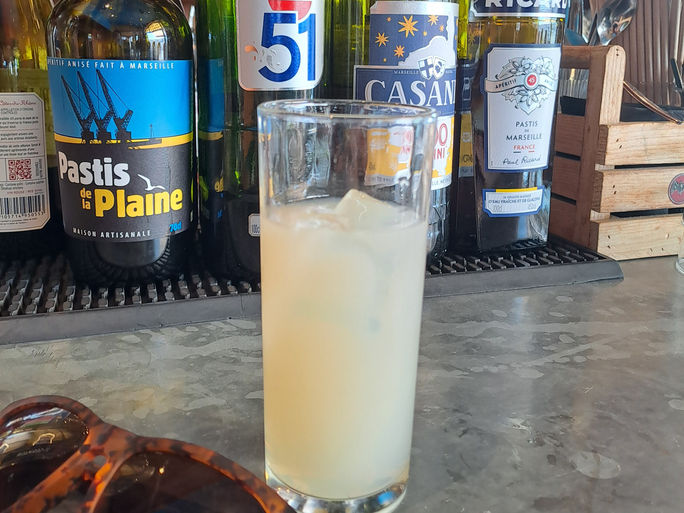
Pastis in Marseille (Photo Credit: Scott Hartbeck)
Marseille’s relationship with the sea goes beyond views and seafood. A boat ride out to Château d’If, the island fortress made famous by The Count of Monte Cristo, reveals the dramatic meeting of rocks and turquoise water that defines this stretch of coastline. Back in the harbor, as the afternoon drifted toward evening and the sky turned blue-pink, I climbed up to Bar Caravelle, a beloved watering hole overlooking the water of the Old Port, where I sipped pastis for the first time. The anise-scented aperitif, cloudy once diluted with water, is practically a Marseille ritual. Even if anise isn’t your thing normally, I’ve got a feeling you’ll dig it here.
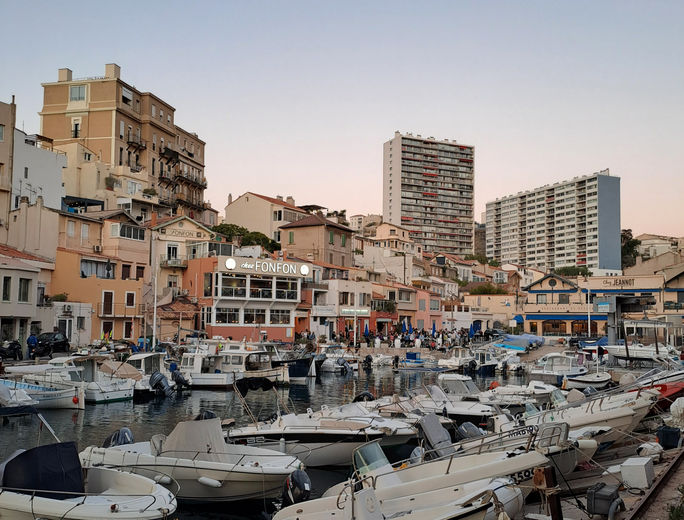
Vallon des Auffes harbor in Marseille (Photo Credit: Scott Hartbeck)
Food and drink continued to shape my days in Marseille. I found outstanding Tunisian cooking at Chez Yassin, flaky desserts dripping with honey at Rose of Tunis, and excellent sandwiches at Razzia, a buzzy hip coffee shop. At Catalan Beach, I paused with another glass of pastis, toes nearly in the sand, before continuing the festivities at the tiny fishing harbor of Vallon des Auffes, which offered one of my favorite moments of the trip: enjoying a glass of rosé in hand before scrambling down to the rocks to watch the sun sink into the sea. Exactly the kind of thing you dream about doing on a European trip that kisses the Med’.
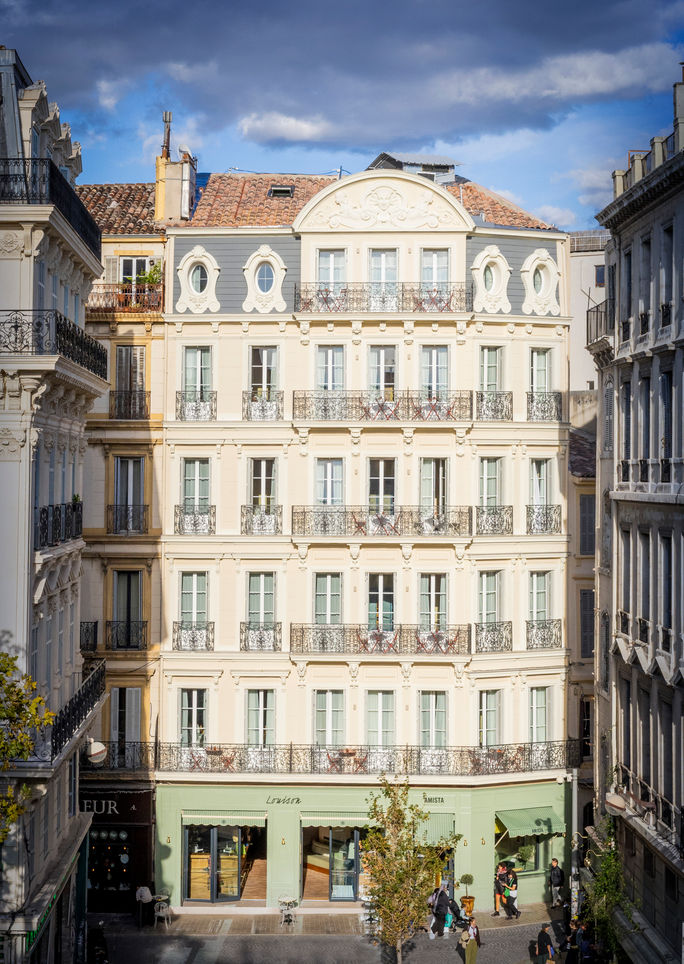
Hotel Amista in Marseille (Photo Credit: Marseille Tourisme / Pierre Monetta)
My base was Hotel Amista, a stylish hotel that blends contemporary comfort with Provençal flair. Perfectly placed for exploring the pulse of the city, it offered a calm retreat from the city’s lively streets each evening. One morning, after spending days in France and somehow not eating a croissant (sorry for that, France), I finally feasted on one during breakfast at Hotel Amista. It was buttery, crisp and to die for, served alongside some of the best eggs I’d ever eaten. This quickly became a morning ritual.
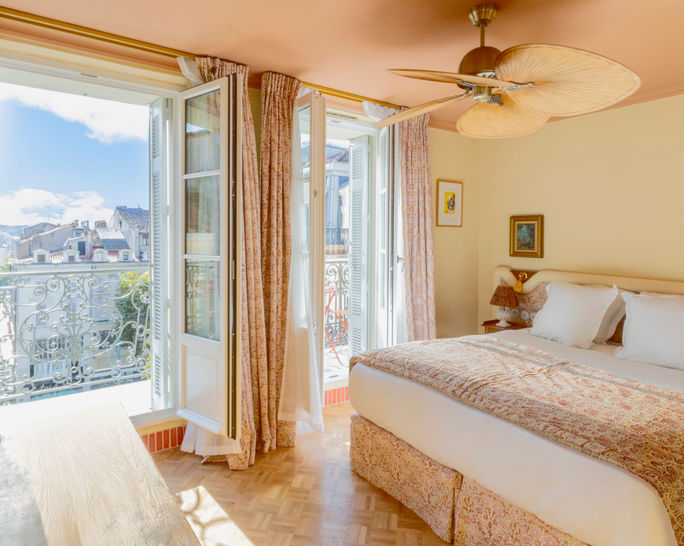
Interior of room at Hotel Amista in Marseille (Photo Credit: Tourisme Marseille / Pierre Monetta)
Housed in a heritage building that nods to Marseille’s late-19th-century era, Hotel Amista balances historic touches with a distinctly modern sense of style. Original architectural features (think tall windows and wrought-iron balconies) have been paired with interiors that feel more modern boutique than 'traditional' hotel.
My journey to Marseille was part of a trip designed specifically to sidestep some of Europe’s most crowded hotspots. Marseille turned out to be the perfect fit: well-connected, culturally rich and full of great food & drink, all while feeling like it’s still a place where the locals enjoy the city as much or more than visitors.
On my final morning, my Eurail pass loaded up for the next destination, I climbed once more to the terrace at Saint-Charles station for a last look at the city I just gotten to know spread out below. I was sad to go, but I know I’ll be back as this city seems like it’s just getting ready for its turn in the spotlight.
For the latest travel news, updates and deals, subscribe to the daily TravelPulse newsletter.
Topics From This Article to Explore


