Oaxaca has earned a global reputation as Mexico’s
culinary capital. Travelers visit the city in search of its legendary moles,
lively markets and the smoky complexity of mezcal. What they find is a
destination where food is inseparable from culture, history and community.
Oaxaca’s delicious food has never needed reinvention, but the
way travelers are experiencing it today is starting to shift. Boutique hotels,
curated culinary tours, and chef-driven restaurants now offer visitors deeper
access to the traditions behind the flavors. Traveling through the city,
visitors can find a food culture shaped by generations of vendors, chefs and
farmers who continue to protect the special traditions that define the region.
Recipes are passed down through families, and markets and restaurants serve as
gathering places for the community and travelers.
What I discovered while exploring Mexico’s culinary hotspot is
that the real story of Oaxaca is not just about what appears on the plate. It
is about the people and traditions that bring those dishes to life. Let’s
explore what travelers should expect through my experience in the culinary
capital.
Where to Stay for Culinary Delights and Exploration
Oaxaca’s historic center is compact and very walkable, making
location part of the culinary equation and giving travelers easy access to many
restaurants. Staying within a few blocks of the city’s leading dining venues,
markets and cultural landmarks allows travelers to move through the destination
at a comfortable pace. The most compelling boutique properties in the city
understand this rhythm and build culinary touchpoints into the guest stay
experience.
Casa Antonieta: Quintessential Rooftop Dining
Casa Antonieta sits in the vibrant heart of Oaxaca’s historic
center, placing guests within easy walking distance of renowned restaurants,
markets and cultural landmarks. Housed in one of the city’s oldest buildings,
the property feels like a thoughtfully restored home rather than a generic
boutique hotel, with warm finishes and design details that echo the region’s
artistic spirit.
Upstairs, Amá Terraza extends the narrative into the evening
with natural Mexican wines, well-crafted classic cocktails, and a menu that is
both thoughtful and expressive.
One thing that makes Casa Antonieta appealing for culinary
travelers is how food and beverage experiences are woven into the stay itself. The
hotel's rooftop restaurant, Amá Terraza, provides a relaxed setting for meals
throughout the day. The restaurant's rooftop setting is framed by terracotta
hues and mountain light, making it feel like a local gathering place elevated
for travelers who want something authentic and effortlessly traditional.
During my visit, the tuna tacos stood out as a highlight of the
evening menu. What some would consider a simple dish was executed with
precision and fresh ingredients. For breakfast, my chilaquiles were prepared
fresh to order and offered a satisfying start to the day, reflecting the
kitchen’s commitment to freshness. At Muss Café, I enjoyed a craft specialty
coffee and delectable French toast while taking in the perfect people-watching
spot.
Another unique aspect of Casa Antoineta was its efforts to lean
into a wellness-minded approach to dining. They offered vegetarian and vegan
options, fresh ingredients, and healthy beverages, such as kombucha, alongside
more traditional offerings. These intentional inclusions make it easy for
travelers of all dietary types to begin and end their day in step with the
rhythm of the city's evolving culinary scene. Casa Antoineta reflects a broader
shift in Oaxaca's hospitality scene, where guests do not have to choose between
cultural immersion and comfort; they can have both.
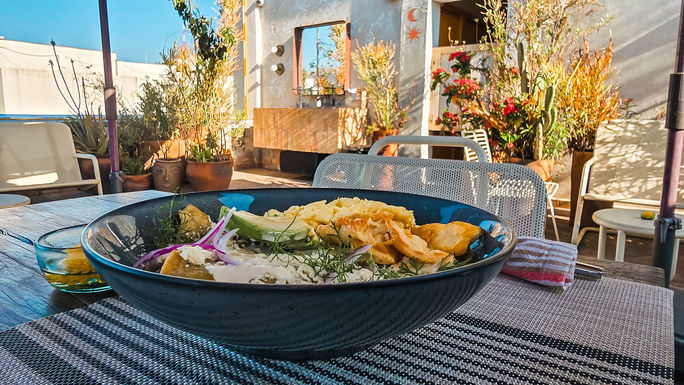
Dining at Casa Antonieta, a boutique hotel in Oaxaca, Mexico. (Photo Credit: Northstar Travel Group/Terika L. Haynes)
Luuna de Jade: A Celebration of Authentic Spirits
Where Casa Antonieta reflects the energy of Oaxaca's rooftop
culture, Luuna de Jade brings the electric energy with their standout bar.
Located in the historic city center within walking distance of Santo Domingo
and the Zócalo, Luuna de Jade positions guests close to the city's culinary and
cultural landmarks and embraces a refined aesthetic rooted in color and
texture. Rich jewel tones, curated artwork and thoughtful lighting define the
hotel.
During my visit, the property’s Mantis Bar stood out as an
unexpected highlight. I learned that Mantis Bar, manager Alan Reyes, approaches
mezcal from a producer-first perspective. Rather than focusing on well-known
brands, he works directly with local mezcal producers across 16 regions of
Oaxaca, highlighting the craftsmanship and labor that go into each bottle.
Reyes’ philosophy is simple but intentional. The team aims to
“sell the producer, not the brand,” ensuring that guests understand the people
and communities behind the spirit. Bottles at Mantis bar are rotated regularly
so different producers have the opportunity to showcase their work, and the
program continues to expand its partnerships, including a goal to feature more
women mezcal producers.
Mantis bar cocktails reflect this same thoughtful approach.
Mixers are made fresh, and the drink menu is designed to highlight mezcal's
culture and agricultural roots rather than overshadow them. Guests can opt for
a curated cocktail experience featuring four drinks or a mezcal tasting
experience featuring five pours, both designed to introduce visitors to the
diversity of Oaxaca’s artisanal spirits. For those who prefer an element of
surprise, the bartender’s choice option allows the bar team to craft a drink
tailored to the guest.
As Reyes explained during our conversation, “We are the bar.” It
is a statement that reflects both pride and responsibility. Each drink from the
bar becomes an opportunity to represent the producers, traditions, and evolving
mezcal culture of Oaxaca.
For those seeking a boutique stay that balances luxury
accommodations with a love for mezcal and cocktails, Luuna de Jade offers a
polished home base within Oaxaca’s evolving hospitality landscape.
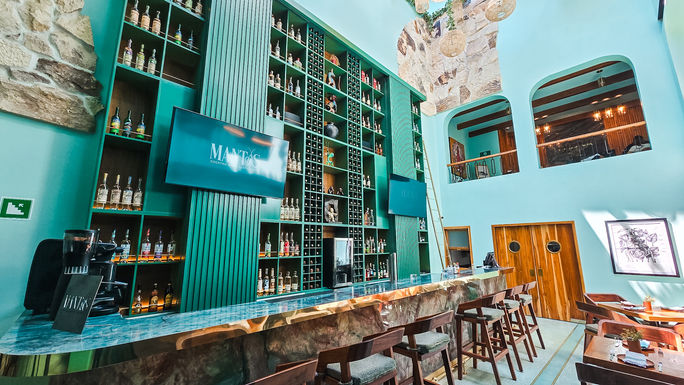
The bar at Luuna de Jade in Oaxaca, Mexico. (Photo Credit: Northstar Travel Group/Terika L. Haynes)
Grana B&B: An Unforgettable Breakfast Experience
After Luuna de Jade, I visited Grana B&B, which focuses on
tradition, particularly through its celebrated breakfast program. Housed in one
of the oldest buildings in Oaxaca, the structure dates back to the 1600s, when
it served as a monastery for roughly a century. After a long period of
abandonment, the building was eventually restored in the 20th century. Today it
remains in the hands of the same Oaxacan family, a detail that reflects a
broader pattern in the city, where historic properties are often preserved
through generations of local ownership.
What distinguishes Grana is its focus on culinary excellence.
The hotel is particularly known for its breakfast program, which has earned a
reputation among guests who especially love the chilaquiles. Each morning,
regional dishes are prepared for guests using traditional techniques that
reflect the depth of the region's food culture. Staying at Grana allows
travelers to begin each day immersed in that tradition, in a setting that feels
refined and deeply connected to the place.
The hotel’s culinary program is led by Chef Rosa, who has served
as head of the kitchen since the property opened six years ago. Her team is
composed entirely of women, a dynamic that reflects the central role women have
long played in preserving and passing down Oaxacan culinary traditions.
When asked what the most important aspect of Oaxacan meals is,
Chef Rosa explained, "The essence of Oaxacan cooking comes down to two
elements: the spice and the sauce." It is a simple statement that captures
the depth and complexity behind the region's most iconic dishes. During my time
at Grana, I learned that its breakfast program speaks to a larger truth about
Oaxaca. Morning meals are part of the culinary narrative, not an afterthought.
Staying at Grana allows travelers to begin each day immersed in that story.
Where to Eat: Where To Explore for Delectable Oaxacan Cuisine
Oaxaca’s culinary reputation was established long before it
appeared in food media outlets. The evolution lies in presentation and access.
Contemporary chefs are refining plating, curating unique wine programs, and
designing tasting menus that honor traditional techniques while introducing
thoughtful interpretation.
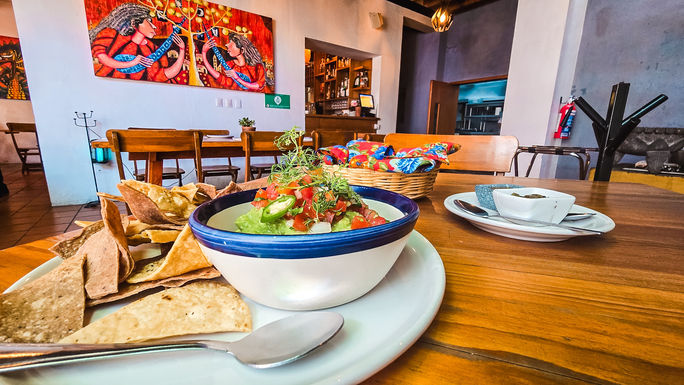
Guacamole at the Las Quince Letras restaurant in Oaxaco, Mexico. (Photo Credit: Northstar Travel Group/Terika L. Haynes)
A Traditional Dining Experience: Las Quince Letras
For travelers looking for a deeper introduction to Oaxaca’s
culinary heritage, Las Quince Letras remains one of the city’s most respected
places to dine. The restaurant is led by owner and Chef Celia Florián, who was
named Best Chef in Mexico in 2022, an honor that reflects her dedication to
preserving and elevating traditional Oaxacan cuisine.
During my visit, the lunch experience offered a thoughtful
progression through some of the region’s most iconic flavors. My meal began
with an adventurous guacamole topped with grasshoppers, an appetizer that
balanced bright freshness with the earthy crunch of chapulines and quickly set
the tone for what followed.
A trio of moles was the centerpiece of my meal. My favorite was
the almond mole, which really stood out for its depth and balance, while the
red mole offered a warm, lingering complexity. The black mole (which many
consider Oaxaca's most famous sauce) carries the signature smokiness that has
made it a defining element of the region's cuisine. The kitchen also sent out a
chef's compliment of a pork-stuffed pepper, a dish that combined richness and
spice in a way that captured the bold flavors for which Oaxaca is known. My
meal at Las Quince Letras reaffirmed why the city continues to attract
travelers eager to explore Mexico's culinary traditions at their source.
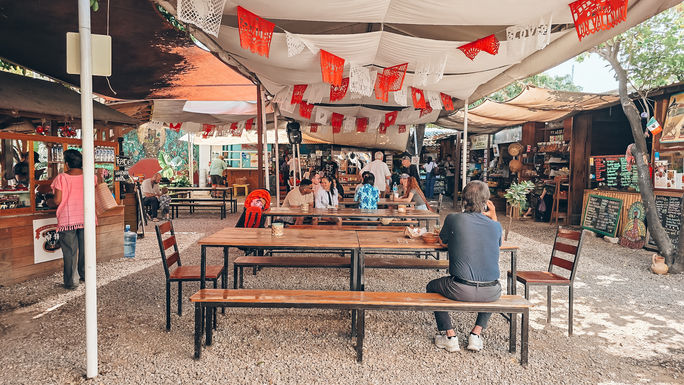
La Cosecha Organic Market in Oaxaca, Mexico. (Photo Credit: Northstar Travel Group/Terika L. Haynes)
A Market Dining Experience: La Cosecha Organic Market
For travelers who want to explore Oaxaca’s market culture
without the intensity of the city’s larger markets, La Cosecha Organic Market
offers a welcoming introduction. Open only on the weekends, the market brings
together a collection of local vendors who each specialize in a particular dish
or regional specialty, creating an experience that feels both curated and
authentic.
At this market, I immediately noticed the atmosphere was
noticeably calmer than in many of Oaxaca's bustling market halls. The open-air
space feels almost like a Mexican food court, where visitors can move between
stalls and choose from a wide variety of dishes before settling at communal
tables to enjoy their meal. Because each vendor focuses on their own specialty,
the quality of the food receives careful attention.
During my visit, nearly every dish felt memorable. A pumpkin
tamale offered a warm, comforting start, while a cup of café de olla provided
the familiar notes of cinnamon and spice that define the traditional drink.
Other highlights included bugambilia lemonade, garnachitas, molotes de plátano,
enmoladas and freshly prepared memelas, each reflecting a different facet of
Oaxaca’s rich culinary tradition.
One of the most appealing elements of La Cosecha is the service.
After you place your order directly with the vendor, you can have a seat while
the dish is prepared. When the food is ready, the vendor brings it to the table
and often takes a moment to explain the dish or chat briefly before leaving you
to enjoy your meal.
For visitors new to Oaxaca, the market offers an ideal starting
point. It introduces the flavors, hospitality and regional specialties that
define the city’s food culture in a setting that feels approachable, relaxed
and thoughtfully organized.
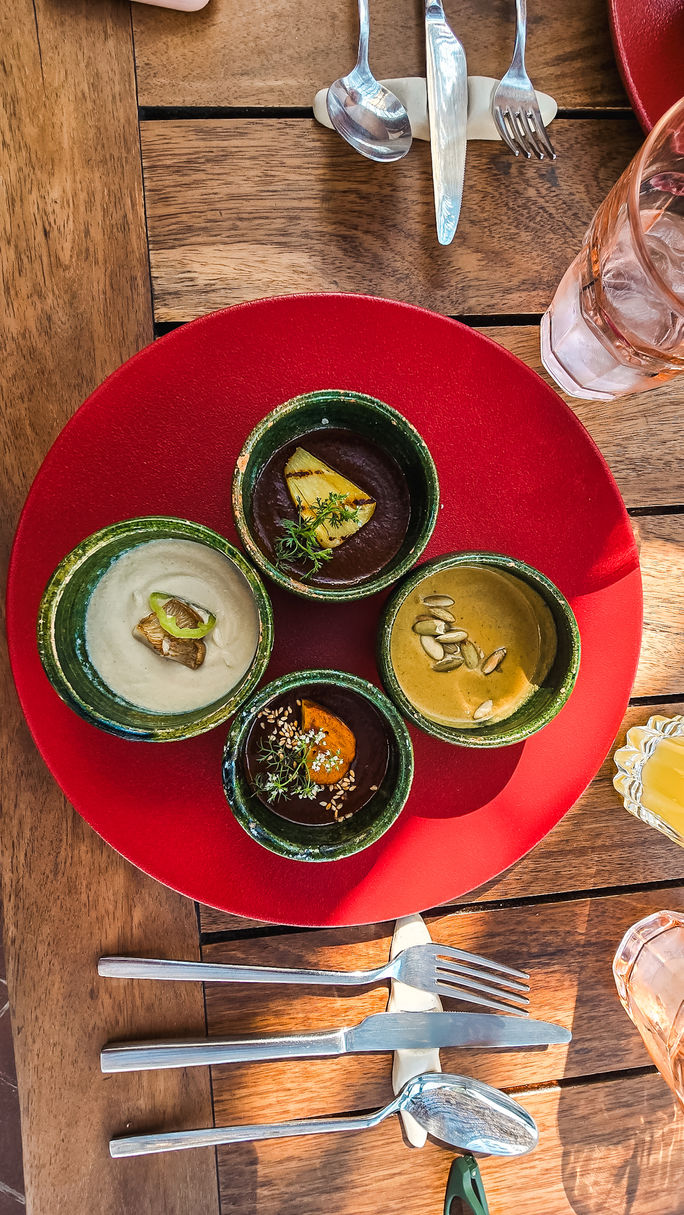
Fine dining at Tierra del Sol restaurant in Oaxaca, Mexico. (Photo Credit: Northstar Travel Group/Terika L. Haynes)
A Fine Dining Experience: Tierra del Sol
For travelers seeking a refined interpretation of Oaxacan
cuisine, Tierra del Sol offers a memorable fine dining experience in the heart
of the city. The restaurant has built a strong reputation for elevating
traditional flavors while maintaining deep respect for the region's culinary
techniques. Stellar service is a defining part of the restaurant experience.
From the moment that I arrived, the staff created an atmosphere that felt
attentive without being intrusive, allowing me to settle into the meal and enjoy
the progression of flavors.
During my visit, I began with a mezcal cocktail before moving
into one of the restaurant's most compelling offerings: a tasting of four
different moles. Oaxaca is widely known for its complex sauces, and Tierra del
Sol provided an opportunity to explore their range and depth. Two of the moles
served during my meal were custom preparations developed by the chef and are
exclusive to the restaurant, giving diners a rare chance to experience
interpretations unavailable elsewhere.
The tasting highlighted the diversity of Oaxaca’s most iconic
culinary tradition. Each mole carried its own balance of spice, sweetness and
depth, demonstrating the skill required to prepare sauces that often involve
dozens of ingredients and hours of careful preparation. For visitors seeking to
experience Oaxacan cuisine in a more elevated setting, Tierra del Sol delivers
a thoughtful combination of culinary tradition, creativity, and exceptional
service.
A Hidden Gem Dining Experience: Casa Taviche
Tucked along a quiet street in Oaxaca’s historic center, I
discovered Casa Taviche, which feels like a discovery waiting to happen. The
restaurant is small and intimate, with a cozy dining room that is thoughtfully
decorated and immediately welcoming. Its scale gives the experience a
hidden-gem quality that many travelers would find unique.
The restaurant’s menu leans into creative interpretations of
Oaxacan cuisine, combining traditional ingredients with contemporary techniques
and unexpected flavor pairings. The result is a style of cooking that feels
playful while still grounded in the region’s culinary traditions. During my
visit, the service was attentive and warm, allowing the meal to unfold at a
relaxed pace. The kitchen’s creativity carried through to the final course,
where dessert became one of the evening's highlights.
Another detail that stood out was the presence of several young
team members working alongside the senior staff. The restaurant appeared to be
committed to training the next generation of culinary professionals, offering
younger talent the opportunity to learn and grow within Oaxaca’s vibrant food
scene. For travelers who enjoy seeking out smaller restaurants with personality
and innovation, Casa Taviche offers a charming and flavorful experience that
reflects the evolving creativity of Oaxaca’s dining culture.
Immersive Culinary Experiences and Tours
Food Tours
A Chef’s Tour – Oaxaca Streets Food Tour
For travelers curious about Oaxaca’s vibrant street food scene,
A Chef’s Tour offers a guided introduction to the vendors and family-run stalls
that form the backbone of the city’s culinary culture. Rather than focusing on
well-known restaurants, the food tour experience highlights local businesses
that have been serving their communities for generations.
Many of the stops on my tour featured vendors whose families
have operated their stalls for decades, with some now in their third or fourth
generation of ownership. These long-standing businesses carry recipes and
techniques passed down through families, offering visitors a glimpse into the
traditions that sustain Oaxaca's street food culture. The tour also provides
reassurance for travelers who may be hesitant about street food. Each stop is
carefully selected, and the dishes are freshly prepared, allowing you to enjoy
the flavors of Oaxaca's street food scene with confidence.
One of the most memorable aspects of the experience is the
setting itself. As the evening unfolded, I moved through lively streets and
markets before sitting down at small tables alongside locals to enjoy the
dishes. The tour's pace allowed me to take in the beauty of Oaxaca at night,
when the city's warm lighting, music, and conversation create a relaxed,
welcoming atmosphere. By the end of the evening, the experience felt less like
a traditional tour and more like an invitation into the everyday rhythm of
Oaxaca's culinary life.
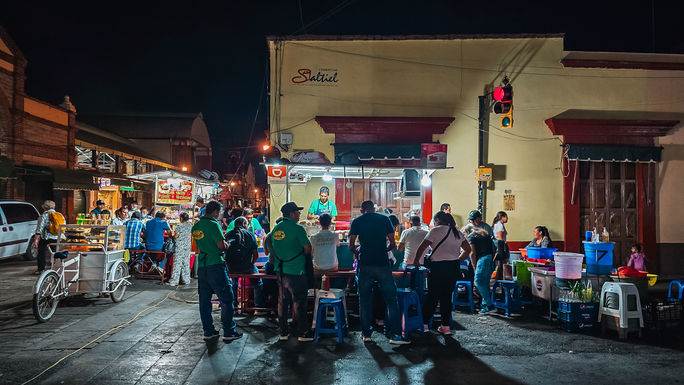
Group participating in A Chef's Tour food tour in Oaxaca, Mexico. (Photo Credit: Northstar Travel Group/Terika L. Haynes)
Oaxaca Street Food Tour – Vegan Tour
Oaxaca’s culinary identity is often associated with complex
moles and slow-cooked meats, but the region’s food culture is also deeply
rooted in plant-based traditions. I had the chance to take a vegan food tour
with Oaxaca Street Food, led by local entrepreneur Betsy Morales. During the
tour, I learned that many traditional Oaxacan meals are naturally vegetarian,
reflecting indigenous agricultural practices that have shaped local diets for
centuries. While meat is certainly part of the cuisine, it is often eaten only
once or twice a week in many households, making vegetables, grains, beans and
herbs central to everyday cooking.
What began as a passion project for Morales has evolved into a
thoughtful culinary experience that highlights Oaxaca's role as one of the
world's most important food destinations. A central focus of the tour is the
contribution of women within Oaxaca's culinary ecosystem. As a single mother
and entrepreneur, the founder designs her tours with solo travelers and women
in mind, and intentionally supports vendors and small businesses led, run or
managed by women. Market visits introduce travelers to these vendors while
offering insight into the ingredients, preparation methods and cultural
traditions that define Oaxacan cuisine.
The tour also explores the region’s deep indigenous culinary
knowledge, including the long-standing plant-based traditions that make Oaxaca
especially welcoming for vegetarian and vegan travelers. Many of these recipes
and agricultural practices have been preserved for generations and remain
visible in the ingredients and dishes found throughout the markets.
Beyond the food itself, the experience emphasizes responsible
tourism. During the tour, I was introduced to locally owned stores,
cooperatives and restaurants, ensuring that purchases are authentic and that
tourism dollars flow directly back into the community. The result is a culinary
experience that feels both immersive and intentional, offering visitors a
deeper understanding of Oaxaca’s culinary identity and the people who sustain
it.
The vegan tour was intentionally flexible and welcoming. It can
be adapted to a variety of dietary preferences and designed to be family
friendly. More than simply showcasing vegan dishes, this food tour experience
highlights the diversity of Oaxaca's ingredients and the women whose work
sustains the city's vibrant market culture.
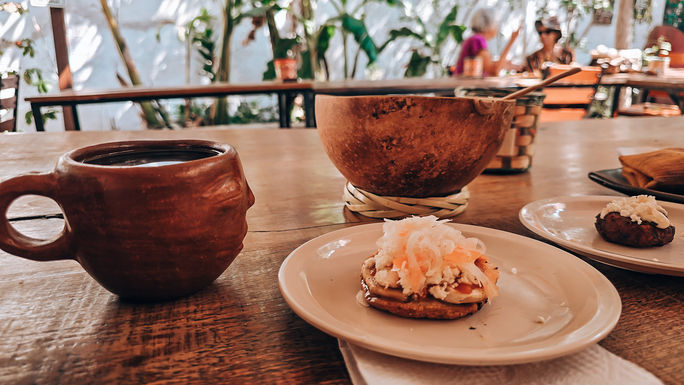
Oaxaca Street Food offers a vegan food tour in Oaxaca, Mexico. (Photo Credit: Northstar Travel Group/Terika L. Haynes)
Oaxaca Eats Food Tour – An Elevated and Diverse Experience
For travelers looking for a more curated introduction to
Oaxaca’s food scene, Oaxaca Eats Food Tours offers an experience that blends
market exploration with visits to notable fine-dining restaurants and
lesser-known culinary gems. The tour is led by owner Lorena Rubio, who has been
guiding guests through the city’s culinary landscape for many years.
Rubio approaches the food tour experience as both a cultural
introduction and a culinary journey. Small group sizes create a more intimate
atmosphere, allowing travelers to interact directly with vendors, chefs and
artisans along the way. Stops on the tour range from vibrant local markets to
refined dining spaces, offering a broader view of Oaxaca's food culture.
Throughout my tour, Rubio shared insights into the ingredients
that shape the region’s cuisine. Rubio commented that there is one theme that
appears again and again: the central role of corn. She taught me an age-old
saying: “Without corn, there is no country.” The statement reflects the deep
agricultural and cultural importance of maize across Mexico, particularly in
Oaxaca, where corn remains the foundation of countless traditional dishes.
Due to the nature and size of the tours, they can be flexible
and adapted to accommodate a variety of dietary preferences while still
highlighting the essential flavors and techniques that define the region's
cuisine. Beyond the food itself, the tour experience reflected a broader
cultural trait that visitors will quickly notice in Oaxaca. Hospitality comes
naturally in the city, and that warmth is woven into the way Rubio introduces
travelers to the people and traditions that sustain the city's culinary reputation.
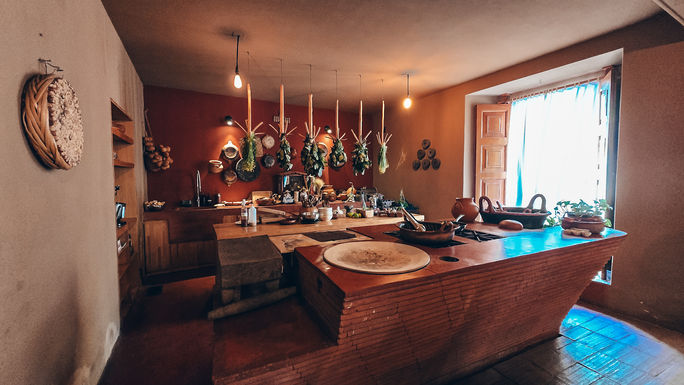
Oaxaca Eats Food Tours takes guests to fine-dining establishments in Oaxaca, Mexico. (Photo Credit: Northstar Travel Group/Terika L. Haynes)
Cooking Classes
Taller Quiote – Chef Oswaldo
Hands-on cooking classes offer a deeper appreciation for the
skill and patience that go into Oaxacan cuisine. Taller Quiote, located in
Oaxaca’s historic center, invites travelers to connect with local food
traditions through immersive culinary workshops.
Chef Oswaldo Ramírez Pérez, an Oaxaca native, led my cooking
class: the experience blended technique, history and cultural context. We
prepared fresh salsa, mole and tamales under the chef's instruction. Drawing on
his professional experience and ongoing culinary research, Chef Oswaldo guided
me through the preparation of regional dishes while explaining the ingredients,
traditions and stories that shape Oaxacan cooking.
Recipes are taught step by step to give everyone a hands-on
experience and help participants recreate the dishes at home, regardless of
their cooking experience. The small-group classes are bilingual and designed to
be welcoming and accessible, allowing guests to learn comfortably while
engaging directly with the techniques that define the region’s cuisine. Beyond
the recipes themselves, the class offers a meaningful cultural exchange.
Cooking with the Oaxacan chef gave me a better understanding of Oaxaca’s
culinary identity and the traditions that continue to shape one of Mexico’s
most celebrated food destinations.
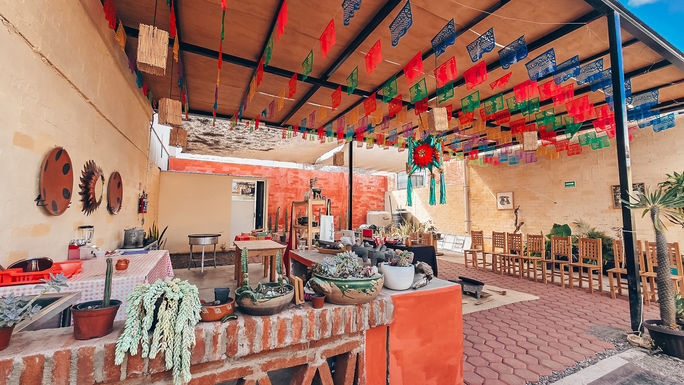
Taller Quiote offers cooking classes in Oaxaca, Mexico. (Photo Credit: Northstar Travel Group/Terika L. Haynes)
Mezcal Tour Experiences – Mezcal Journey, Mezcal Tour
Experience, EduTours Mezcal Experience
For travelers seeking more than a casual tasting, several
companies offer immersive experiences, including Mezcal Journey, Mezcal Tour
Experience and EduTours Mezcal Experience. These companies offer a structured
and culturally grounded introduction to the region’s most iconic spirit.
Experiences range from half-day distillery visits to full-day
excursions that include agave field tours, market visits in Tlacolula de
Matamoros and guided tastings led by knowledgeable hosts. With these tours,
participants can move beyond the bar setting into family-owned palenques, where
mezcal production remains deeply rooted in tradition. During the tour, you can
learn about the agave life cycle, harvesting methods, roasting techniques and
small-batch distillation processes directly from the producers who practice the
craft.
Guided tastings typically include multiple varieties of mezcal,
including curados and cremas, with explanations of flavor profiles and
production differences. Additionally, more immersive options, such as
agave-harvesting workshops or hikes focused on wild agave species, provide
additional insight into the agricultural and cultural foundations of mezcal.
Rather than simply sampling mezcal, through these tour companies, guests can
gain an understanding of its lineage, symbolism and regional identity. The
experiences reframe mezcal as a product of land, labor and generational
knowledge, making each pour more meaningful.
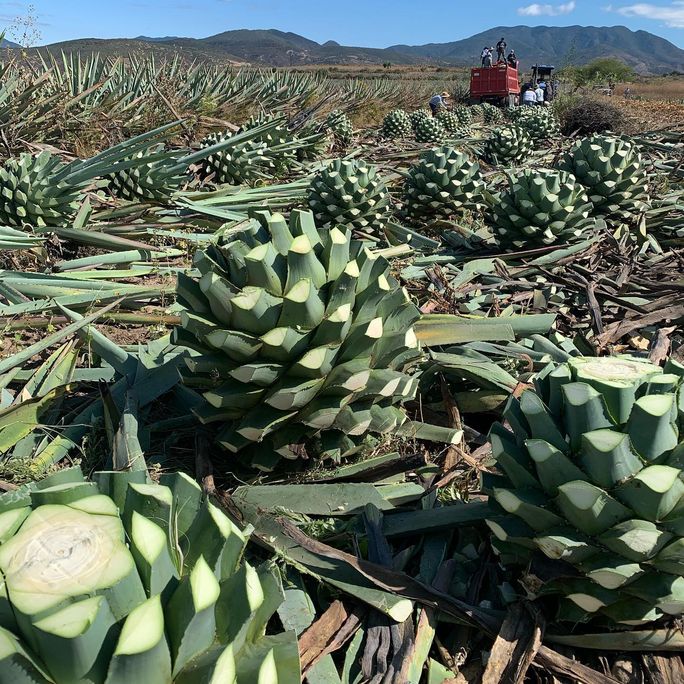
The Mezcal Journey offers tours of distilleries, agave fields and markets in Oaxaca, Mexico. (Photo Credit: The Mezcal Journey)
Shopping – Where To Go To Bring Oaxaca To Your Kitchen
Shopping in Oaxaca often begins in the markets. These lively
spaces are more than places to buy ingredients. They serve as cultural hubs
where visitors can explore regional flavors, meet local vendors, and discover
the ingredients that define Oaxacan cuisine. From spices and chocolate to
handmade goods and traditional beverages, the markets offer an authentic way to
bring a piece of Oaxaca home.
Chimaca Cacao
For travelers interested in Oaxaca’s rich chocolate tradition,
Chimaca Cacao offers a thoughtful introduction to one of the region’s most
iconic ingredients. The shop focuses on cacao sourced from Oaxaca and other
regions of Mexico, highlighting the craft and cultural significance behind
traditional chocolate production. Stopping into Chimaca Cacao offers an
opportunity to learn more about cacao's origins while selecting products that
make meaningful souvenirs for culinary-minded travelers.
Mercado Benito Juárez
Mercado Benito Juárez is one of Oaxaca's most well-known markets
and a central hub for locals and visitors alike. The market is filled with
stalls selling everything from dried chiles and spices to Oaxacan chocolate,
coffee, textiles and artisanal crafts. Walking through its corridors, visitors
will find vendors proudly displaying their goods and sharing stories about
their products. For travelers interested in bringing home authentic
ingredients, this market offers an extensive selection of culinary staples that
reflect Oaxaca's rich agricultural traditions.
Mercado Sánchez Pascuas
Mercado Sánchez Pascuas provides a more local,
neighborhood-style market experience. This market is smaller and less crowded
than some of Oaxaca's larger markets, and offers a glimpse into everyday life
in the city. Vendors here sell fresh produce, prepared foods and traditional
ingredients used in Oaxacan kitchens. The market's relaxed pace makes it an
enjoyable place to browse, observe the rhythms of daily life, and discover
local products and specialties.
Conclusion
Traveling through Oaxaca’s culinary scene reveals that the
city’s reputation as Mexico’s food capital is built on far more than just a
handful of celebrated dishes. What I learned during my visit is that the true
heart of Oaxacan cuisine lies in the people who sustain it. It also lives in
the market vendors who proudly explain their ingredients, in street food stalls
run by families for generations, and in kitchens where chefs continue to build
on traditions that stretch back centuries. Even mezcal reflects this connection
to land and heritage, with each bottle representing the labor of producers who
cultivate agave and distill it using techniques passed down over time.
Markets, restaurants and cooking workshops all offer visitors to
the city a window into this world, but the most meaningful moments often unfold
through simple conversations and shared meals. Oaxaca may be known globally for
its flavors, but what makes the destination truly memorable is the generosity,
craftsmanship, and cultural pride behind every dish.
As Oaxaca's culinary scene continues to evolve, it does so on
its own terms. The flavors remain timeless, and the access has become more
thoughtful. For travelers willing to fully engage with the city's culinary
offerings, the reward is more than a memorable meal. Visitors will also gain a
deeper understanding of the place. In the end, the biggest lesson I learned
from traveling through Mexico's culinary hotspot is that in Oaxaca, the flavors
may draw travelers in, but it is the people, traditions and stories behind the
food that stay with you long after you leave.
For the latest travel news, updates and deals, subscribe to the daily TravelPulse newsletter.
Topics From This Article to Explore


