When the sun slips below the horizon, Tucson’s Sonoran
Desert takes on an entirely different character. The heat softens, the sky
deepens into a canopy of stars, and the landscape comes alive with the sounds
and movements of creatures that remain hidden by day.
From stargazing beneath some of the darkest skies in the
U.S. to moonlit walks and nighttime desert encounters, Tucson after dark offers
the chance to experience the Sonoran Desert in a cooler, quieter, and more
mysterious way. These are a sampling of activities I experienced that are available to the summer
traveler willing to take on the sizzling Sonoran heat.
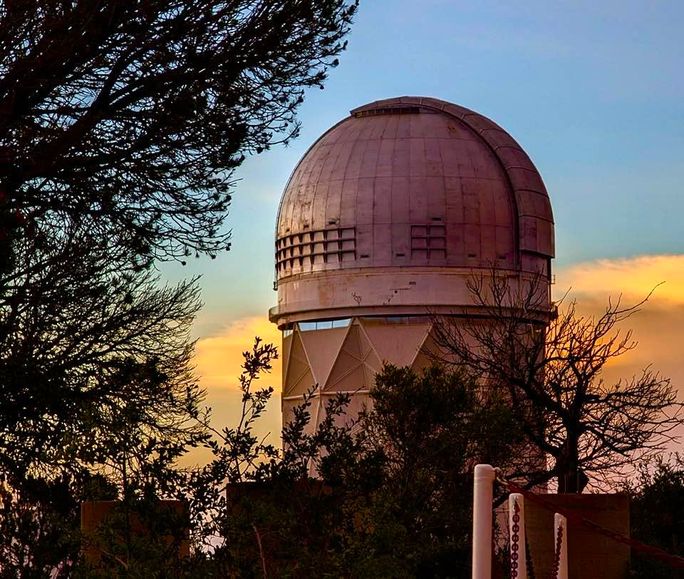
Kitt Peak National Observatory (Photo Credit: Noreen Kompanik)
Stargazing at Kitt Peak National Observatory
Tucson is one of the best places in the country for
observing the night sky due to its exceptionally dark desert skies and the Kitt
Peak National Observatory. Located about 50 miles southwest of Tucson in the
Quinlin Mountains, Kitt Peak sits at almost 7,000 feet above sea level, well
above the surrounding desert. Its elevation, dry climate and distance from city
lights makes it an outstanding location for observing the night sky.
The observatory, an active scientific research facility, is
home to numerous telescopes, including the Mayall 4-meter, one of the largest
optical scopes in the U.S. The surrounding desert has remarkably low light
pollution, making the Milky Way impressive on clear nights. The observatory
offers nighttime observing experiences where visitors can not only learn about astronomy but view celestial objects through various telescopes.
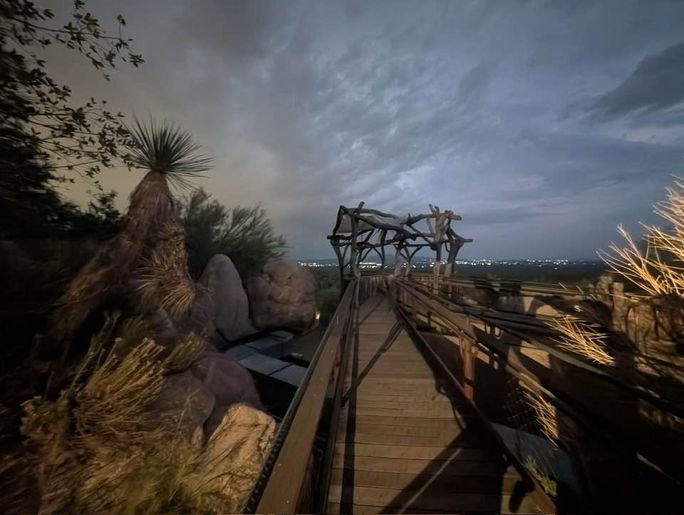
Cool Summer Nights at Arizona-Sonoran Desert Museum (Photo Credit: Michael Kompanik)
Arizona-Sonoran Desert Museum
Founded in 1952, the Arizona-Sonoran Desert Museum combines
a zoo, botanical garden, aquarium, art gallery and natural-history museum into
one expansive outdoor experience devoted to the Sonoran Desert.
Trails wind through native landscapes where visitors can see
mountain lions, Mexican gray wolves, black bears, javelinas, coyotes, bobcats,
birds of prey, reptiles, and hundreds of species of desert plants. The
botanical gardens showcase the remarkable diversity of the Sonoran Desert, from
towering saguaros to colorful wildflowers and smaller plants adapted to extreme
heat and drought.
After dark however, the museum features Cool Summer Nights
every Saturday throughout the summer as the desert’s nocturnal side becomes the
focus with creatures that become more active after sunset. Bats perform aerial
acrobatics in pursuit of dinner, beavers splash in their pond and scorpions
glow green under black light. Each week also offers a weekly theme and during
my visit, ‘Taste the Desert’ celebrated hearty plants and deep-rooted
traditions that nourish the Sonoran Desert.
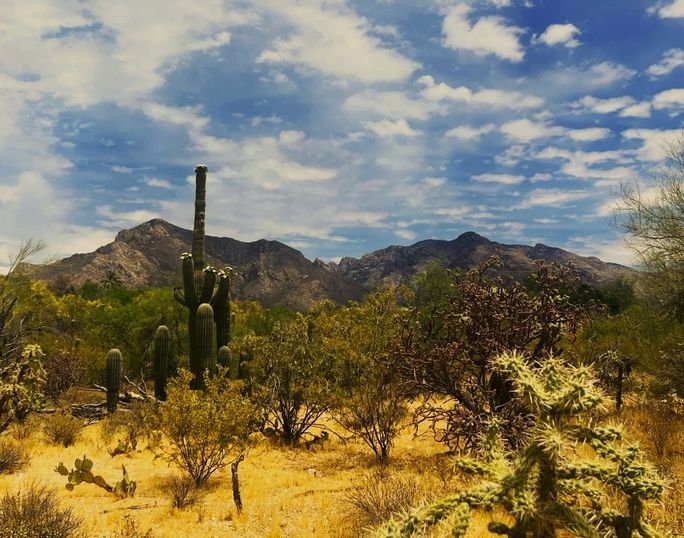
Early evening at Tohono Chul Botanical Gardens (Photo Credit: Noreen Kompanik)
Tohono Chul Botanical Gardens
‘Chillin’ at the Chul’ in Casas Adobes is an intimate summer
nights event held on Friday and Saturday nights after sunset, with live music,
refreshing beverages, family-friendly activities and tasty treats from the
Garden Bistro. Guests can wander the 49-acre botanical garden and nature
preserve that houses collections of native plants, cacti, wildflowers and
Indigenous species after dark and enjoy Tucson’s softer side of the desert
landscape at an easygoing pace.
When summer daytime highs reach over 100 °F, Tucson’s
Sonoran Desert environs offer respite along with other “cool” fascinating
sights and experiences.
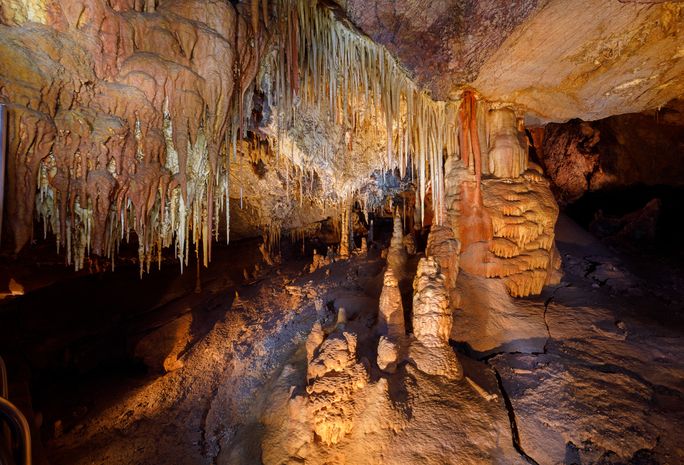
Kartchner Caverns State Park (Photo Credit: Kartchner Caverns State Park)
Kartchner Caverns State Park
Located about 50 miles southeast of Tucson, Kartchner
Caverns is un underground attraction inviting visitors to descend into a living
limestone cave filled with delicate formations that have developed over
hundreds of thousands of years.
The caverns weren’t discovered until 1974 when two Tucson
cavers, Gary Tenen and Randy Tufts were exploring the limestone hills at the
eastern base of the Whetstone Mountains. They kept the discovery secret for
more than three years, concerned that an unprotected cave could be damaged by
visitors. Kartchner Caverns State Park officially opened to visitors in 1999
and today, guided tours take awe-inspired explorers into the caves filled with stalactites,
stalagmites, columns, flowstone, and other intricate formations, along with
seasonal bat activity. The Cavern stays at about 68°F year-round, largely
insulated from Arizona’s extreme seasonal temperatures.
Richard F. Carris Mirror Laboratory at University of Arizona
Those into astronomy will love a tour at the University of
Arizona’s Richard F. Carris Mirror Laboratory where scientists, engineers and
technicians have developed impressive innovations in the construction of large
lightweight mirrors with unprecedented surface accuracy. Interestingly enough,
the lab, where some of the largest and most advanced astronomical mirrors in
the world are made, sits just underneath the student section at the University
of Arizona’s football stadium. Who would have known?
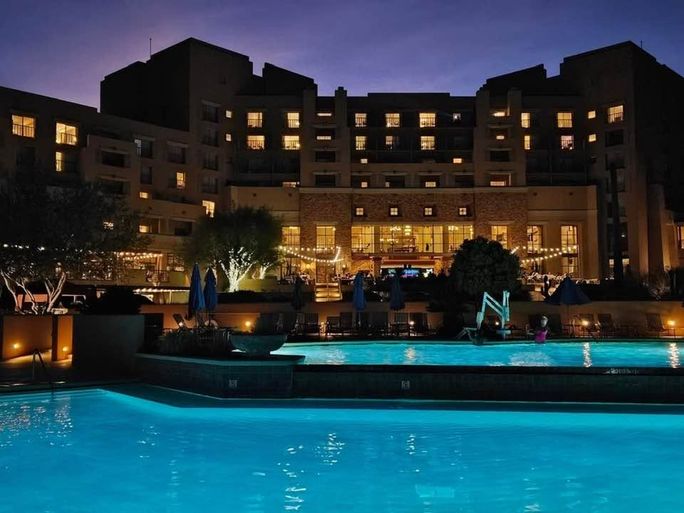
JW Marriott Tucson Starr Pass Resort (Photo Credit: Noreen Kompanik)
JW Marriott Starr Pass Resort
If you’re visiting Tucson in the summer, your best bet is
staying at JW Marriott Starr Pass Resort. Nestled on 50 acres at the base of
Tucson National Park and overlooking the Sonoran Desert and city, the AAA
Four-Diamond property is considered one of Tucson’s premier destination resorts
that feels like a true desert retreat, especially in the summer. The Mitakuye
Oyasin Morning Ritual is a not-to-be-missed experience, a traditional Native
American ceremony that occurs at sunrise, with sounds of a Native American
flute, the opportunity to burn a sage prayer tie and an eagle feather blessing.
Cooling off is easy here with the resort’s reflection pools
and Starr Canyon River, a lazy river where guests can float on inner tubes and
take a exhilarating race down Monsoon Falls waterslide.
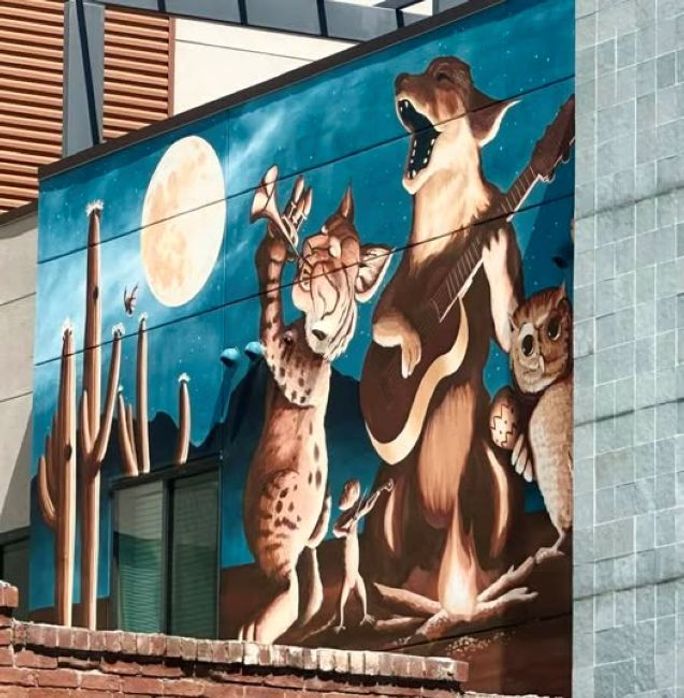
One of downtown Tucson's fun murals (Photo Credit: Noreen Kompanik)
Downtown Nightlife
A Tucson summer night is desert heat giving way to neon,
live jazz, cocktails, live music and people drifting between Congress Street
and Fourth Avenue.
Hotel Congress is one of downtown Tucson’s signature
historic nightlife spots. Built in 1919, the hotel is a beautifully preserved,
quirky Southwest Deco landmark. Its colorful rooms, murals, vintage details and
iconic neon sign represent a strong connection to Tucson’s arts and music
culture. Its history is fascinating, when in 1934, a fire at the hotel led to
the capture of bank robber and organized-crime figure John Dillinger.
The shining star of the Congress Hotel today is The Century
Room, an intimate jazz club that features Hot Jazz Wednesdays with two daily
evening shows and rotating bands. It’s a great way to escape the heat and enjoy
the energetic nightclub side of Tucson.
Fourth Avenue is the more eclectic, funky and slightly
grittier version of Tucson nightlife with tropical tiki bars, alternative/goth
character, nightlife and an astronomy-themed sky bar. The party doesn’t get
started until 8 pm and by 10 or 11, it’s in full steam.
Though summer in the Sonoran Desert can be quite hot during
the day, the city really comes alive when the sun goes down and the
temperatures drop. The desert may define Tucson by day, but after sunset, the
city reveals another side —vibrant, soulful, and unmistakably its own.
For the latest travel news, updates and deals, subscribe to the daily TravelPulse newsletter.
Topics From This Article to Explore


