
by Scott Laird
Last updated: 8:00 AM ET, Sat September 9, 2023
Cultural experiences are generally a big part of any vacation in Hawaii.
The Aloha Spirit that is so often talked about as part of the Hawai’i visitor experience is firmly rooted in Hawaiian culture, but what exactly does that mean?
What is Hawaiian culture? What is not?
And how can visitors tell the difference, to ensure they’re getting an authentically Hawaiian experience?
How To Define Culture
What do macadamia nuts, pineapples, and plumerias all have in common? The answer is that they’re all things that are generally ubiquitous in modern Hawai’i, but are not native to the islands. But does this mean they’re not Hawaiian?
Most cultures have markers that are not native to that culture’s land of origin. It may be difficult to imagine Ireland without potatoes, or Italy without tomatoes, but neither existed in either country prior to European contact with the Americas just over five hundred years ago.
Other cultural markers are outdated—similar to any other culture found around the world. Some Hawaiian cultural practices also faded on a similar timeline to those practices in Europe or the Americas. Slavery ended in Hawai’i shortly after European contact, as did human sacrifice.
What’s important to understand is the origin of cultural practices presented as Hawaiian—and when we use Hawaiian here, it means Native Hawaiian. Many cultural markers presented as Hawaiian today are in fact amalgamations of the cultures that colored Hawaiian history after European contact.
The luau, for example—in its modern format—did not exist in pre-contact Hawai’i. Even the word is a Western invention, derived from the name of a dish (luau refers to the leaves of the taro plant, which are often stewed with chicken, fish, or seafood) that has popularly been served at festive gatherings for meals. A western journalist attended one such gathering in the Kingdom of Hawai’i during the 19th Century, and the name stuck. The modern luau was born in the 1950s as a sort of dinner theatre to entertain the tourists who were then flocking to the islands in record numbers as air transportation grew more reliable.
There are Hawaiian elements to modern luau. Some dishes served (poi or poke) are honestly Hawaiian, while others are introduced (generally anything with pineapple or papaya). Much of the hula performed during the dinner show is Hawaiian, while many of the other dances originate elsewhere in the Pacific, and most luau are quick to point out their origins come from outside Hawai’i.
An important rule for determining the authenticity of culture presented as Indigenous is whether the stories being told are not only about, but also by, the Indigenous People being represented. Appropriately, stories presented as Hawaiian should be told by Hawaiians.
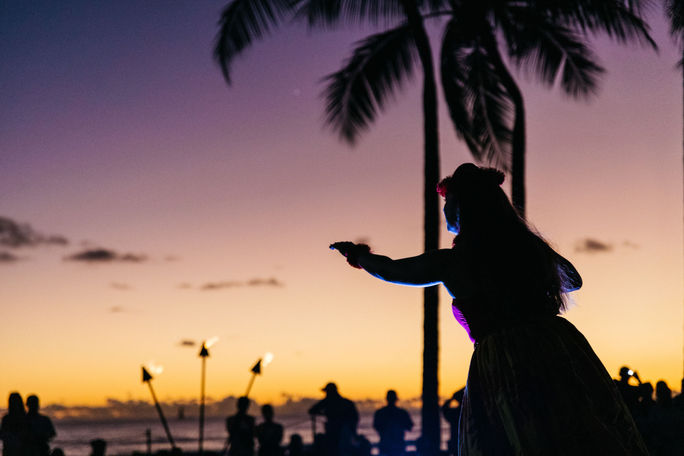
A hula dancer on Waikiki Beach (Photo via Hawaii Tourism Authority)
What’s Hawaiian—And What Isn’t?
The Hawaiian Islands have been in contact with the rest of the world for over two hundred years, so the line between what is authentically Hawaiian and what is not has significantly blurred.
One of the more solid distinctions is linguistic. Hawaiian Pidgin, a Creole language often spoken by Hawaii Locals—Native Hawaiian or otherwise—is wholly separate from the Hawaiian language, although there are loanwords.
Other traditions are Western introductions but are perpetuated as Hawaiian—sometimes even by Native Hawaiians whose cultural education and understanding are often similar to the state’s non-Hawaiian populations. The stories about which ear a flower is worn behind to indicate whether the wearer is single or attached are an American invention (the left ear signifying one is attached is derived from the western tradition of wearing wedding bands on the left hand).
Thankfully, most major resorts and tourism businesses in Hawai’i have Native Hawaiian staffers or cultural practitioners who provide guidance on whether the businesses’ efforts to incorporate Hawaiian culture into their products are pono (correct, proper, or appropriate).
Travelers concerned about the authenticity of their experiences at their resort or other tourism businesses can always inquire how the business vets their cultural practices, and most resorts are happy to engage customers with their cultural consultants.
To make the most of a Hawai’i vacation, travelers should be sure to take part in the cultural offerings made available and ask questions of the providers. Questions about Hawaiian culture that come from an honest desire to understand are always welcome when traveling in the Aloha State.
For the latest travel news, updates and deals, subscribe to the daily TravelPulse newsletter.
Topics From This Article to Explore


