
by Mia Taylor
Last updated: 4:15 PM ET, Thu April 10, 2025
Whether its the critically endangered black rhino, whose numbers have declined 90 percent over the last century, or the fragile population of mountain gorillas of which there are just 1000 left, thousands of species worldwide face extinction from loss of habitat, climate change, and poaching.
Human activity continues to barrel forward, driving wildlife to the brink of existence.
There is a glimmer of hope however. A new report from safari company Go2Africa reveals that tourists are increasingly interested in ethical travel and in tandem with this development, a growing number of travelers are seeking conservation-focused safaris.
Underscoring this reality, it seems Google searches for “ethical tourism” have increased by 242 percent over the past three months, according to research conducted by Go2Africa. Similarly, some 16 million posts on TikTok turn up in response to searching for “eco-tourism.”
These sorts of trends are promising, because when done correctly and ethically, tourism can be a powerful tool to drive conservation, says Go2Africa.
“Responsible tourism helps to fund habitat conservation and wildlife protection, and can have a huge positive impact on the endangered species and local communities,” says Go2Africa travel expert Justin Chapman.
So how can you make sure your next travel experience is an ethical one? (Whether it’s a safari or any other type of travel?)
The most important element of ethical tourism, at least with regard to wildlife, is that it prioritizes the welfare of the animal above all else, and ensures that the animal is not being exploited in any way. (Think: animals being sedated so that tourists can take selfies or dolphins being kept captive so that travelers can swim with them.)
More broadly, ethical tourism also ensures that there’s no damage or destruction to ecosystems, or to the natural habits of animals. Additionally, the proceeds of ethical tourism go directly to supporting wildlife protection and other types of conservation efforts.
These are merely some of the considerations to keep in mind when pursuing ethical travel. Here are 10 more tips from Chapman that can help ensure your travels are a force for good.
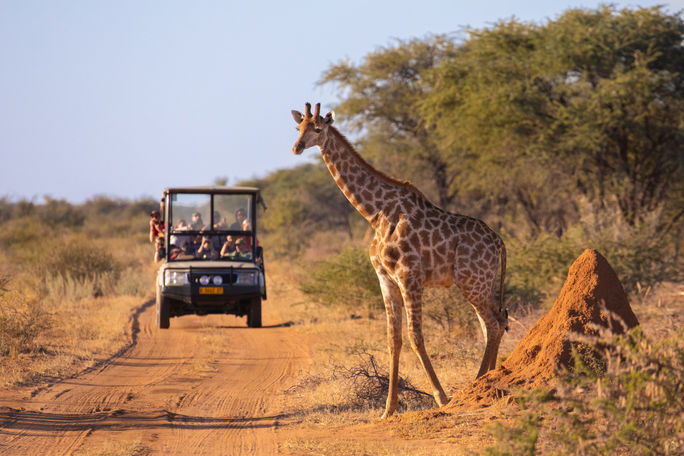
A wild giraffe crosses an African road ahead of a safari vehicle of tourists (Photo Credit: Courtesy AdobeStock)
Tips To Ensure Travel Is Ethical and Responsible
- Hire local guides to support local people who know the land best.
- Stay in community-owned lodges that also employ local people and invest in local communities.
- "Take only photos, leave only footprints"; don't remove anything like rocks, shells, or plants, from their natural environment.
- Keep a safe distance and respect the space of the animals. Always follow the guides instructions, and don't ask them to get you closer than you should to get a better photo.
- Avoid excessive vehicle use; tours that use electric vehicles are more sustainable, but walking safaris can cause less damage to the animals’ natural habitats.
- Follow the rules of the parks - no loud noises, no feeding animals, and no littering.
- Respect local cultures; learn about their local traditions, customs, and language. Be mindful of dress codes, especially in rural or religious countries, and always ask for permission if taking photos of locals.
- Instead of imported, mass produced souvenirs, buy authentic handmade food and crafts that are made by local people, but be wary of products made from things like ivory that come from endangered animals.
- Rather than simply sightseeing, consider volunteering with a conservation group.
- Consider traveling during off-peak times of the year. This means visiting a country or region in the low season, which helps reduce overcrowding and the strain on animals and the environment. Taking this step also helps local economies by spreading tourist revenue throughout the year.
One last important tip from Chapman, with regard to wildlife tourism specifically. It's important to always ask yourself a series of important questions before participating in a wildlife experience. The questions include:
"Are the animals in their natural habit? Or
are they kept in enclosures for tourist entertainment?"
"Does the
organization have a clear mission for rehabilitation and conservation?"
"Are the interactions natural, or do they involve taking selfies with the
animals, bottle-feeding cubs, or riding elephants?"
If the answer to any of these questions is
no, then the tour or experience is likely be unethical, and it might be a good idea to
look for something different, says Chapman.
For the latest travel news, updates and deals, subscribe to the daily TravelPulse newsletter.
Topics From This Article to Explore


