All-inclusive resorts with top sustainability
programs are redefining luxury travel by combining comfort with
environmental responsibility.
Sustainability is the idea of meeting present needs without
compromising the ability of future generations to meet theirs —a concept
formalized in the United Nations’s Brundtland Report.
But what factors play into being considered ‘sustainable?’
For
travel and resorts, sustainability means more than just ‘being green.’ It
includes sourcing food locally, minimizing energy use and waste, conserving
water, reducing pollution, protecting ecosystems, contributing positively to
the surrounding community and earning independent certifications.
Let’s look at some ways all-inclusive resorts around the
world are prioritizing sustainability.
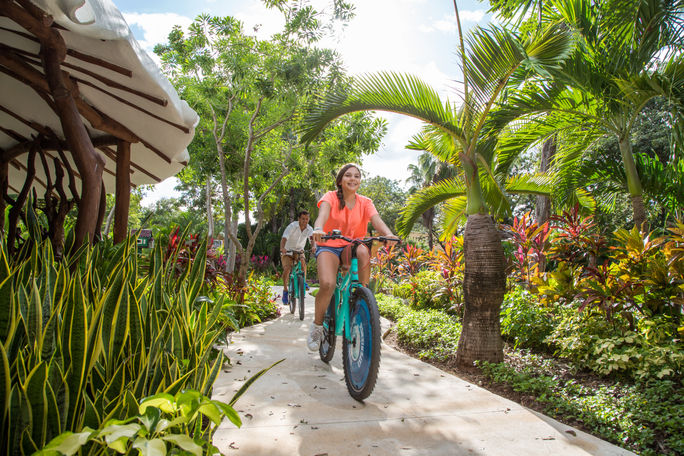
Biking at Sandos Playacar (Photo Credit: Sandos Hotels & Resorts)
Sandos Hotels & Resorts, Mexico
Sandos Caracol is the flagship for sustainability within the
portfolio, built around the Riviera Maya’s natural jungle and cenote systems
rather than replacing them. It has been repeatedly Rainforest Alliance
certified and Travelife Gold certified, signaling strong environmental and
social practices.
Guests can participate in eco-activities like wildlife
tours, tree planting initiatives, cenote conservation, cultural experiences
with local Maya communities, and learn about responsible travel firsthand. The
resort has also been recognized with industry awards for its green hospitality
efforts.
While Sandos Playacar is known as a beachside all-inclusive
favorite, it also shares in Sandos’ sustainability framework, including
Rainforest Alliance and Travelife Gold certifications, participating in waste
reduction, recycling, and guest-oriented eco programs alongside the rest of the
brand.
Set in the Hotel Zone of Cancun, Sandos Cancun is Rainforest
Alliance certified resort. Sustainability includes responsible resource
management and opportunities for guests to engage in eco-aware activities
during their stay.
Sandos Finisterra Los Cabos property has also achieved
Rainforest Alliance certification. Along with social sustainability commitments
through the Sandos Foundation and environmental protocols on energy, waste, and
community engagement, Finisterra reflects how all Sandos’ Mexico properties are
aligned with broader sustainable tourism principles.
Hilton Cancun
Hilton Cancun is uniquely set between a protected coastal
mangrove ecosystem and the Mayan shoreline, offering guests an immersive
experience in one of Mexico’s most biodiverse regions. The resort operates
harmoniously with its surroundings, featuring more than 50 wildlife crossings
and tunnel systems that allow native species, including turtles and crocodiles,
to move safely through the area. Seawater desalination and the innovative reuse
of treated wastewater help reduce environmental impact while nourishing nearby
mangroves.
Through Hilton’s LightStay program, the property tracks
energy, water, waste, and carbon emissions, including meetings and events. With
dedicated leadership guiding ecosystem preservation and creative initiatives
like repurposing collected seaweed into nutrient-rich resources, Hilton Cancun
exemplifies responsible, forward-thinking hospitality.

Dining at Hilton Cancun (Photo Credit: Hilton Hotels)
Journey Beyond’s Sal Salis Ningaloo Reef
Sustainability is a priority at Sal Salis, with 16
eco-luxury safari tents designed for minimal impact, just meters from the
largest fringing reef in the world. It’s luxury as nature intended, with the
brand's 'eco-luxury' namesake meaning that guests can enjoy all the key
comforts of an all-inclusive while, leaving barely a footprint in the sand
behind.
Constructed above ground to protect the flora, fauna and
sand hills, and equipped with boardwalks to prevent soil erosion, Sal Salis is
committed to protecting the prolific beauty of the Ningaloo Reef and Cape Range
Peninsula.
The resort operates under a lease agreement with Western
Australia’s Parks and Wildlife Service. In addition to park entrance fees, five
percent of the resort’s turnover goes to Western Australia’s Department of
Biodiversity, Conservation and Attractions, Parks and Wildlife Service to
assist in their conservation work directly in the Cape Range National Park.
Additionally, Sal Salis is closed from mid-November to mid-March to allow for
the region to fully recover following the heavy tourist season.

Sal Salis Ningaloo Reef (Photo Credit: Journey Beyond)
Fairmont Mayakoba
This all-inclusive optional resort in Riviera Maya, Mexico
is considered one of the stronger sustainability-focused resort developments in
Mexico in a region where many resorts historically destroy local ecosystems.
Fairmont Mayakoba’s development was designed to protect
mangroves, lagoons and jungle habitats. During construction, thousands of trees
were relocated instead of cleared. Mangroves are activity preserved because they
act as natural water filters and biodiversity. Water recycling systems reuse
treated wastewater for irrigation, energy use is monitored and optimized with
efficiency tech and waste is sorted, recycled and composed on site. The resort’s
certifications include Green Key, Distintivo S (Mexico’s sustainability
certification), and Preferred by Nature.
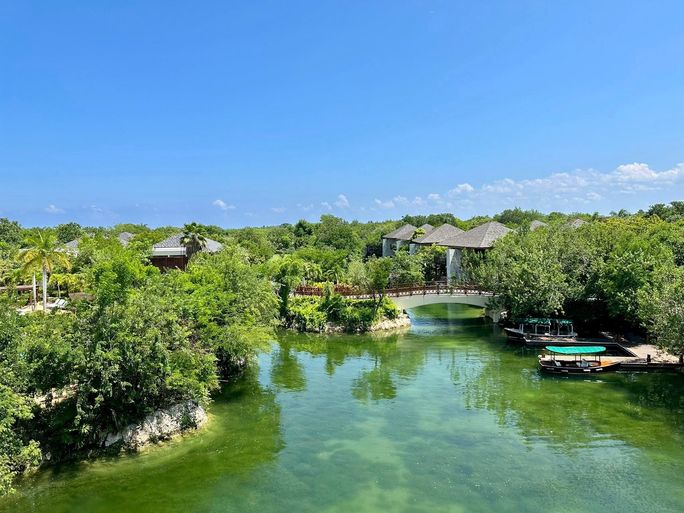
Fairmont Mayakoba, Riviera Maya (Photo Credit: Noreen Kompanik)
Turtle Island, Fiji
This South Pacific resort with only 14 villas on the entire
island is often held up as a model of ‘regenerative luxury.’ The property runs
on solar energy, composts food waste, and produces much of its own food.
One of the most impressive parts of Turtle Island’s story is
that the island was ecologically damaged before the resort even existed. But
thanks to long-term reforestation, over 5,000 trees have been planted to
restore native forest, rebuilding biodiversity, preventing soil erosion and
recreating natural habitats for native wildlife. An active sea turtle
conservation program works in partnership with the World Wildlife Foundation.
Most of the food is grown on the island utilizing fruit
trees and hydroponic gardens. Local fishing assists in self-sustenance. Building
is done with local materials and reclaimed wood, drastically reducing the
environmental footprint compared to typical all-inclusive resorts.
For the latest travel news, updates and deals, subscribe to the daily TravelPulse newsletter.
Topics From This Article to Explore


