Europe’s palaces are special as they play an important
role in the cultural, historical and political background of their countries.
These architectural wonders are filled with charm, history and artifacts
offering glimpses into their incredible past and stories of those who once occupied
these opulent
places.
Make sure to have your camera or cell phone ready to capture
some of the most awe-inspiring structures you’ll ever see when you visit.
Here are some of our must-see European
favorites that will you leave you with long-lasting memories.
The Palace of Versailles, France
Château de Versailles is one of the world’s most renowned and
beautiful royal palaces, its structure and stunning gardens the symbols of the
grandeur and extravagance of the French monarchy, especially during the reign
of King Louis XIV, the “Sun King” who transformed Versailles from a 1624
hunting lodge into a grand royal residence.
As a masterpiece of French classical architecture, the most
famous section of the palace is undoubtedly the Hall of Mirrors, a long luxurious
corridor adorned with 17 massive mirrors and crystal chandeliers, making it one
of the most iconic and beautiful palace rooms in the world.
The Gardens of Versailles are equally impressive as the
palace itself, covering 800 acres and including awe-inspiring flower beds,
fountains, statues and man-made lakes. The Grand Canal is a long, artificial
waterway that cuts through the gardens, once used for royal boating parties.
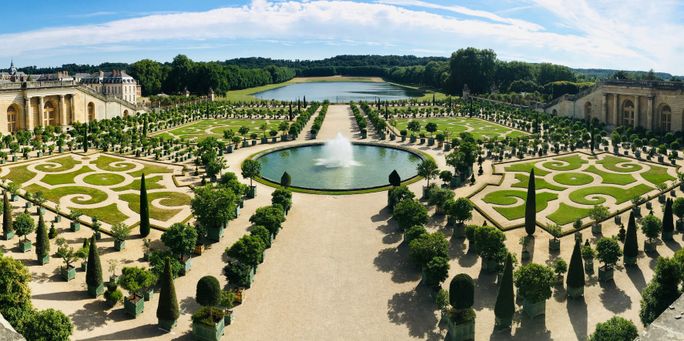
Gardens at the Palace of Versailles, France. (photo via Unsplash/Armand Khoury)
Schönbrunn Palace, Austria
This stunning landmark in Vienna, Austria was once the
summer residence of the Habsburgs and stands as one of the most important
cultural and architectural monuments in Austria.
Empress Maria Theresa transformed the palace and its
surrounding gardens into a lavish imperial residence, a UNESCO World Heritage
site, with Baroque and Rococo architecture, impressive symmetrical design,
grand interiors and over 1,400 rooms and the oldest zoo in the world.
Buckingham Palace, England
The official residence and administrative headquarters of
United Kingdom’s monarch, Buckingham Palace is as well-known as the Palace of
Versailles and has been a focal point of British royal ceremonies and state
functions for over a century.
The palace is a large, stunning building designed in the
Neoclassical style with an iconic balcony overlooking the forecourt, where the
royal family often appears during public events. One of the most famous
ceremonies, the Changing of the Guard takes place daily and lasts about 45
minutes.
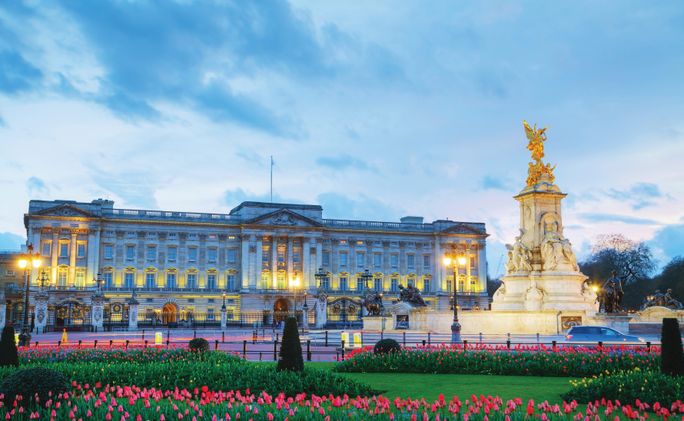
Buckingham Palace, London, U.K. (photo courtesy of Collette) (Photo Credit: Provided by Collette)
Alhambra, Spain
One of the most famous and visited monuments in Europe, the
Alhambra, located in the Andalucian city of Grenada, is a historic palace and
fortress renowned for its stunning Islamic architecture and intricate artwork.
Its setting on an elevated plateau with the snow-capped peaks of Sierra Nevada
mountains as a backdrop makes it one incredible sight to behold.
The Alhambra’s construction began in 1238 during the reign
of Muhammed I and later expanded by his descendants. What makes the Moorish palace
so unique is that aside from its Islamic architecture, it also combines
elements from Christian and Jewish religions as well. Key features include
delicate stucco work, grand courtyards, reflecting pools and beautifully tiled
walls. In 1984, the Alhambra was designated as a UNESCO World Heritage Site, a
testament to its historical and cultural importance.
Doges Palace, Italy
The Doges Palace (Palazzo Ducale) is one of the most famous
landmarks in Venice, Italy, positioned along Piazza San Marco (St. Mark’s
Square). This stunning Gothic building symbolizes Venice’s past opulence served
as the residence of the Doge, the supreme ruler of the Republic of Venice, and the
seat of government of the Venetian Republic.
The Palace dates back to the 9th century though
the current structure was built and expanded over several centuries beginning
in the 14th century. The Gothic architecture is stunning with its
Venetian influences and distinctive elements like pointed arches, ornate stone
carvings and decorative columns.
Inside, the palace is a treasure trove of art and history. The
Grand Council Hall, where the Venetian government would meet, is impressive
with its massive paintings, including The Paradise by Tintoretto.
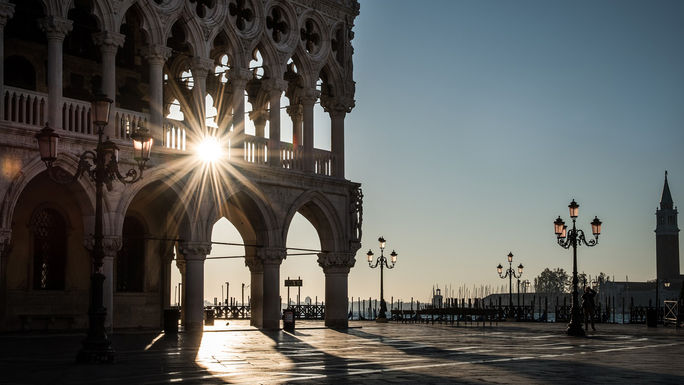
PHOTO: Doges Palace, Venice (photo via Pixabay)
Pena Palace, Portugal
You know you are in Sintra when you see one of the most
iconic landmarks in Portugal, the Pena Palace (Palácio da Pena). The palace is
a magnificent example of 19th-century Romanticism, constructed on
the site of any old monastery which had been abandoned and partially destroyed
by an earthquake in 1755.
A striking mix of architectural styles that includes Gothic,
Moorish, Renaissance and Menueline (Portuguese late Gothic), vibrant, colorful
exterior with hues of yellow, pink and red, towers and turrets make this
structure resemble an almost fairytale castle/palace. The interior is equally
enchanting with its opulent furnishings, elaborate décor and impressive
historical artifacts.
Popes Palace, France
Popes did not always live in Vatican City.
One of the most impressive and historically significant
building in Avignon, the Palais des Papes served as the residence of the popes
during the 14th century when the papacy was temporarily relocated
from Rome to Avignon.
The imposing palace, now a UNESCO World Heritage Site,
represents an example of Gothic-Romanesque architecture with ramparts, towers,
chapels and vast halls. The most notable feature of the palace is the huge
fortified exterior, which includes tall, square towers and massive battlements
designed to protect the popes from potential threats.
The Pope’s Private Apartments are still lavishly decorated,
though many of the original frescoes and decorations have been damaged or
removed over time.
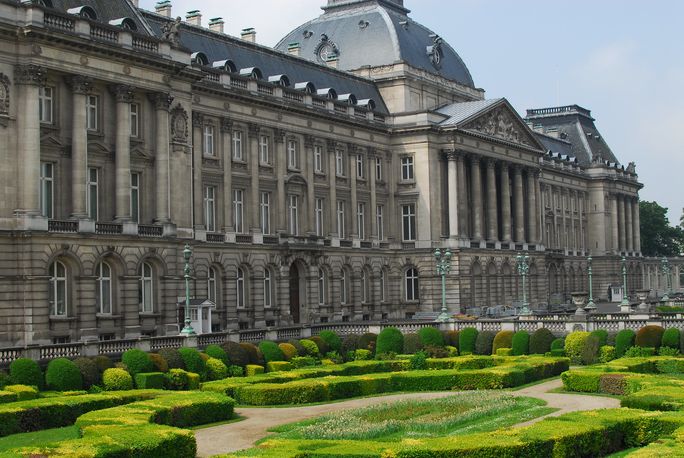
Royal Palace in Brussels, Belgium. (Photo Credit: martin_vmorris / Flickr)
Royal Palace of Brussels, Belgium
Located in the heart of Belgium’s capital, this neoclassical
architectural gem is the official palace of the Belgian royal family, dating
back to the 18th century.
The grand and imposing façade faces Parc due Bruxelles
(Brussels Park) and the National Congress Building and features classical
elements including columns, pilasters and domed roofs. It is particularly
gorgeous at night. The luxurious interior includes richly decorated rooms, the
most notable The Throne Room, a grand hall used for formal events and The White
Room and Hall of Mirrors with jeweled chandeliers used to host high-profile
functions.
Drottningholm Royal Palace, Sweden
One of Sweden’s most important and beautiful residences sits
on the island of Lovön, just outside Stockholm. Built in 1600, Drottningholm is
the best-preserved palace/castle of Sweden, inspired by and modeled after the
French palace of Versailles.
The Baroque structure still serves as the King and Queen’s
permanent residences and the setting for official receptions. In 1981, the
palace was added to the UNESCO World Heritage List. Visitors love walking
through its meticulous French-style parterres, English-style landscaped
gardens, and wandering through a baroque maze along with impressive sculptures
and fountains.
Another fascinating feature, The Drottningholm Court
Theatre, located near the palace, is one of the best-preserved 18th-century
theatres in Europe. It was built in 1766 and is still used for performances,
including baroque opera and theater productions.
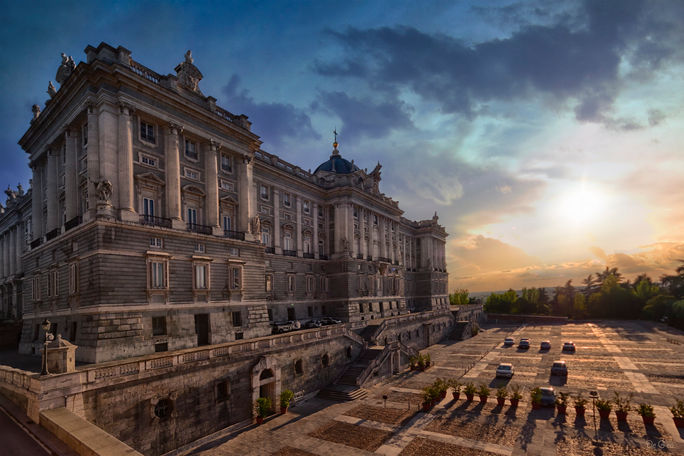
Palacio Real in Madrid, Spain. (Photo Credit: Jose Ramirez / Flickr)
Palacio Real, Madrid, Spain
Situated in the heart of Madrid, the Palacio Real (Royal Palace) was
originally built on the site of the Alcázar of Madrid, a fortress-palace that
was destroyed by a fire in 1734. The impressive building now serves as the
official residence of the Spanish Monarch. One of the largest palaces in
Europe, the magnificent structure overlooks the picturesque Plaza de Oriente
and the Sabatini Gardens.
The Baroque building includes over 3,000 rooms, lavish
reception halls adorned with large domes, intricate carvings, statues,
balconies, lavish detailing, frescoes and stunning chandeliers. Key rooms
visitors need to see include The Throne Room, The Hall of Mirrors, The Royal
Chapel, The Royal Armoury and The Crown Room (where the royal crown jewels are
displayed).
For the latest travel news, updates and deals, subscribe to the daily TravelPulse newsletter.
Topics From This Article to Explore


