On Veterans
Day, November 11, visitors can enjoy free admission to all national parks
across the United States—the final opportunity this year to explore some of
America’s most breathtaking landscapes at no cost.
While it’s the annual
calendar’s last day of no-cost admission for the general public, veterans,
active service members and their dependents, and Gold Star families can get
annual and lifetime Military
Passes for free to visit at any time. Fourth graders and U.S. citizens or
residents with permanent disabilities also qualify for year-round free
admission.
“We’re
excited for members of the public to discover national parks on Veteran’s Day,
and especially invite current military and their dependents, veterans, and Gold
Star Families to get a Military Pass to get free entrance to parks
any day," National Park Service Director and Navy veteran Chuck Sams said
in a statement.
"As a veteran, it is fantastic to see other veterans and their loved ones
explore parks, learn about our nation’s history, and find peace in the
outdoors.”
According
to USA
Today, about one-quarter of the parks within the National Park Service (NPS)—including
some of the most popular—typically charge entrance fees on most days, with a few
exceptions. On certain special dates and federal holidays, like Veteran’s Day,
fees are waived, and there were six such days in 2024. Sometimes, such dues can
cover multiple days’ entry and, when charged per vehicle, also cover the cost
of admission for multiple visitors. For those planning a future visit, the NPS’
website has details on which parks require
entrance fees and what kind.
The U.S. is home
to 431 sites within the National Park System (NPS), but only 63 of these are
officially designated “national parks”, such as Yosemite, Yellowstone and the Grand
Canyon. With a limited number of actual national parks, you won’t find one in
every single state, although some states have multiple.
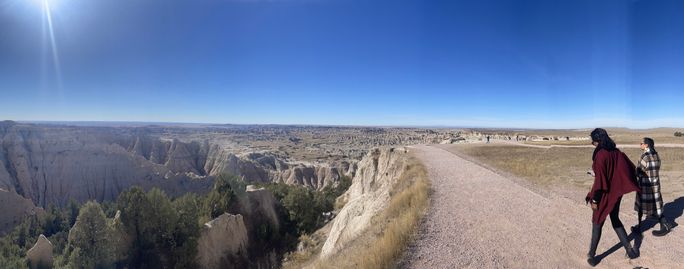
Badlands National Park, South Dakota. (Photo Credit: Patrick Clarke)
However, many other
sites managed by the NPS consist of historical monuments, battlefields,
seashores and parkways, which offer a wide variety of outdoor recreation experiences
across all 50 states. To find the closest national park or a specific type of
site, visitors can use the NPS’ “Find a Park” feature online.
Why is it that some
national parks charge entrance fees? Dues collected from visitors are vital for
funding park maintenance and upholding visitor services. The NPS reports that
at least 80 percent of the revenue from park fees stays in the park where it’s
collected, while the remaining 20 percent supports other parks with no fee
structure of their own or that generate only limited revenue.
Funds might also
be used to finance infrastructural improvements, such as the accessibility
projects underway at Acadia National Park or boardwalk repairs at Everglades
National Park; or for preservation work on historic structures, such as the
Many Glacier Hotel at Glacier National Park. You can see for yourself how these
revenues are being applied on a dedicated NPS webpage, where you can
search for specific parks via an interactive map.
For the latest travel news, updates and deals, subscribe to the daily TravelPulse newsletter.
Topics From This Article to Explore


