
by Mark Chesnut
Last updated: 7:00 AM ET, Mon August 10, 2026
For LGBTQ+ travelers heading to some parts of the world, planning
a vacation is about more than just finding pretty scenery and interesting
activities. It's also about safety and comfort. Approximately one-third of
countries around the world criminalize LGBTQ+ people, according to the Human Dignity Trust, while others
may simply not provide an overtly welcoming ambiance for diverse travelers.
But that doesn’t mean these countries can’t be visited,
according to several LGBTQ+ travel experts.
“If we told LGBTQ+ travelers to avoid every destination that
isn't fully legally and culturally supportive, they’d have nowhere to go,
because a queer utopia doesn’t exist,” said Meg Ten Eyck, CEO of EveryQueer, an LGBTQ+ travel content, tour
and event company. “We'd be cutting them off from some of the most beautiful,
bucket-list-worthy experiences on the planet — the beaches of Bali, the
Pyramids of Giza, safaris across East Africa, the medinas and food markets of
Morocco. That’s a real loss, and it’s not one we think queer travelers should
have to accept.”
Careful research about laws, societal norms and comfort
levels is important. Experienced tour operators and travel advisors can also
play a key role in helping LGBTQ+ travelers build a memorable and safe
trip.
Experience Counts
Ten Eyck noted that
her team has traveled extensively in places where LGBTQ+ identities are illegal
or discouraged. “EveryQueer specializes in travel to anti LGBTQ+ destinations,”
she explained. “We've gone to destinations where it's illegal to be LGBTQ+, and
to even more places where it's simply culturally frowned upon. And here's the
thing that surprises people: we have never personally experienced anti-LGBTQ+
bias while traveling in any of those destinations. Locals are, more often than
not, warm, hospitable, and far more interested in sharing their culture than
policing anyone's identity. And that is true for our gender nonconforming staff
as well as our gender conforming staff.”
“It's a reminder that a country's laws on paper don't always
reflect the reality of how people are treated on the ground, and that
assumptions about which places are 'safe' or 'unsafe' for queer travelers
deserve more nuance than a headline or a legal map can offer,” she said.
Brand G Vacations
is another LGBTQ+ tour operator with extensive experience in this type of
travel. “Brand g has expanded our offerings over the years, adding destinations
that push the envelope a little, but only where we can do it safely and with
proper preparation," said Mike Mumford, the company's general manager. “We
look at each destination's actual conditions on the ground, including
enforcement patterns, police behavior and the real experience of LGBTQ+
visitors and locals, rather than ruling a place out based on the law alone.”
Also well-versed at guiding LGBTQ+ groups are Inclusive Morocco, which specializes
in travel around Morocco, and Tel Aviv-based Bein Harim Tourism Services, which
offers tours to Jordan and other Middle Eastern destinations. “While many
LGBTQ+ travelers long to explore nearby landmarks like Petra, Cairo or
Bethlehem, independent travel there feels too daunting,” said Arthur Aharanov,
Bein Harim’s vice president of marketing. “To bridge this gap, regional tour
operators act as a trusted bridge by utilizing managed group tours.”
Travel as a Positive Catalyst
Carefully managed LGBTQ+ travel can also benefit local
communities, according to Mumford and Ten Eyck. After all, queer travelers
support hotels, guides, restaurants and community organizations, and personal encounters
can challenge stereotypes.
Mumford, for example, recalled heterosexual guides in
Mongolia who expected young gay partygoers on one of his company’s tours but
instead found them to be mature gay men, many in decades-long relationships. “Trips
like this have helped families in Mongolia understand and respect our community
a little more, one conversation at a time,” Mumford said.
Ten Eyck sees similar potential in ordinary exchanges. “When
an LGBTQ+ traveler shows up in a less-friendly destination, when they check
into a hotel, hire a local guide, sit down to dinner with a host family,
they're often creating exactly that kind of contact,” she said.
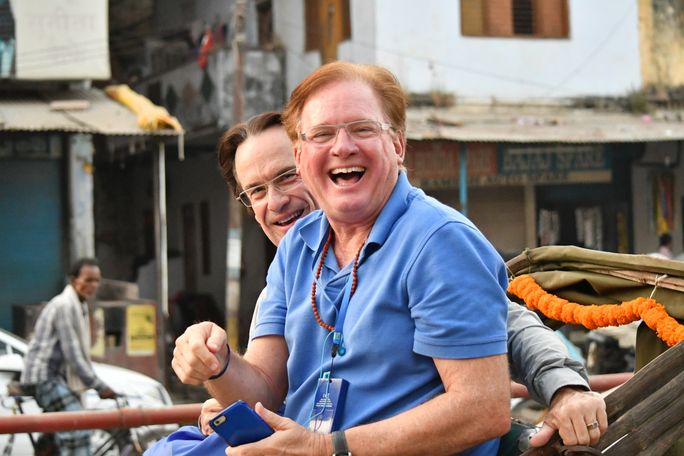
India. (Photo Credit: Brand G Vacations)
How to Prepare and
Plan
Mumford advises LGBTQ+ travelers to consider booking with a
reputable tour operator when visiting destinations that may not be welcoming.
He also offers advice for those going on their own. “Keep a low profile rather
than traveling with obvious rainbow branding,” he advised. “Keep groups small
and private, focus on culturally grounded sightseeing and events, look for
queer-owned or queer-supportive accommodations and work with a travel agency
that understands human rights conditions on the ground.”
He also stresses the benefits of group travel, with fellow
travelers, vetted guides and local experts who understand what LGBTQ+ travelers
need. “In countries that may frown on homosexuality for religious or cultural
reasons, we create what we call an LGBTQ+ bubble, so our guests can experience
these amazing cultures without feeling any oppression,” he said.
For Ten Eyck, preparing for such a trip may involve
difficult questions. “My best advice starts with self-awareness before it
starts with a packing list,” she said. “This is a bit touchy and politically unpalatable
in our community, but every LGBTQ+ traveler needs to honestly ask themselves:
can I pass as straight or cisgender in this part of the world if I need to? And
just as importantly, am I comfortable doing that, even temporarily? That's not
a comfortable question, but it's an essential one. The answer is different for
everyone, and it should shape everything from how you dress to whether you hold
your partner's hand in public to how you answer questions about your
relationship status.”
Research is also essential, Ten Eyck added. “Use resources
built specifically for this, like EveryQueer's travel guides, IGLTA's listings
of vetted, LGBTQ+-friendly operators and accommodations and don't stop there.
Seek out people who share your identity, whether that's your sexual
orientation, gender identity, race, nationality or all of the above, and who've
actually been to the destination you're considering.”
“Planning this way isn't about being fearful,” she said. “It's
about being prepared enough that you can actually relax and enjoy where you are.”
For the latest travel news, updates and deals, subscribe to the daily TravelPulse newsletter.
Topics From This Article to Explore


