Travelers heading
to or through the Middle
East are facing growing uncertainty this week, as a number of major
international airlines suspend or adjust services across the region due to
rising geopolitical tensions and updated safety guidance.
The disruptions
come amid reports of increased military activity in the Gulf and sharper
rhetoric between the United
States and Iran. According to aviation officials and airline statements,
the changes are largely precautionary, but they’re already affecting key routes
to parts of the Gulf and surrounding countries.
Why Airlines
Are Changing Routes
Aviation risk
assessments intensified after President
Donald Trump confirmed that a “big flotilla,” led by the USS Abraham
Lincoln strike group, is moving toward the region. Conde
Nast Traveller reported that this type of military escalation often
triggers heightened caution among airlines, especially due to concerns about
passenger aircraft being misidentified in regional defense zones.
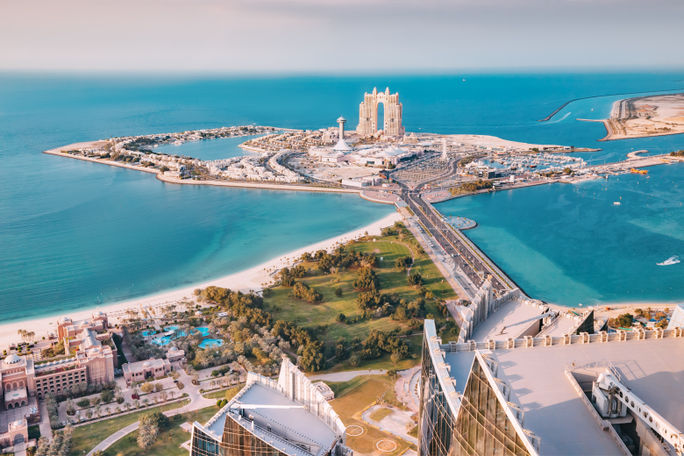
The Marina Village in Abu Dhabi, United Arab Emirates. (Photo Credit: Adobe Stock/EdNurg)
Which Airlines
Are Affected?
Several major
carriers across Europe,
North
America and Asia have
made operational changes.
- KLM
has suspended all flights to Tel Aviv, Dubai,
Dammam and Riyadh and is avoiding the airspace of Iran, Iraq and Israel
entirely.
- Lufthansa,
Swiss International Air Lines and Austrian Airlines have stopped overnight
services to Tel Aviv and Amman, limiting flights to daytime only and canceling
flights to Tehran through at least late March.
- Air
France briefly paused select routes last week, including Paris–Dubai,
before resuming them while continuing to monitor the situation.
- British
Airways temporarily halted overnight flights to Dubai and earlier suspended
flights to Bahrain (where the U.S. Navy’s Fifth Fleet is stationed) before
restarting service.
- In
North America, United
Airlines has paused flights to Israel until further notice.
- Low-cost
carriers are also feeling the impact. UK-based Wizz
Air is now making technical fuel stops in Cyprus or Greece for some
westbound flights from Dubai and Abu Dhabi due to restricted airspace. IndiGo,
India’s largest budget airline, has suspended flights to and from Almaty, Baku,
Tashkent and Tbilisi, citing safety concerns linked to Iranian airspace.

Riyadh, Saudi Arabia. (Photo Credit: wajdram / Adobe Stock)
What About Regional
Airlines?
While big regional
players like Emirates
Airlines and Qatar
Airways are still operating, many of their flights are taking longer routes
to avoid restricted zones, adding anywhere from 30 to 90 minutes to travel
times. Low-cost carrier Flydubai has canceled multiple routes to Iranian
cities, including Tehran, Mashhad and Shiraz.
Which
destinations are most impacted?
The disruptions
are hitting major regional hubs and transit corridors:
- Tel Aviv: Widespread suspensions by Western
airlines
- Dubai and Abu Dhabi: Select evening suspensions and longer
flight times
- Riyadh and Dammam: Targeted cancellations by European
carriers
- Amman: Restricted to daytime-only flights by
Lufthansa Group
- India: Risk of cancellations due to blocked
airspace routes
- Iranian and Iraqi airspace: Now avoided entirely by many Western
airlines

Sunset on Skyline of Amman and old town with a view over historic capital of Jordan (Photo Credit: Goway Travel/mbrand85/Adobe Stock)
What Regulators
Are Advising
Regulators are
also playing a key role in shaping airline decisions. The European Union
Aviation Safety Agency (EASA) recently issued a Conflict Zone Information
Bulletin (CZIB) warning advising airlines to avoid Iranian airspace entirely,
citing an “increased likelihood of misidentification” if military activity
escalates.
What This Means
for Travelers
For travelers, the
impact is already being felt in several ways. Some flights now include
unexpected fuel stops, particularly on budget carriers. Others are limited to
daytime departures, especially to destinations like Jordan
and Israel. Even flights that are still running may take longer due to
rerouting.
Most airlines are
offering refunds or flexible rebooking options, but policies vary widely.
Travelers connecting through major hubs like Dubai or Riyadh are being urged to
keep a close eye on schedules and allow extra time for possible delays.

Tel Aviv skyline. (Photo Credit: rudi1976 / Adobe Stock)
How Long Could
Disruptions Last?
As for how long
this will last, it’s still unclear. EASA’s advisory remains in place through
mid-February 2026, but several airlines have suggested disruptions could
stretch well into the spring, depending on how long military forces remain in
the region and whether tensions escalate further.
For the latest travel news, updates and deals, subscribe to the daily TravelPulse newsletter.
Topics From This Article to Explore


