Since the beginning of the 21st
century, the United States has watched at least eight commercial airline brands
disappear in a series of mergers in the industry.
The result is the surfacing
of three dominant carriers: United Airlines, Delta Air Lines, and American
Airlines. These mergers, along with the strength of Southwest Airlines, have
raised concerns about the benefits for passengers, echoing the oft-raised
question of whether we are better off now than we were, say, a decade ago, at
least as flying is concerned.
Into that scene comes JetBlue Airways, now seeking to buy
Spirit Airlines, which is well-known as the nation’s largest ultra-bargain-seat
air carrier. If it passes, that deal would make JetBlue the fifth-largest
airline in the country and add another contraction to a notably shrinking
industry.
Similarly, the sector
recently rattled to another potential shake-up in numbers: that of Alaska Airlines' surprise announcement this month to
purchase Hawaiian Airlines for $1.9 billion, including debt. With those two
customer-facing brands merged, Alaska would be the fifth largest in the U.S.
with a five percent share of seats – or the sixth largest if the JetBlue-Spirit
deal goes through.
To that end, 2024 could be a banner year of milestones in mergers
and acquisitions for airlines worldwide. In
Europe, at least three legacy carriers are also looking to change the airline
landscape: Lufthansa hopes to acquire a stake in Italian flag carrier ITA
Airways; International Airlines Group (parent company of Aer Lingus, British
Airways, Iberia, Level and Vueling) hopes to gain approval for its Air Europa
deal to strengthen its Latin American network and Madrid hub: and Air
France-KLM is poised to take a stake in Scandinavian Airlines (SAS). And it is
reported that TAP Air Portugal has seen interest from a cornucopia of carriers
as it moves toward privatization.
For Alaska, such a deal would
be the second since 2016 in a mad game of the last Russian doll standing.
Alaska acquired Virgin America seven years ago and gives the U.S. Justice
Department an additional stack of work to get through these next many months in
trying to determine the efficacy of this marriage on the competitive airline
industry landscape and what it will mean for consumers in an ever-thinning
space.
As the world airline industry pulls out of the pandemic following its
second set of bailouts in some dozen years, the wins have been staggering. According to an announcement earlier this month, the
International Air Transport Association (IATA) noted net profits of $25.7
billion for the global airline industry, with operating gains reaching a record $49.3 billion. The IATA says North American carriers are set to
collect a combined $14.4 billion in profits (up four percent).
Both airline
boards have approved the Alaska-Hawaiian acquisition plan and are looking to
wrap up in 12 to 18 months, pending regulatory and Hawaiian shareholder
approval.
“This combination is an
exciting next step in our collective journey to provide a better travel
experience for our guests and expand options for West Coast and Hawai‘i
travelers,” said Ben Minicucci, Alaska Airlines CEO, in a press release.
What Matters
Alaska's proposed Hawaiian
Airlines merger will put to the test whether further airline consolidation
should be allowed. The current administration is seeing the DOJ launching lawsuits
to prevent the planned $3.8 billion merger between JetBlue and Spirit Airlines,
both now competing in the low-cost carrier space, to become one airline.
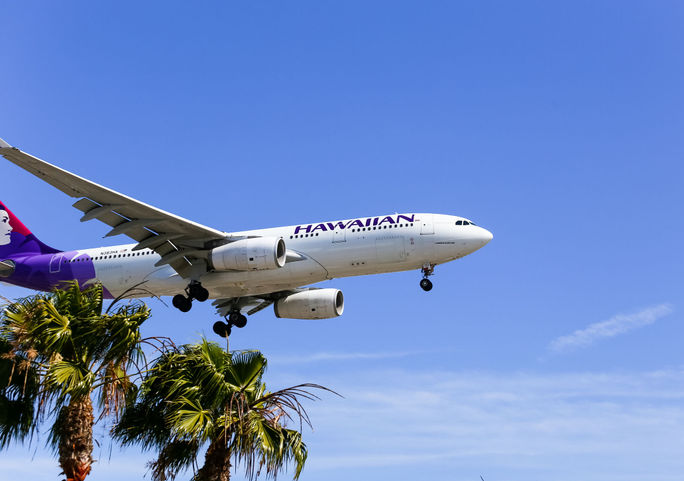
Hawaiian Airlines plane landing at Los Angeles International Airport. (photo via mixmotive/iStock Editorial/Getty Images Plus)
Such a
move could, in effect, harm lower-income travelers. In a similar action earlier
this year, the DOJ successfully prosecuted a different case that aimed to break
up the "Northeast Alliance" partnership between American Airlines and
JetBlue, also showing how that deal would hurt competition and flyers’ pockets.
A look back in time reveals
that, since 1960, Delta and American have acquired, in total, 26 airlines
between them. Detractors will show that airfares have fallen by over 30 percent
since 1999, but it is easy to point to a litany of hardy airline profit makers
since that time – fees, baggage charges, shrinking seats, etc.
And a shrinking airline
landscape has not added operation efficiencies or better destination
connectivity per se. The Bureau of Transportation Statistics shows that late
arrival numbers have increased to a fifth of domestic flights annually.
The Benefits of Airline Industry Consolidation
Proponents of airline
industry consolidation argue that these mergers have led to several positive
outcomes:
- Improved Financial
Stability: By merging with financially struggling airlines, larger carriers
have stabilized their operations and enhanced their financial performance. This
has resulted in a more sustainable industry that can weather economic downturns
and external shocks, such as the recent COVID-19 pandemic.
- Operational Efficiencies:
Merged airlines can streamline operations, reduce redundant costs, and optimize
fleet utilization, leading to improved efficiency and productivity. This, in
turn, can result in cost savings that can be passed on to consumers through
lower fares.
- Global Competitiveness:
Mega mergers have enabled U.S. carriers to compete more effectively on the
global stage. Through increased scale and network reach, airlines have
established strategic partnerships and alliances, expanded international
routes, and attracted more international passengers, bolstering the overall
competitiveness of the U.S. airline industry.

PHOTO: JetBlue aircraft. (Photo via JetBlue)
The Drawbacks of Airline Industry Consolidation
Critics of airline industry
consolidation raise valid concerns about the potential negative consequences:
- Reduced Competition: The
consolidation of major airlines has resulted in a highly concentrated market,
raising concerns about reduced competition and the potential for monopolistic
behavior. This concentration of market power could lead to higher fares,
limited choices for consumers, and diminished service quality.
- Loss of Diversity:
Consolidation has seen the disappearance of once-iconic airline brands, eroding
the diversity and competitiveness of the industry. This loss of competition
could stifle innovation and limit consumer options as fewer airlines dominate
the market.
- Labor Concerns: Mergers
often result in workforce reductions and labor-related challenges.
Consolidation can lead to job losses, wage stagnation, and diminished employee
bargaining power. This can have a significant impact on the livelihoods of
airline workers and their communities.
- Service Quality: With fewer
competitors, airlines may have less incentive to prioritize customer service
and invest in passenger amenities. This could potentially result in a decline
in overall service quality and a decrease in the passenger experience.
The announcement of the
Alaska-Hawaiian merger led to a significant surge in Hawaiian's parent company
shares, reflecting the greater market's optimistic view of the deal. And that
positive reaction aligns with a broader trend in the airline industry, where
smaller carriers seek mergers to stay competitive against the dominant market
players.
While airline
consolidation has led to the emergence of dominant carriers that control the
market, the negative consequences for consumers cannot be ignored. Due to
industry mergers, rising prices, shrinking seats, declining service quality,
and reliance on government bailouts have become more prevalent.
The hope is
that regulatory bodies will prioritize consumer protection and enforce stricter
oversight while promoting competition in a balanced and customer-centric
approach that benefits all stakeholders involved. As 2024 approaches, however,
it’s an upside-down world now and anyone’s game – and guess.
For the latest travel news, updates and deals, subscribe to the daily TravelPulse newsletter.
Topics From This Article to Explore


