Egypt is having a paradoxical
tourism moment: demand is strong, the product is better than ever, and yet war
clouds, fuel costs, and confusing safety headlines are more pervasive than ever.
The country has spent the
past year trying to sell the world on a simple proposition: the country is
open, improving fast, and offering more than just the pyramids and a Nile
cruise. And the pitch is resonating. Egypt drew 19 million visitors in 2025, up
21 percent from 2024. Tourism revenues reached a record $16.7 billion in fiscal
2024/25, according to the Information and Decision Support Center (IDSC) in
Egypt.
That growth has come from a
mix of lower relative prices after currency devaluation, improved security
perceptions, stronger air links, and the long-awaited opening of the Grand
Egyptian Museum, which has become a centerpiece of the country’s tourism
revival. Sherif Fathi Attia, Egypt’s Minister of Tourism & Antiquities,
said Egypt’s appeal now rests on its “unmatched diversity,” emphasizing the
country is no longer just a beach-and-antiquities destination but a place where
heritage, nature, and high-end experiences are all optimally packaged.
Why Go Now
There is a strong argument
for going now. Egypt is using the current lull in global confidence to push
hard on accessibility, with a new digital visa-on-arrival system set to launch
at Cairo International Airport in August and expand nationwide. The government
is also adding flights and hotels as it modernizes airports, and negotiates
incentives to help offset rising fuel costs that have pressured airlines and
tour operators.
Egypt is not waiting for the
region to settle before acting, Attia says. Rather, it is finding ways to
convert uncertainty into an advantage.
What is New Again
The most obvious new magnet
for tourism in Egypt is the Grand Egyptian Museum, which officials hope will
transform the destination from a place people visit for a few headline sights
into one where they linger longer and spend more. The museum houses about
100,000 artifacts and is expected to draw millions of visitors annually. Tour
operators say it has already changed the conversation from ‘someday’ into ‘now.’
But the museum is only part
of the story. Around the pyramids, the visitor experience is being upgraded
with new dining, entertainment and preservation practices. In Luxor, a recently
restored royal tomb and broader preservation work point to a tourism model that
is not attached to sheer volume. In Hurghada’s inland desert, a community-based
tourism focus is helping to channel spending from large resorts to precious Bedouin
retreats. Smaller operators are also trying to create a more intimate version
of Egypt, from boutique hotels in ancient port towns to “experience tourism”
that includes farming, village visits, and slower Nile itineraries. The message
is that Egypt is trying to become a place where travelers can do far more than
just check off monuments.
Worth the Risks
None of this erases the
concern that shadows the market. Egypt has not been attacked, but the wider
Middle East conflict has made many travelers nervous. There is also the more
practical problem of costs. Higher fuel prices, constrained jet-fuel supply, and
the chance of longer routings can make Egypt less competitive if the regional
crisis drags on. In Cairo, a temporary 9 p.m. curfew for many restaurants and
shops has also shown how geopolitics can spill into the visitor experience in
small but often noticeable ways. For travelers, mainstream destinations such as
Cairo, Luxor, Aswan, Hurghada, Marsa Alam, and Sharm el-Sheikh remain the focus
of official tourism activity, while some border and desert areas remain subject
to caution.
Egypt wants visitors to see
“hidden gems,” not just the classics, Attia stresses. That is also the
country’s most persuasive point right now. In a region defined by instability,
Egypt is trying to convince travelers that the safest bet is a place that feels
ancient, newly polished, and still full of surprises.
The following is a talk
Travel Pulse had with Mr. Attia recently at the Expedia Explorer Conference in
Las Vegas.
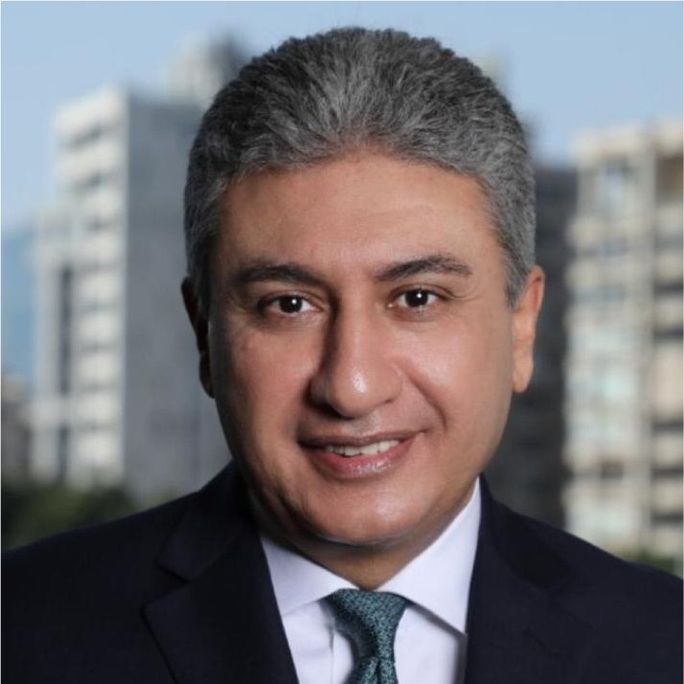
Sherif Fathi Attia, Egypt's Minister of Tourism and Antiquities. (Photo Credit: Egypt Tourism Authority)
Interview with Sherif Fathi Attia, Minister of Tourism and Antiquities, Arab Republic of
Egypt
TravelPulse (TP): The U.S. traveler
often sees “Middle East” as one undifferentiated risk zone. How do you convince
American travelers — and the travel advisors who sell Egypt — that the country
should be evaluated separately from conflicts elsewhere in the region?
Sherif Fathi Attia (SFA): Well, actually, let me tell you that when the 7th of
October attacks happened, we were affected for only two or three months, and
then we actually recorded an amazing 20 percent growth over the past two years.
And actually, last January and February, before the events with Iran, we
actually scored another 20 percent. We are securing our borders, not only
physically, but with wisdom and balanced politics. It will take some time, but
all indicators say there is a very high demand for Egypt. The challenge today
is the economic situation on both sides: fuel prices for airlines, and a high-pressure
economy. A lot of people don’t want to travel internationally; they’d rather
travel domestically with their own vehicles to save money. So this is the
biggest challenge that we have today.
TP: When you mentioned the 20 percent bumps at these
critical junctures, what do you say accounts for that?
SFA: Several factors, actually … strong fundamentals for
the country itself. I’m not talking about security here; I’m talking about
spending huge amounts of money on infrastructure. We have more airports, better
airports and more roads. Now, people can travel more easily between
destinations in Egypt. In addition, there is value for money. I believe even 20
percent growth is not enough.
TP: Egypt has set a goal
of reaching 30 million visitors by 2030, but the current Middle East
environment can quickly affect sentiment, pricing, and airlift. How realistic
is that target under today’s conditions? What assumptions are you making about
the U.S. market?
SFA: Again, coming back to all the crises that happened in
the Middle East in the past few years, we rebound quickly. Two or three months
is all we need to rebound and actually achieve growth. What we normally do is,
even if we lose some numbers from certain countries or destinations, we really
focus on countries that don't have those challenges. For example, if people in
the Middle East or Europe stop traveling to long-haul destinations like the Far
East, the United States, or Latin America, Egypt offers them a very good
replacement because it means only four or five hours of flying. That is a big
cost-cutting consideration, plus we still have a very good product and very
good weather. We work like that. We have this in our DNA. Nothing is
impossible.
TP: Egypt has seen
strong growth from the U.S., Australia, and Europe despite regional tensions.
What kind of traveler is Egypt attracting now? Has the profile of the American
visitor changed since the pandemic and recent conflicts?
SFA: Specifically for American travelers, they want to
experience. They don’t want to just consume products. And here comes our role.
Lots of Americans, when they think of Egypt, think of the pyramids, the famous
Nile cruise or sometimes the spiritual areas. But we are repositioning Egypt for
unmatched diversity, where people can swim and dive. Now, you can even paraglide
above the pyramids. Very soon, we will have a balloon experience over the
pyramids.
If you visit the Grand
Egyptian Museum, it is not just another museum. This is how we are going to
showcase our antiquities and culture in a modern way, so that people don't just
learn about history; they experience it, and it’s a living history. We are
attracting the young generation, the experienced generation, backpackers and
high spenders because Egypt is full of potential, including MICE and special-interest
products. We have developed all the spots along the Holy Family trail in Egypt.
There is Ecotourism. Next year we will have the total solar eclipse in early
August, and it is already fully booked.
TP:There have been reports of bookings being
canceled. Some show fewer than 5 percent; others show occupancy down 20 to 25
percent; and some DMCs report cancellations as high as 70 percent. What numbers
should the travel industry believe, and how are you tracking the real impact on
the U.S. market specifically? Are they canceling, or are they ignoring?
SFA: We are looking for future bookings starting maybe in
October (after the summer low season), and we are monitoring those closely. We
are in the U.S. meeting with some of our partners here and in New York, and
planning lots of activities together to stimulate the American market to
re-engage with Egypt.
Lots of people now don’t
really book in advance; the majority of visitors we get are doing last-minute
bookings. This is becoming a pattern. The crisis in the Middle East is like the
pandemic or any other crisis in the world: one of two things will happen --
either people solve the problem, or they live with it. I believe we are
stabilizing right now toward a definite solution; let's wait and see.
TP: If you were speaking directly to American travel
advisors hesitant to recommend Egypt this year, what would you want them to
understand that they are not seeing/hearing in the headlines?
SFA: Egypt is completely safe and secure. Last year, we
welcomed 19 million travelers, and even with the wars on our borders, we
haven't been affected as a country in terms of safety and security. We have
enough systems in place to secure our visitors and our nationals.
Two main reasons people visit
Egypt are authenticity and gastronomy. Authenticity you can't buy with money;
it comes with heritage, and that heritage spans thousands of years. The other
thing is the food. We have a very rich culinary culture. Whenever I meet a
tourist, I tell them that if they don't gain two or three kilos in a week in
Egypt, they haven't really tried the delicious food.
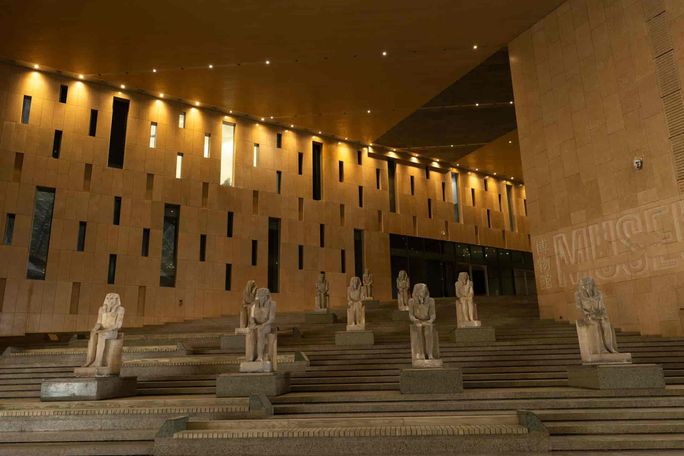
The Grand Staircase of the Grand Egyptian Museum. (Photo Credit: The Grand Egyptian Museum)
TP:As jet fuel costs are rising and supply is
constrained, how is your Ministry responding?
SFA: We have good news: EgyptAir announced a direct flight
from Cairo to Chicago and Los Angeles only a few days ago. So now we have five
connecting points: Washington, New York, New Jersey, Chicago, and Los Angeles.
We are opening our gates and opening new pathways for Americans to come to
Cairo. If we have more direct flights from U.S. carriers, we will fill them.
Definitely, it will happen. Our partners in hotels and companies are providing
very generous discounts for year-round travelers to Egypt. So, for any
Americans who would like to come today, the fuel price might be a little bit
higher, but everything else will be very competitive.
TP: The Grand Egyptian Museum in Giza, which opened in
November, is expected to draw up to 8 million visitors annually. How is the
Ministry leveraging this exciting new independent attraction to specifically
recapture the U.S. market, which historically values the cultural and
archaeological depth that the GEM represents?
SFA: The Grand Egyptian Museum is an ambassador for the
future of tourism to Egypt. We are uplifting most of our museums and
archaeological sites for the future. If you visited the pyramids in the past 10
years and visit them today, you will see that we now have many top-tier
restaurants. You can have breakfast on the Giza plateau, looking at the
pyramids. You can attend exciting festivals and entertainment there. We also
have eco-friendly buses that go around the site. We are developing these sites
and museums, and we are also developing the infrastructure to make it easy for
people to get there and move around, saving their time while providing a long
list of attractions.
TP:What other
unsung gems around the country should members of the travel industry note… and
how will you be promoting these and the rest of Egypt’s treasures as 2026 moves
into 2027?
SFA: Egypt is not only about cultural products or
sun-and-sea products. It is about many other products, like spiritual tourism,
ecotourism, and birdwatching. Egypt is one of the most important areas in the
world for birdwatching. If you go to Ras Mohammed Protectorate in Sharm El
Sheikh, South Sinai, you will find half a million birds migrating from Europe
to South Africa and vice versa. Egypt, as a destination, has everything.
It is also about diversified
accommodation: you can stay in a tent in the desert or by the sea. We have
places like Dahab or Siwa Oasis, where Alexander the Great was proclaimed a
god. We have Alexandria, established by Alexander the Great, and the Mediterranean.
You have two famous seas in Egypt, the Red Sea and the Mediterranean. If you
dive in the Red Sea, it’s not just about diving. The Red Sea along Egypt's
coast could be among the last coral reefs on the planet, as coral reefs are
lost to global warming. We also have the Holy Family route. Egypt invented the
monasteries, you know. The first monastery in the world was in Egypt. So there
are lots of exciting things to discover.
For the latest travel news, updates and deals, subscribe to the daily TravelPulse newsletter.
Topics From This Article to Explore


