Air travel has undoubtedly
revolutionized the way we explore the world. Unfortunately, the journey itself
has taken a dive over the decades.
A transformation in seat size
has left passengers with little legroom,
thin padding, and a growing list of grievances about their flight experience.
Consider
this: the average legroom or pitch has decreased from a comfortable 35 inches
to a cramped 28 inches, often found on low-cost carriers. Seat width has also
shrunk by as much as four inches over the past 30 years, leaving many seats
with a narrow 16-inch width. This squeeze has been a boon for airlines,
allowing them to add more seats per flight and introduce new service fees, such
as charging extra for preferred seats and the privilege of selecting seats.
But
for passengers, it has been a horror story, especially when considering this: The CDC reports that modern seat specs reflect the measures of a 1960s male passenger who is
5’10” and weighs 180 pounds. These days, a quarter of U.S. males weigh more
than 224 pounds, and a quarter of U.S. adult females weigh more than 195
pounds. A sixth of U.S. males are over six feet tall.
And now, there's a new factor
to add to general flight discomfort: the "pre-recline" seat. This
non-amenity allows airlines to save on fuel costs and accommodate more
passengers by eliminating the button that allows flyers to recline their seats,
however slightly, for a bit of added backrest. But this moment of relaxation may
also be destined for the dustbin of air travel memory, just like blankets,
pillows, legroom, cushioning and meals. Non-reclining seats have already been
offered by some low-cost carriers in the United States for years.
While shrinking seats have
become a
recurring complaint and a source of social media memes and satire, recent
government attention has offered a glimmer of hope for frequent
back-of-the-plane flyers. In 2018, Congress introduced the FAA
Reauthorization Act, which aimed to establish minimum standards for seat
pitch, width, and length.
As part of this initiative, the FAA opened
communication lines for 90 days to gather public input. Over 26,000 messages
flooded in from disgruntled passengers. Tests were conducted to assess whether
passengers in the tightest seats could safely evacuate a plane within 90
seconds. However, the regulation standards were set based on mock cabins
containing 60 healthy passengers, whereas commercial airline cabins usually
hold more than twice that number. Test passengers were also limited to those
aged 18-60, without mobility challenges or carry-on luggage.
Despite these concerns, a
U.S. appeals court last spring refused to order the FAA to adopt minimum
requirements for seat size and spacing, stating that it was not “clear and
indisputable” that airline seats have become dangerously small.
That prompted some senators,
including Sens. Tammy Duckworth (D-Ill) and Tammy Baldwin (D-WI), to take
action. Duckworth, who chairs the Senate
subcommittee regulating airline safety, is leading a push for the FAA to
conduct new cabin evacuation tests under more realistic conditions. Currently,
the FAA
does not regulate minimum seat size or passenger space for airline cabin
configurations.
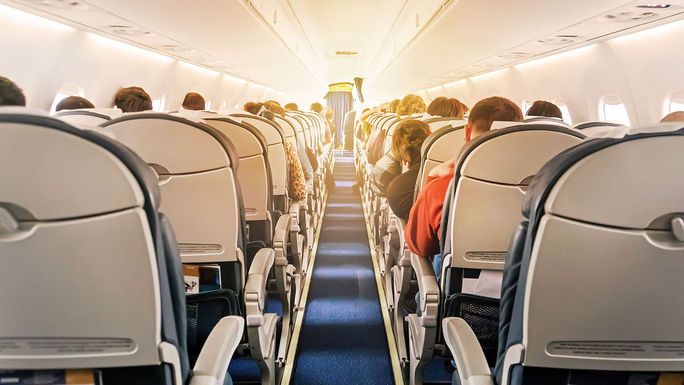
Commercial aircraft cabin with rows of seats down the aisle. (Photo via Diy13 / iStock / Getty Images Plus)
Air Seats Shrink as Costs Rise
The discomfort of airline
seats is not the only concern for passengers. The cost of these seats per
passenger has also skyrocketed. In fact, the cost of flying on average is now
27 percent more expensive than before the pandemic. CEOs of major airlines have
expressed their satisfaction with the financial gains. In recent investor
relations calls, United Airlines CEO Scott Kirby praised the team's
performance, leading to an all-time high operating cash flow in the first
quarter of 2023. Delta Air Lines CEO Ed Bastian echoed this sentiment,
highlighting their solid profitability marked in revenue growth of 15 to 20
percent yearly.
Some customers are left
puzzled as they recall the $50 billion in federal pandemic relief provided to
U.S. airlines to support their employees and ensure a swift recovery. However,
instead of investing in their workforce, airlines opted for stock buybacks and
incentivized veteran employees to retire or leave. The consequences were
evident in the form of understaffing and inadequate handling of the surge in
demand, leading to chaos and disruptions during key travel periods.
So why are passengers paying
significantly more for smaller airline seats? According to the Air Monitor 2023
report by American Express Global Business Travel, rising jet fuel costs,
airline and airport industry labor shortages, supply chain challenges, and even
pilot shortages are driving up prices. These factors, combined with a surge in
demand for air travel, have put carriers in a strong position to raise fares
and reduce inventory, particularly in the economy seat tiers.
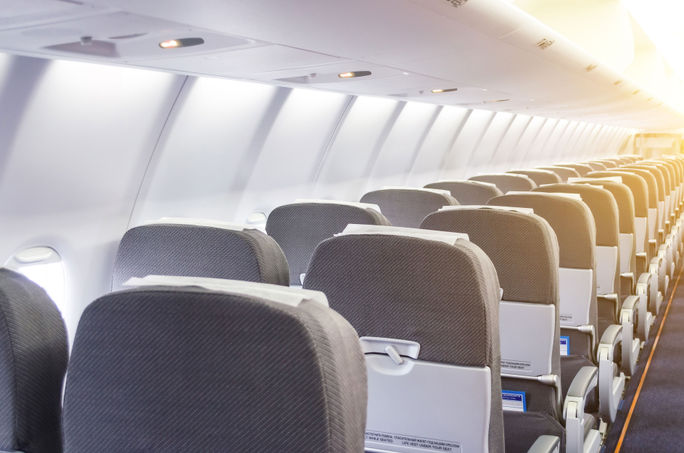
Passenger seats in the cabin airplane. (photo via aapsky/iStock / Getty Images Plus)
The Consumer Price Index
reports reveal alarming numbers: airfare inflation has reached a record high of
42 percent annually, more than five times higher than the overall inflation
rate of 8.2 percent. Despite this, Americans are still eager to travel – and
spend $1,585 on a one-week holiday, slightly higher than the cost of a one-week
vacation a year ago, according to Bankrate. Meanwhile, airlines carry 10
percent more passengers yearly, even with 10 percent fewer flights scheduled
than in 2019. U.S. legacy carriers are operating larger planes and experiencing
high occupancy rates, resulting in a more profitable business model.
Despite the rising costs,
decreasing service quality, and limited seat privileges, the public’s desire to
travel remains strong, and passengers, left with little choice, are willing to
pay higher prices for less service. As
the battle between comfort and efficiency rages on and airlines continue to
squeeze more seats into their cabins, passengers may find a point in which they
are unable to squeeze themselves into a seat.
As in any enterprise, air travel, too, will
find its bottom line.
For the latest travel news, updates and deals, subscribe to the daily TravelPulse newsletter.
Topics From This Article to Explore


