As the federal
government shutdown continues, the Transportation Security Administration
(TSA) is asking travelers for patience as it works to keep the nation’s
airports running smoothly amid funding uncertainty.
“While TSA is
prepared to continue screening about 2.5M passengers a day, an extended
shutdown could mean longer wait times at airports. We kindly ask for our
passengers’ patience during this time,” a TSA spokesperson said Thursday in a
statement to NewsNation.
“Despite this challenge, we will remain vigilant and focused on performing our
vital security mission on behalf of the American people.”
According
to The
Hill, the TSA noted that roughly 61,000 of its 64,000 employees are
classified as “excepted” or “exempt,” meaning they’re required to continue
working through the shutdown—even without pay (they
will receive back pay once Congress agrees on a new budget). The remaining few thousand will
be temporarily furloughed until funding is restored.
While most TSA
officers will still be reporting to duty, their paychecks are essentially on
hold until Congress passes a new budget. For travelers, this could translate
into longer lines, slower screening times, and potential bottlenecks if the
shutdown drags on.
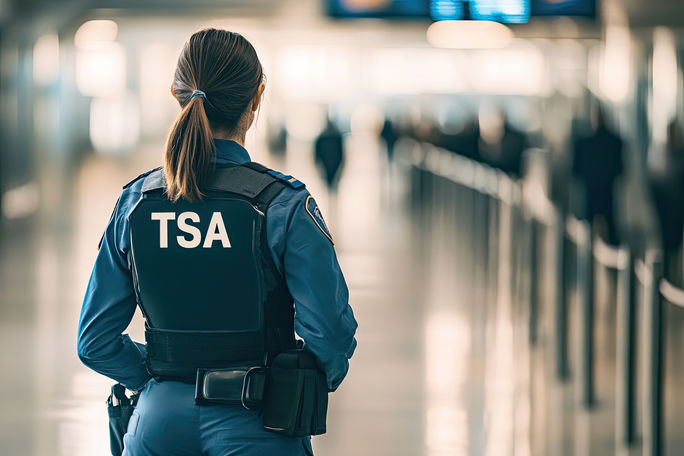
TSA officer working at an airport security checkpoint. (Photo Credit: Adobe Stock/Derrick (generated with AI))
So far, travelers
are unlikely to notice immediate changes. Security checkpoints remain staffed,
and air traffic control towers are still operating, with about 13,200
controllers on duty nationwide.
However, “The
longer a shutdown drags on, the more likely we are to see longer TSA lines,
flight delays and cancellations, national parks in disrepair and unnecessary
delays in modernizing travel infrastructure,” said Geoff Freeman, president and
CEO of the U.S. Travel Association.
“The system does
become a little bit more brittle, and the longer this goes, the more the
traveler is going to notice it,” said Jeffrey Price, professor of aviation at
the Metropolitan State University of Denver.
During
the record 35-day shutdown of 2018–2019, during Trump’s first term, many unpaid
TSA officers began calling out sick, leading to longer wait times for
passengers. The situation even forced Miami International Airport to
temporarily close one of its terminals. Air traffic controllers, some working
up to 60 hours a week, sued the government for unpaid wages.
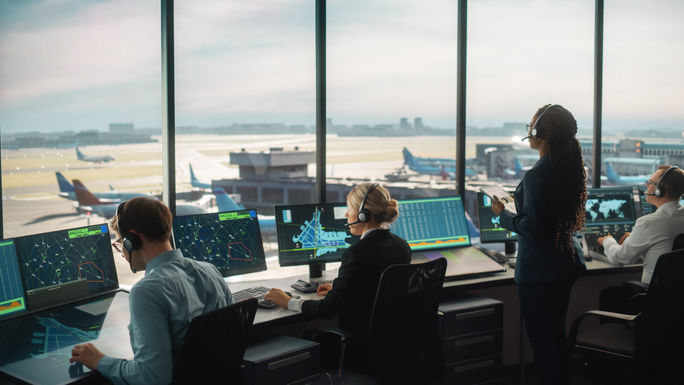
Air traffic controllers working in an airport control tower. (Photo Credit: Adobe Stock/Gorodenkoff)
According to PBS
News, this time around, both TSA
and the Federal Aviation Administration (FAA) were already dealing with
staffing shortages before the shutdown began. For example, the FAA is currently
short around 3,000 air traffic controllers, which leaves little margin for
additional stress on the system.
“They’re out there
working right now with critical staffing—the lowest staffing we’ve had in
decades ... And, on top of that, they’re working with unreliable equipment,”
said Nick Daniels, president of the National Air Traffic Controllers
Association (NATCA).
If the system
becomes overtaxed trying to manage scheduled flights, the FAA may need to slow
down takeoffs and landings, leading to additional delays and possible
cancellations for passengers.
Plus, prolonged
shutdowns don’t just inconvenience travelers. “This is more than just an
inconvenience to the traveler,” Price said. “This is definitely going to bring
up safety and security issues, if it really starts to go into the long term.”
For the latest travel news, updates and deals, subscribe to the daily TravelPulse newsletter.
Topics From This Article to Explore


