Few
destinations offer as many attractions for visitors as Chiapas, a state in
southern Mexico bordering Guatemala. Its natural beauty, culture, gastronomy,
and archaeological richness make it unique for travelers of all tastes and
ages, who find world-class lodging options in its magical towns and
accommodations in the heart of one of the continent's most biodiverse jungles,
rich in flora and fauna.
To get
there from the United States, the airports of Tuxtla Gutiérrez (the state
capital) and Tapachula receive, respectively, direct flights from United
Airlines from Houston (IAH), and connecting flights via Mexico City from Los
Angeles (LAX), Chicago (ORD), and Dallas (DFW), connecting with Aeromexico,
Volaris, and Viva Aerobus airlines.
The
adventure begins three miles from the state capital, where visitors embark on
an exploration of the impressive Sumidero Canyon National Park, admired from
the Grijalva River, one of Mexico's deepest and most powerful rivers. The
imposing cliff rises to over half a mile, though there are walls much higher.
Tourists
can visit this majestic place on two-hour excursions, admiring the natural
beauty and wildlife, including eagles, ducks, pelicans, spider monkeys, and
jaguars, among others, as well as crocodiles that feed on various fish species,
such as Potamarius Nelsoni.
After
this journey, nature lovers can venture into the Lacandon Jungle, the largest
tropical rainforest in North America.
This
natural wonder is home to 10 percent of Mexico's biodiversity and to Mayan
communities that offer ecotourism, adventure, and archaeological experiences.
It is estimated to have more than 3,400 plant species, including giant trees;
it is also a habitat for endangered species such as the tapir, quetzal, scarlet
macaw, harpy eagle, and jaguar.
Deep
within the Lacandon Jungle, visitors find the waterfalls at the El Salto
Ecotourism Center (30 miles from the city of Palenque), where they can hike,
zip-line, bike, and swim in natural pools. Additionally, this tourist center
offers accommodations for families or couples, campsites with bathroom
facilities, a restaurant, and Wi-Fi.
Further
inside the jungle lies Lacanja Chansayab, a Mayan community home to the Top Che
Ecotourism Center, which offers rustic wooden cabins with palm-thatched roofs
and all services. It also has a camping area, welcoming travelers with lodging,
gastronomy, and high-quality services. This is a paradise for those seeking an
ecotourism and adventure destination while getting to know the community
members who run the place and offer various experiences for their visitors,
such as tasting native dishes and nighttime guided tours to Corcho Negro, a
waterfall, and a natural cenote illuminated in the heart of the jungle.
They
also offer explanations of the different species of flora and fauna, including
giant trees like the Ceiba, various types of monkeys, toucans, and macaws,
among others. Additionally, community members offer quick courses on making the
region's typical handicrafts.
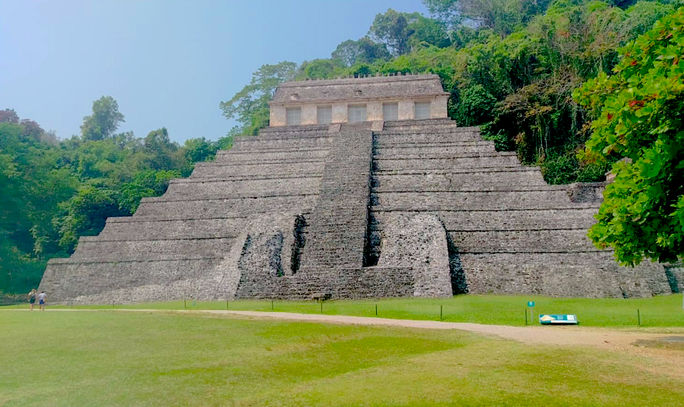
The Archaeological Site of Palenque houses the magnificent Tomb of Pakal, the most powerful governor in the city's history. (Photo Credit: Northstar Travel Group/Valentin Fuentes)
World-class Archaeological Treasures
At the
heart of Chiapas's jungle natural beauty lie unique archaeological sites,
UNESCO World Heritage Sites, such as the monumental Mayan cities of Palenque,
Bonampak, and Yaxchilan.
Palenque,
considered one of the most powerful cities of the Mayan culture (Classic Maya
Period), features the iconic Temple of the Inscriptions, where the tomb of
Pakal the Great, the most important ruler of this civilization, is located.
Additionally, the great city has a complex of courtyards, towers, ball game
courts, and temples, showcasing the perfection of Mayan architecture. Once the
tour of this archaeological site is finished, visitors can cool off in the pool
of the impressive Misol-Ha waterfall, located just 12 miles away. Also, about
40 miles away is the emblematic Cascadas de Agua Azul National Park. This city
offers hospitality to all types of tourists, from backpackers to families,
couples, and groups, who can find five-star hotels such as Hotel Ciudad Real, as
well as haute cuisine elaborated with local ingredients, such as Maya Cañada.
On the
other hand, in the ruins of the ancient city of Bonampak (Late Classic Maya
Period), located about 13 miles from the border with Guatemala, are its
emblematic murals, created in the 8th century, detailing battles, rituals, the
life of ruler Chan Muwan II, and the customs of the privileged classes of
society. Furthermore, from the central Acropolis, visitors can climb the main
pyramid for an extraordinary view of the majestic jungle.
Further
south, right on the border with Guatemala (Frontera Corozal), lies the third
archaeological jewel of the area: the city of Yaxchilan, one of the most
powerful states of the Late Classic Maya Period. At this site, impressive
hieroglyphic texts describe the dynastic history of this city located on the
banks of the Usumacinta River, the largest and most powerful river in Mexico
and Central America. For a small fee, travelers can request a special boat
service along the river to reach the imposing sacred city of Tikal in
Guatemala.
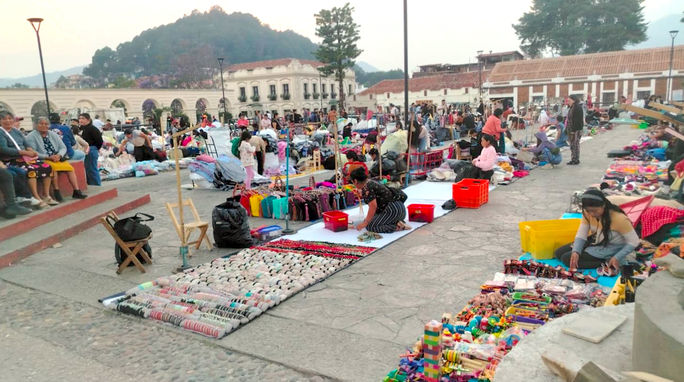
The great ethnic diversity of San Cristóbal de las Casas makes it one of the most culturally rich places in the world. (Photo Credit: Northstar Travel Group/Valentin Fuentes)
Colonial-Era Wonders in Magical Towns
San
Cristóbal de Las Casas is a community in the highlands of Chiapas that earned
the title of Magical Town for its significant colonial heritage. Its great ethnic diversity makes this place one of the richest
culturally, and it is combined with natural beauty and gastronomic diversity.
Notable
is the San Cristóbal Cathedral (16th century), with its majestic architecture
blending Baroque, Mudejar, and classical elements. Another unmissable place is
the Santo Domingo Temple, built in the 17th-century Baroque style. Outside this
parish is an important textile crafts market connected to the town center by a
charming pedestrian walkway that links this temple to the Cathedral and the
Parish of La Caridad. In this Magical Town, visitors find high-quality
gastronomy and accommodation, such as Posada Diego de Mazariegos.
Chiapa
de Corzo is another unmissable Magical Town for its colonial and cultural
significance. Notable is La Pila, in the town center. This
is a monumental fountain, created in 1562, in Mudejar style, unique on the
continent. The great gastronomy of Chiapa de Corzo is one of its hallmarks,
with standout dishes such as Cochito asado (roast pork), Pepita con tasajo
(dried beef with pumpkin seed sauce), and Pozol, a pre-Hispanic drink made from
corn and cacao.
On the
outskirts of San Cristóbal de Las Casas is the small and welcoming community of
Zinacantan, where visitors can explore different places to learn crafts and
sample unique cuisine. In Mox Pol, the sanctuary and distillery of the
pre-Columbian drink box, ceremonial spirit made from corn, tourists can witness
the artisanal production process, from corn fermentation to distillation in
wood-burning ovens. In this place, the artisanal weaving technique is also
demonstrated by community members, who sell their unique products.
For the latest travel news, updates and deals, subscribe to the daily TravelPulse newsletter.
Topics From This Article to Explore


