Skiers and snowboarders travel annually to Hokkaido, Japan, the
second largest of Japan’s four main islands, as it receives amazing snowfall every
winter. However, the region offers so much more, like year-round outdoor
adventure, breweries, hot springs, historical attractions, and cultural
experiences.
As places like Tokyo and Kyoto overflow with tourists, skip
the crowds and visit Hokkaido. It’s easier than ever, especially since Japan
Airlines offers free domestic flights to Hokkaido from major cities across
Japan.
Keep reading to see what you should put on your Hokkaido
itinerary.
Sapporo
Sapporo
is the largest city in Hokkaido and offers a wealth of experiences beyond its
famed Sapporo Snow Festival (held in February each year). Asahiyama Memorial
Park and Sapporo TV Tower offer stunning views of the city from high above. Hokkaido
Jingu, the largest Shinto temple in the city, is a fantastic place to visit
with a guide, who will share the temple's history and aspects of Shinto.
Beer lovers should check out the Sapporo Beer Museum to
learn how the famous brand came to be, before sitting down to taste a flight of
beers that are only offered at the brewery. Across the street from the museum
is Sapporo Garden, a great spot to have Jingisukan, the city’s famous grilled
lamb dish. Otherwise, visit Ramen Alley, a world-famous alley with 17 ramen
spots. Don’t forget to make your way underground to Aurora Town, Pole Town, and
Apia, underground shopping malls full of boutiques, stores, and restaurants
connected to the underground rail line.
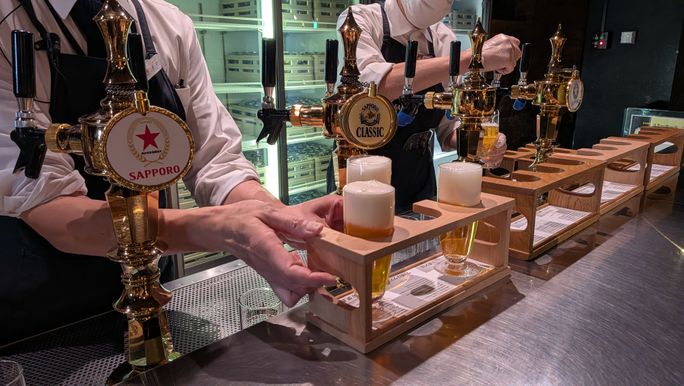
Sapporo Beer Museum. (Photo Credit: Alex Temblador)
Volcanoes
There are about 52 volcanoes (15 of which are active) in
Hokkaido, which draws curious travelers interested in learning more about these
geological giants. Toya-Usu
UNESCO Global Geopark surrounds Lake Toya and is home to the active volcano
Mt. Usu. The geopark is full of hiking trails you can experience year-round,
whether hiking in the summer and fall or snowshoeing in the spring and winter. You
can even take kayaks or canoes on Lake Toya in the warmer months. Book a tour
with a volcano meister to learn more about the eruptions that carved out the
geopark and how they impacted the local areas.
Hot Springs, Lakes, and Waterways
As mentioned above, Hokkaido has a ton of volcanoes, which
means it has a lot of great hot springs. While many Hokkaido hotels have onsens,
one of the top hot-spring destinations is Marukoma
Onsen Ryokan, a 110-year-old traditional Japanese inn perched atop a
hot-spring site. Nearby is Lake Shikotsu, which doesn't freeze due to the
region's abundant volcanic activity. The water is exceptionally clear and blue,
attracting scuba enthusiasts year-round. Hire Ocean Days Outfitters, and
they'll take you on kayak tours on the lake (no matter the season) and even
guide you to a beautiful waterfall, Nanajo Otaki Waterfall, which freezes in
the winter.
In the summer, head to Ranshima for a beach day, and in the
winter to Abashiri Harbor to take an ice cruise through massive chunks of drift
ice that float down from the Russian coast. Shiretoko Peninsula attracts
cold-water divers in winter to see underwater ice formations and sea angels,
while others travel to the Blue Pond in Biei to witness its striking blue color.
Ainu Indigenous Culture
In 2019, Japan formally recognized the Ainu as an Indigenous
people of Japan. The next year, the Upopoy
National Ainu Museum and Park opened in Shiraoi Town, Hokkaido, to teach
citizens and tourists more about the Ainu who lived in Hokkaido and the
surrounding islands from the 9th to the 13th centuries to
the present. The Upopoy National Ainu Museum and Park is a good place to start learning
about the Ainu, as it offers reconstructions of traditional Ainu homes,
exhibits, and dance and music presentations. Nearby is Hoshino Resort Kai
Poroto, a hotel where travelers can try Ainu-style food like Ainu potage (or
soup). Even in Sapporo, there are opportunities to learn more about this
Indigenous community via exhibits at the Former Hokkaido Government Office
(also known as the Red Brick Museum). You can even see Ainu designs
incorporated into hotel rooms at The Royal Park CANVAS Sapporo.
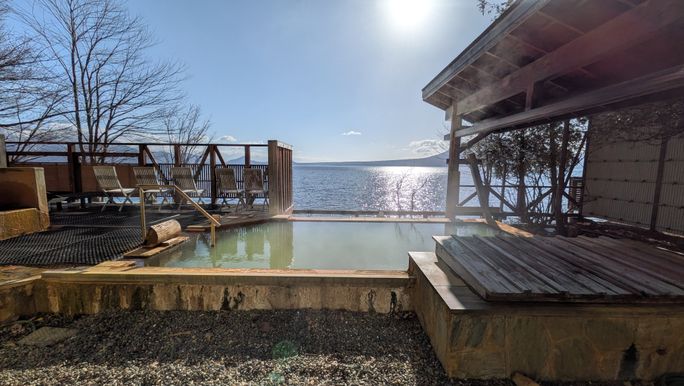
Marukoma Onsen Ryokan. (Photo Credit: Alex Temblador)
Picturesque spots
Every summer, travelers head to the Furano
area of Hokkaido to walk among purple lavender fields. To be fair, places
like Farm Tomita, Flower Land Kamifurano, and Saika no Sato plant more than
just lavender, resulting in pink, yellow, and purple flower fields that pop in
photos.
Otaru
Canal is another great photo spot. Historic buildings line the curved
canal, while cafes and restaurants invite travelers to enjoy the views. In
addition to taking a boat ride on the canal, be sure to visit at night when gas
lamps light up this romantic destination.
The Usuzan Ropeway takes travelers on a gondola ride to a
promenade viewing area located on a volcano. In the viewing area, you’ll have
great views of a lake, a volcano, and a small town. Don’t forget to check out Cape
Kamui, which juts into the Sea of Japan for another great photo spot.
National Parks and Outdoor Areas
There are six national
parks in Hokkaido, and plenty of other public outdoor areas that offer
diverse forms of adventure. At Shiretoko National Park, you’ll see dramatic
landscapes, waterfalls, and maybe even orcas and brown bears. Kushiroshitsugen
National Park is home to Japan's largest marsh, a paradise for birders who want
to see the red-crowned crane. Extreme hikers should head to the tallest peaks
in Hokkaido at Daisetsuzan National Park, while those who simply love nature
should make their way to Cape Chikyu to enjoy walking trails alongside
100-meter-high cliffs, a lighthouse, and to ring the Bell of Happiness, which
is said to bring good fortune.
Matsumae Castle
On the southernmost point of the island is Hokkaido’s only
castle town, Matsumae, home to Matsumae Castle. The castle
has a museum with information on the Matsumae clan and the Ainu people. Visit
during cherry blossom season, as there are over ten thousand cherry trees of
250 different varieties surrounding the castle. Take some time to visit the
nearby Buddhist temples; they are among the oldest structures in Hokkaido.
There's also a historical theme park called the Matsumae Yashiki, which has
recreated buildings from the Edo Period so you can see what life would have
been like when the castle was at its height.
For the latest travel news, updates and deals, subscribe to the daily TravelPulse newsletter.
Topics From This Article to Explore


