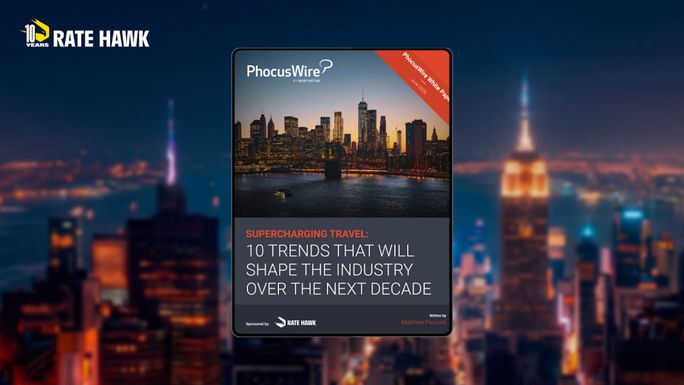
The report details 10 trends during the next 10 years and and was unveiled at the RateHawk Futurecast online event. (Source: RateHawk)
RateHawk, a B2B online platform for travel, and Phocuswright, a global travel market research leader, joined forces to release a study identifying trends that travel advisors can rely on to gain a competitive edge over the next 10 years.
“We created this report as a practical guide to help travel businesses navigate the industry’s fast-changing environment,” said RateHawk Managing Director Astrid Kastberg.
“It explores key shifts across the most important parts of the travel ecosystem, including the broader market landscape, traveler behavior and technological adoption, and is designed to help travel professionals identify the most important actions needed to stay competitive over the next decade.”
In addition to data analysis from Phocuswright and RateHawk, the report also used information based on interviews from “leading industry players, ensuring it addresses the most relevant questions faced by decision-makers and travel professionals on the frontline.”
In all, the report analyzed 10 trends. Here are just some of the highlights.
The Shift Toward Personalization
A key finding is the transformation in how veteran travelers and digital nomads are reprioritizing their view of travel, with personalized experiences taking center stage, “resulting in increasingly fragmented demand patterns,” the study said.
Furthermore, travel decisions are increasingly relying on social media and digital platforms. “As a result, travel professionals need to adapt by diversifying their offerings and exploring new channels to reach new potential customers and meet their authentic requests,” the report said
Thriving in an Era of Travel Volatility
“Another major driver of transformation is growing industry volatility, fueled by geopolitical tensions, economic instability and other global dynamics,” the study found, which “is influencing traveler behavior, leading to greater price sensitivity and more spontaneous decision-making.”
Ultimately, that volatility is driving travel advisors to select a “more resilient supply mix, while increasing demand for all-in-one solutions that simplify booking and trip management,” the study said, with the role of trusted Application Programming Interface Connectors (API) becoming increasingly important for advisors to adapt to changes.
The Impact of AI on the Industry
“With the rapid advancement of innovation, travel professionals are increasingly expected to adopt agentic workflows that free up capacity for customer-focused activities,” the study said, adding that “57% of global travel professionals surveyed by RateHawk in 2026 hold a positive view of AI in their work, though trust levels vary depending on the task.”
Capitalizing on AI will be contingent on “greater focus on data quality, as well as the consolidation of databases into standardized formats that are accessible to autonomous systems,” the survey said.
“As infrastructure becomes more complex and risk management grows in importance, the accurate technological stack and partnerships also ensure business resilience.”
Going forward, savvy technology choices will play a pivotal role in the success of the travel advisor community.
“Amid rapid industry transformation and the many challenges ahead, one thing remains constant: travel professionals need powerful, intelligent tools to stay ahead,” Kastberg said.
“This is where we see RateHawk’s role in the next decade –to stand alongside our retail and API partners, empowering them with the technology, supply, and operational infrastructure they need to grow faster, operate smarter, and unlock new opportunities.”
The report was unveiled at the RateHawk Futurecast online event on June 23, 2026.
For the latest travel news, updates and deals, subscribe to the daily TravelPulse newsletter.
Topics From This Article to Explore


