
by Lacey Pfalz
Last updated: 8:00 AM ET, Mon March 2, 2026
The American Society of Travel Advisors (ASTA) is so much more than a trade association offering educational resources and a network of professionals in the same field: it’s also an advocacy body, known for supporting advisors and the broader travel industry in Congress.
But how does ASTA’s advocacy work? And does it actually achieve actionable change? How can any travel advisor take part in advocacy?
ASTA’s Advocacy Arm: Championing the Travel Industry
ASTA’s advocacy first begins with determining which issues the organization needs to support—or try to solve.
Jessica Klement, the association’s Vice President of Advocacy, explains: “At ASTA, our advocacy priorities are guided by one central principle: How does this policy help or harm the travel advisor community and the traveling public? We rely heavily on direct member feedback through surveys, grassroots conversations, and internal committee discussions to be proactive on positive changes for the community. We engage in both regulatory and legislative monitoring at the federal and state levels to react to policy proposals.
“Our role is to anticipate risks before they become realities and engage policymakers when proposals could negatively affect advisors’ businesses,” she continues. “When necessary, we also build coalitions with other stakeholders to amplify our message. ASTA’s advocacy efforts are most effective when it is member-informed and forward-looking.”
Advocacy works through three main avenues: direct federal engagement, working with members of Congress, federal agencies and congressional committees to inform and advocate for advisors and the broader industry; supporting candidates who “understand and value the travel advisor community,” and by encouraging advisors nationwide to contact their representatives.
In April, ASTA will host its annual Legislative Day, inviting advisors to meet with members of Congress in Washington, D.C.
“ASTA’s role is to ensure that policymakers understand that value and to make sure the regulatory environment allows advisors not just to survive, but to thrive,” said Klement. “Advocacy is not a one-time effort. It’s a continuous commitment to protecting and elevating the profession.”
ASTA’s Governmental Advocacy in 2026
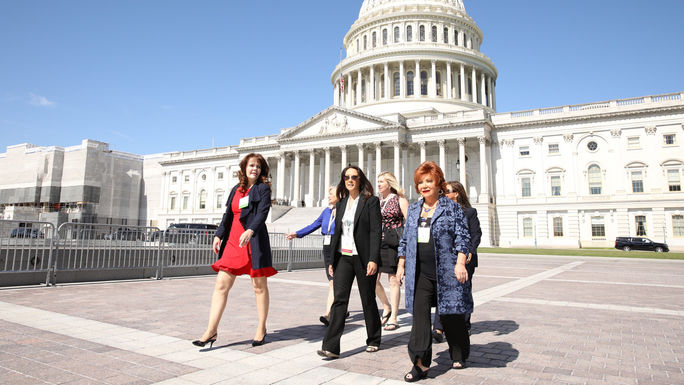
PHOTO: Travel agents on Capitol Hill for ASTA Legislative Day 2019. (photo courtesy ASTA)
In 2026, ASTA will continue to advocate for many of the same issues it did in 2025, since the legislature remains in the 119th Congress.
These include issues both small and large in public perception, including the recent ESTA proposal that would require international visitors to the United States to provide their social media history for review, potentially along with their DNA.
ASTA has issued statements against this proposal, along with other travel industry members.
“The proposed expansion of ESTA requirements raised significant concerns for the travel industry because it risks discouraging inbound international travel to the United States and potential for reciprocity for American travelers abroad,” Klement explained.
“Requiring travelers to disclose social media history introduces privacy concerns, delays, and uncertainty that could deter visitors. The U.S. is competing globally for tourism dollars. Policies that create friction in the entry process directly affect advisors who rely on international bookings.”
To advocate against the ESTA proposal, ASTA is submitting formal comments to the U.S. Customs and Border Protection outlining the concerns and raising awareness of the issue by coordinating with industry partners and the media.
ASTA works to ensure that travel advisors are heard on key issues, maintains a level playing field for flight refunds, advocates for friendly independent contractor policies and potential regulatory developments that might hinder small businesses.
“The overarching theme is ensuring travel advisors are recognized and treated as essential small businesses in the U.S. economy,” said Klement.
Other Key Issues of ASTA Advocacy
Beyond government advocacy, ASTA champions travel advisors across the industry.
Most notable is the new Commission Reporting Portal, which launched in October, 2025. Since then, it’s found nearly $15,000 in missing commissions for advisors. Advisors can use the portal to report commissions they haven’t received from hotels, and it encourages hotels to pay commissions on time or risk being added to a list of hotels known for not paying advisor commissions.
“Data is power,” Klement told TravelPulse. “This portal gives our members a stronger collective voice.”
ASTA also works to protect commission transparency.
When Norwegian Cruise Line heard that its commission structure was difficult for advisors to understand, the cruise line chose to eliminate all non-commissionable fares (NCFs) permanently, making the commission structure easier to understand and offering more ways to earn commission.
“When advisors are not provided with clear, timely, and accurate commission information, it creates uncertainty, undermines trust, and impacts revenue planning,” Klement said. “Transparency ensures that advisors can operate as professional, reliable intermediaries for their clients. ASTA’s advocacy efforts aren’t just related to policy; advocacy within the industry can be just as powerful.
“We appreciate NCL’s recent actions to discontinue NCFs, and we continue to have similar conversations with other partners and suppliers to work collaboratively on industry issues affecting ASTA members,” Klement said.
How Can Travel Advisors Get Involved?
Klement offers some advice to advisors who wonder whether they can make a difference and support the travel industry.
“I think the biggest concern I hear is that advisors don’t know if their advocacy is making a difference, especially in today’s world where more organizations are competing for attention in Washington,” she explains. “They want to know if they’re cutting through the noise. I want those advisors to know that their story makes a difference for policymakers who are not experts in providing travel services.
“Second, do not assume that others will speak on your behalf,” Klement said. “Your story is yours, and yours alone, to tell. No one can tell your story better than you. Congressional staff repeatedly report that interacting with constituents and hearing their stories is what makes the difference when it comes to policy decisions.”
She recommends a short meeting with a representative, sending an email explaining how a policy impacts you personally, encouraging advisors to respond to grassroots action alerts, building relationships with local representatives, participating in ASTA Legislative Day, and sharing real stories about how policy impacts you and your clients.
“You should feel empowered to reach out to your legislators at any time. As a constituent, your voice matters, and your story can make a difference as they debate policy,” said Klement. “You don’t have to be a policy expert. You simply need to be willing to speak up and share your personal experience.”
For the latest travel news, updates and deals, subscribe to the daily TravelPulse newsletter.
Topics From This Article to Explore


