
by Lacey Pfalz
Last updated: 7:00 AM ET, Thu August 27, 2026
August saw its fair share of big destination news, from changing travel advisories to new data about Mexico’s tourism industry and travel spending here in the United States.
Read on to see the most important headlines we’ve covered in August, 2026, and click the links provided to read the stories in full.
Travel Advisories, Entry Requirements and More
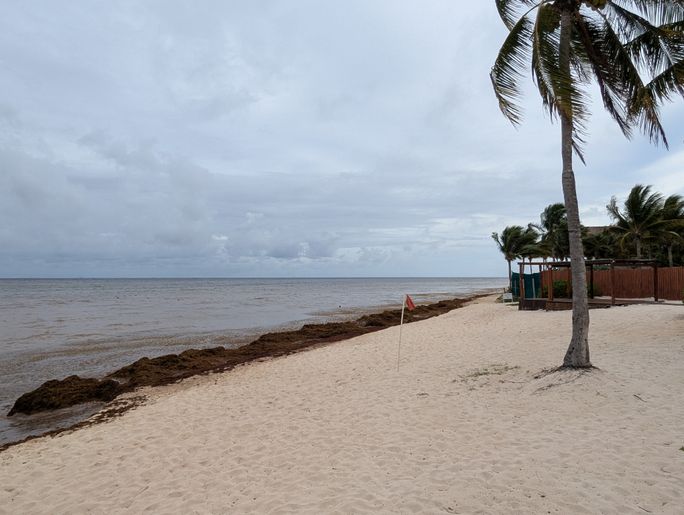
Sargassum on the beach in Riviera Maya, Mexico (Photo Credit: Eric Bowman)
The U.S. State Department updated 18 travel advisories for different countries at the end of August, many of which retained their Level 1 status. Read more about the changes to all the countries’ advisories and what you should know about traveling to them this year.
Travelers to Japan will soon have to submit receipts for some purchased items to receive a tax refund. The new program replaces the tax-free program for goods purchased and taken out of Japan, making it a bit more complex for travelers who want to bring home souvenirs.
Read more about the program to learn just what you might have to do to save some money the next time you’re in Japan.
Lastly, Sargassum, a red-brown algae that’s been growing and beaching itself across the Caribbean in record totals this year, has begun receding from popular Mexican beaches this month. While it’s a hopeful sign the season may be ending, the season doesn’t end officially until late October, so beaching events could still occur.
Inside Destination Marketing & Management

Trio of travelers exploring Phoenix, Arizona. (Photo Credit: Giant Noise/Tanner Kalin)
We’ve reported on a few exciting headlines in the world of destination marketing and management this August.
The Caribbean Tourism Organization will launch its first Caribbean Research Forum this year during the 2026 State of the Tourism Industry Conference. It’ll bring together industry partners, destination managers and researchers to discuss how to solve the region’s biggest future challenges.
Visit Phoenix, the DMO for Phoenix, Arizona, just launched a new campaign, “Sol Like No Other.” The campaign encourages travelers to visit the sunny city, where they can engage in local music culture, culinary scene and multicultural communities.
In other good news, Greater Fort Lauderdale has become the first destination to be certified by KultureCity as a sensory-inclusive beach destination. The city’s “Beaches for All” campaign is working to improve accessibility at its beaches, with some participating ones offering sensory bags to visitors and residents, complete with helpful tools like strobe-reduction sunglasses, weighted lap pads, noise-canceling headphones and more.
Mexico Tourism in 2026
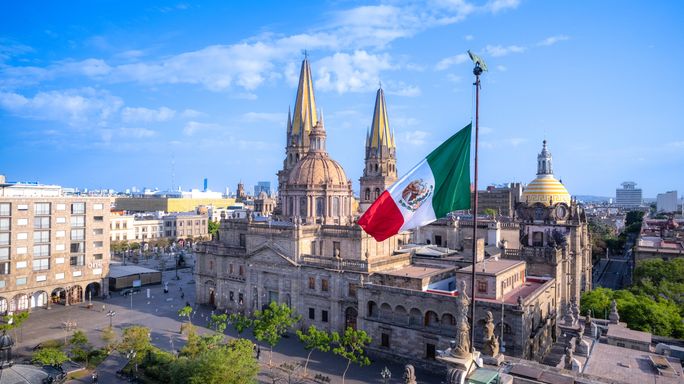
The Guadalajara Cathedral. (Photo Credit: Ministry of Tourism of the State of Jalisco & Guadalajara Tourism Board.)
August brought new data and insight into the health of Mexico’s tourism industry this year. Before its big boost from the World Cup, data from Mexico’s statistics agency, INEGI, found that tourism spending, especially by international visitors, actually dropped during the first quarter of the year. This could be a short-term trend driven by global economic challenges, but it’s worth watching.
Mexico wasted no time catching up during the second and third quarters with the World Cup, however. Tourism revenue from the World Cup hit MXN$42.3 billion, with an even larger overall economic impact. The short-term travel boost is paving the way for Mexico’s longer-term vision: investing in tourism infrastructure, hosting more international events and encouraging repeat visits by World Cup attendees.
Travel Spending Worldwide
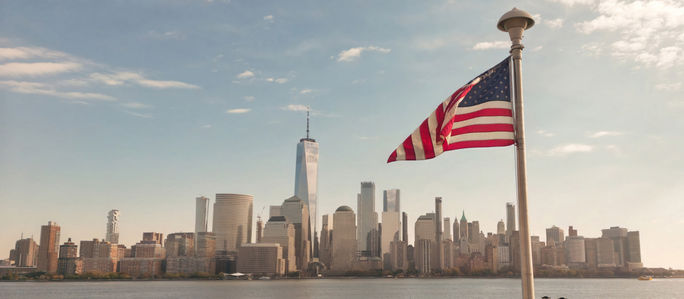
American flag waves in front of New York City skyline. (Photo Credit: Volodymyr/Adobe)
We also reported fascinating new data on travel spending worldwide, particularly in the United States and across Europe.
New data on the United States shows that after a year and a half of consecutive declines in international visitor spending, June actually saw increases, spurred at least in part by the FIFA World Cup. Visitor spending injected over $21 billion into the economy, a 2.3% increase from June, 2025.
The total for the first half of the year continued to show a decline of 0.7% from last year, so it remains to be seen whether June’s boost signals a welcome change or is only an outlier.
New World Travel & Tourism Council data found that Europe netted one-third of all global leisure travel spending in 2025, totaling $3 trillion. Certain destinations, including France and Italy, took home the most economic benefit from leisure travel, which is only expected to grow this year.
For the latest travel news, updates and deals, subscribe to the daily TravelPulse newsletter.
Topics From This Article to Explore


