
by Mia Taylor
Last updated: 7:35 PM ET, Wed May 22, 2024
Social media certainly has its drawbacks, particularly when it comes to the ways in which it has shaped the consumer travel experience.
In addition to social media influencers projecting an image of travel that's often overly polished and highly glamorized, the rise of social media has driven record levels of travelers to destinations around the world.
From an economic standpoint, that can have benefits, but the rise of overcrowding has proven to be problematic. From Venice, Italy to Japan and beyond, destination leaders have been busy announcing restrictions designed to help cope with overtourism.
Enter a newly released study from Georgia Institute of Technology (Georgia Tech), a leading research university.
The study, conducted by Georgia Tech’s School of Economics, bills itself as “the first to tie high levels of social media exposure to increased visitors" at U.S. National Parks.
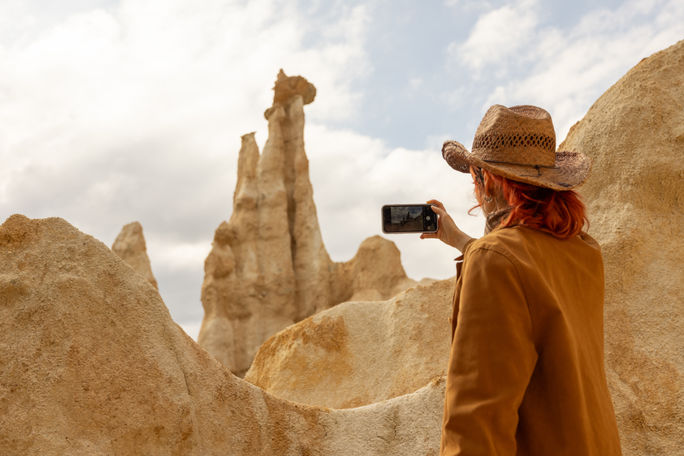
Traveler taking a picture with a phone. (Photo Credit: Courtesy AdobeStock)
In particular, the study says the surge in visitation has led to both ecological damage and economic benefits for the country's national parks — which is of course, the conundrum faced globally.
When it comes to the U.S. Parks in particular, the study finds:
- A 25 percent increase in park visits correlated with viral social media posts
- Ecological impacts such as trail erosion and wildlife disturbances
- Economic benefits, including a 15 percent rise in local tourism revenue
"There's been a general idea that social media exposure matters for visitation, but this research shows that it matters to a very strong degree," said Casey Wichman, an associate professor of economics and the author of the study, published in April in the Proceedings of the National Academy of Sciences. "It's one of the main drivers of the huge increase in visitation to national parks."
National parks with high social media exposure saw anywhere from a 16 percent to a 22 percent increase in visitors compared to national park locations that received less attention on social media, according to the study.
The social media-related growth can be traced back to 2013 when Instagram and Twitter started to gain popularity.
And it’s not just the parks that are household names that were impacted by the arrival of social media.
“While well-known parks such as Yosemite, Grand Canyon, and Yellowstone saw big jumps tied to social media exposure, smaller, less well-known properties also saw significant jumps,” says the report.
For example, the number of travelers to the far less well-known Lake Clark National Park and Preserve in Alaska increased by more than 180 percent.
The report also found that the biggest increases on a percentage basis took place in the Western United States, particularly in Alaska, the Rocky Mountain region, and Utah.
How exactly though did Wichman measure the correlation between social media exposure and national park visitation levels?
He used five different measurements to create an index of social media exposure. They included:
- Instagram followers
- Instagram mentions
- Twitter followers
- Twitter mentions
- Total number of likes and retweets on Twitter
Wichman then ranked parks based on the average of these five metrics, with a lower rank indicating greater social media exposure.
"Social media serves as advertising for parks in a way that's targeted to an individual's network," Wichman said. "However, not all exposure increases visits — it has to be good exposure."
Ultimately, Wichman suggests that the increase in visitation at national parks that’s driven by social media is a double-edged sword.
More visitors can result in overcrowding, frustrating traffic jams, and difficulty accessing campsites or other amenities, according to Wichman. More traffic also means more pollution.
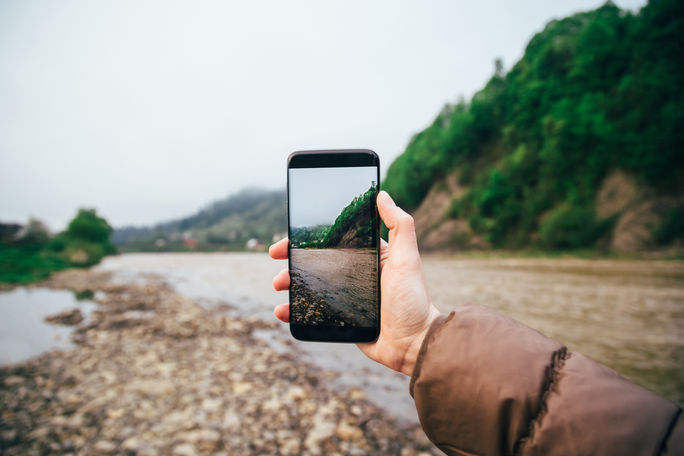
National parks with high social media exposure saw a 16% to 22% increase in visitors compared to locations that received less attention on social media. (Photo Credit: Courtesy AdobeStock)
But there are also economic upshots that can’t be discounted. For instance, tourists pay entrance fees and buy things at gift shops, restaurants and other concessions — revenue that can help support park operations, wildlife conservation efforts, and local economies.
As part of a Q&A with TravelPulse, Wichman offered some additional insights surrounding social media’s impact on national parks across the country and what travelers should takeaway from his report’s findings.
Q.Is the phenomenon of social media driving national park visitation getting worse? Social media and overcrowding are not new phenomenons. What is the trajectory that’s unfolding?
A.What social media does is crowd everyone into a small set of parks and, even within those massive parks, they cram onto well-beaten trails.
On any given day, there’s a line to take a photo at the Delicate Arch in Arches National Park. I bet most of those photos end up on social media, thus generating more exposure to that one particular site. It’s often easy to find solitude in National Parks by skipping the marquee, over-Instagrammed attractions.
It’s true that social media is not new, although social media is self-reinforcing. When I visit a park, I post a photo to share that experience with my network. Someone in my network might be influenced to visit that same park and take that same photo.
So, as long social media remains an influential component of choosing where to visit, this could generate a feedback loop where overcrowded places become more congested.
The trajectory of social media’s influence on National Park visitation doesn’t seem to be diminishing since the uptick began in 2013 or 2014 (right around the time Instagram gained popularity).
I think social media fundamentally changed how people discover new places to visit, and how they share their visit with friends, family, and others in their network.
Moreover, social media now serves as a tool for the National Park Service to engage with their visitors. Sometimes, that can be humorous banter, but oftentimes that media becomes a way to educate visitors on how to recreate responsibly and inform visitors about risks, road closures, etc.
Q.Can you talk more about the ecological impacts that are taking place as a result of the increased number of visitors.
A.More people means more wear and tear on roads, hiking trails, infrastructure (e.g., parking, toilets), more litter, etc.
More traffic leads to increases in air pollution at parks (which are already polluted). In some (rare) cases, visitors can harass wildlife and deface natural, cultural, or historical landmarks.
Not ecological entirely, but people who are unaccustomed to outdoor tourism can place themselves and wildlife at risk. For example, climbing out onto the edge of cliffs, hiking a trail that is too technical for the hiker’s skills, getting too close to wildlife, etc., can place individuals in precarious positions that can lead to harm to themselves, the environment, or wildlife.
Q.What takeaways can we offer readers about this? Is there a way to be better tourists? Should we ignore social media?
A.Should we ignore social media? Probably!
But, I don’t think this is all negative. Social media is often pitched as detrimental to society on net, but this research provides evidence that social media can get us outside to appreciate nature. Maybe some of those visitors are “bad tourists” but I would guess that the vast majority of those visitors will leave with a greater appreciation of the benefits of conserving natural landscapes and wild habitats.
Moreover, those tourists spend money to get into the parks, at the gift shop, and in the surrounding areas, which can be a boom for local economies and help the park service fund conservation efforts and much-needed investment in infrastructure (roads, toilets, etc.) to reduce the detrimental impacts to the environment.
For the latest travel news, updates and deals, subscribe to the daily TravelPulse newsletter.
Topics From This Article to Explore


