
by Mia Taylor
Last updated: 10:00 AM ET, Mon April 15, 2024
Shipped to Japan as a six month old baby from Thailand, the elephant Miyako has spent 50 years living in cramped, solitary confinement at the Utsunomiya Zoo about one hour outside of Tokyo.
Unlike elephants in the wild who live in extended family groups and wander for miles on a daily basis, Miyako has spent nearly the entirety of her life standing listlessly on a small, barren concrete platform amid her own feces.
When she’s not exhibited on that platform for zoo visitors, Miyako is forced into a small, dark indoor space where she remains locked for up to 18 hours at a time.
This has been the sum of her existence since she was born in 1973. For more than half a century Miyako has not had any interaction with other elephants, says Ulara Nakagawa, founder of the non-profit organization Elephants in Japan. Nakagawa runs the organization entirely on her own with the goal of raising awareness about the plight of elephants like Miyako, who spend their lives in "concrete prisons."
It’s a bleak and dismal sentence for Miyako, one so tragic that she has earned the title from animal rights activists: “One of the loneliest elephants in the world.”
“Her story is really tragic,” says Nakagawa. “An elephant living a life of solitude is depriving them of one of their core needs - it’s not dissimilar to keeping a human in solitary confinement.”
The Broader Message of Miyako's Plight
Miyako’s brutal experience is important on many levels.
To begin with, it offers a look at the historic practice in Japan of keeping single elephants in zoos for a lifetime, while also confining them to enclosures that are grossly inadequate, explains the report “Solitary Elephants in Japan” written by Keith Lindsay, Ph.D., a Canadian-British biologist best known for his long-term study of elephants.
“These zoos are typical of an old-fashioned model, dating from a time when exotic animal collections were still seen as a source of entertainment for the public,” writes Lindsay in his report.
“They are all associated with amusement parks in urban or semi-urban settings and the animal exhibits, including the elephant enclosure, are simply display cases in a living museum," the report continues. "The enclosures all appear to have been designed and constructed in the 1950s, or earlier, at a time when zoo management was not at the progressive standard of the late 20th century.”
What’s more, these types of facilities typically have not been modified or updated since initial construction, says Lindsay. Not only are the enclosures outdated and inadequate, but as Lindsay goes on to explain in his report, a life of solitary confinement is a particularly cruel and unusual punishment for a sentient and highly social animal like an elephant.
"Elephants are among the most social animals on the planet and keeping them in isolation is contrary to their nature and welfare,” continues Lindsay. “We also know that elephants require large spaces, complex flexible environments, including pasture to graze, soft substrates, a great deal of physical and mental stimulation and appropriate climates.”
But still today, the practice of keeping single elephants in zoos continues in Japan. Lindsay’s report says there are still “a significant number” of such elephants in facilities throughout the country and his report examines 14 specific cases, including Miyako’s.
In addition to the heartbreaking tragedy of Miyako’s plight, her story provides a vivid example of a broader matter within the travel industry as well: The critical need for tourists to be truly informed about the best ways to experience wildlife when exploring the world, wherever that may be.
And that includes making conscious efforts as a traveler to avoid supporting facilities or venues that are substandard or that subject animals to a lifetime of misery or imprisonment.
With Miyako’s circumstances in mind, TravelPulse recently spoke with Liz Cabrera Holtz, senior programs manager at the international non-profit World Animal Protection (WAP), about how to ensure you experience wildlife responsibly when traveling. Here are her top tips, as well as the outlook for Miyako's case.
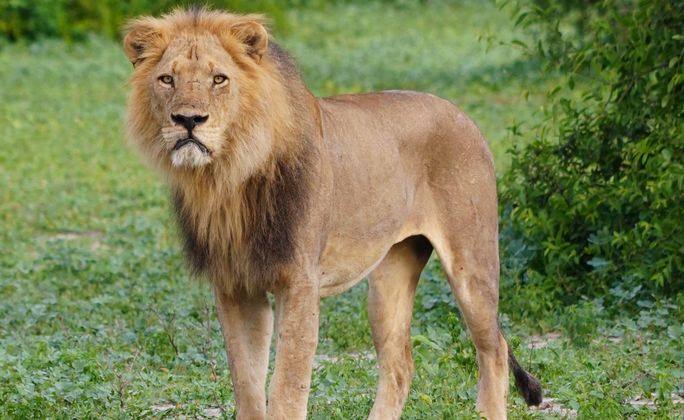
Lion on an African safari. (photo by Jessica Kelly)
1.View animals in the wild
Perhaps the most critical and fundamental guiding principal when it comes to experiencing wildlife when traveling is that it’s always best to see them in their own natural habitat.
In other words, try to avoid supporting or visiting facilities that exhibit animals in enclosures or in captivity.
“We encourage people to skip zoos and view animals in the wild or visit accredited sanctuaries,” says World Animal Protection's Cabrera Holtz. "Following this number one guideline will eliminate most other concerns."
As estimated 110 million people, however, visit cruel or inhumane wildlife attractions every year, according to WAP.
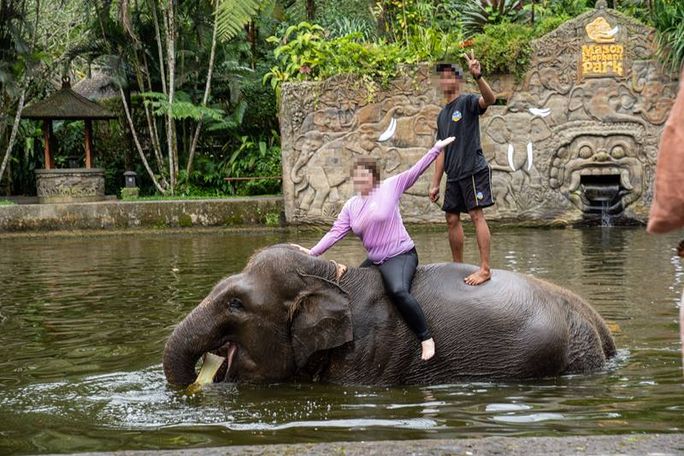
World Animal Protection advises tourists to avoid venues that allow riding, touching, or bathing elephants. (Photo Credit: Courtesy World Animal Protection)
Elephants in particular, are big business for tourism venues – offering interactions such as shows, riding, bathing or using them as photo props for selfies. Across Asia, there’s more than 3,800 captive elephants exploited for tourist entertainment in 357 camps, according to WAP.
The reality however, is that it's far more exciting to observe an elephant or lion on the plains in the wild, rather than in a cage or enclosure.
2.Educate yourself about the red flags
Not all travelers may be aware of the red flags or signs that a particular venue or activity involving wildlife is actually doing harm to animals.
Here’s a good rule of thumb to follow, says Cabrera Holtz: “If you can touch, hold, feed, or bath a wild animal, you’re unfortunately engaging in animal cruelty,” she says.
Adding to that, if you can ride, hug, or have a selfie with the wild animal, the chances are it’s a cruel venue and one that should be avoided as well, according to WAP.
The behind the scenes realities of many of these venues is that the animals have been taken from the wild and have undergone traumatic training so that they’re able to be around people. Facilities that showcase big cats, for instance, often drug the animals in order to force them to cooperate.
Attractions that showcase elephants, meanwhile, often engage in a form of torture known as “phajan” or “the crush,” which involves physical and psychological torture in order to break the elephant’s spirit and make them submissive enough to interact with tourists, according to WAP.
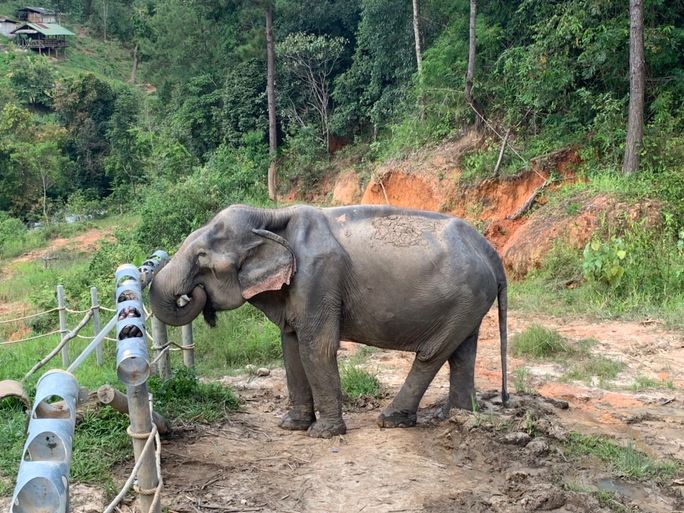
ChangChill Elephant Sanctuary, Thailand (Photo Credit: Courtesy World Animal Protection)
3.Distinguish between pseudo-sanctuaries and real sanctuaries
When it’s not possible to see an animal in the wild, a genuine wildlife sanctuary offers a good alternative. There’s a small, but growing, number of true wildlife sanctuaries around the world.
Unfortunately, there’s also a proliferating number of “exploitative businesses that bill themselves as sanctuaries,” says Cabrera Holtz. “This is especially prevalent in Thailand with elephant sanctuaries.”
Before patronizing a sanctuary, do a bit of research and ensure that it’s an accredited, reputable sanctuary. WAP offers a checklist that can be downloaded, which is designed to help travelers distinguish between legitimate sanctuaries and venues that exploit animals for money.
A few examples of what to look for include:
- Does the venue have clearly stated animal welfare standards?
- Has the facility been inspected by third-party, independent animal welfare experts from an NGO or from academia?
- Is it accredited by an independent professional association such as Global Federation of Animal Sanctuaries (GFAS)?
- Does the venue educate visitors about animal welfare and conservation?
- Do they explain why the animal was rescued and is now at the facility?
It’s also important to note that true sanctuaries do not remove animals
from their enclosures for show. The animals are only removed if it is in
their best interests, for example for a veterinary emergency or a
natural disaster, according to WAP.
Similarly, true sanctuaries
hold public tours in a careful way, minimizing the impact on the animals
and their environment, so as not to cause them stress.
4. Book travel with companies that are committed to animal welfare
A growing number of well-known travel brands and providers have made public statements and commitments with regard to animal welfare, says Cabrera Holtz. And often these statements can be found on the company’s website.
Some of the most reputable companies when it comes to animal welfare and activities (according to WAP’s report Tracking the Travel Industry) include The Travel Corporation, Airbnb, and Expedia.
At the other end of the spectrum, companies that fared the worst in the WAP investigation, include Groupon and Get Your Guide, which continue to sell animal experiences on their platforms that harm animals.
"On GetYourGuide right now you can buy a
package to touch elephants in Asia and they use words like sanctuary,
which can be really confusing to travelers” says Cabrera Holtz.
Groupon, in particular, received one of the lowest overall scores from WAP in its Tracking the Travel Industry report. In 2022, World Animal Protection launched a public-facing campaign urging Groupon to stop selling deals to wildlife entertainment venues. The company “routinely partners with some of the most cruel captive wildlife venues in the US,” says the WAP report. This includes roadside zoos, and illegitimate sanctuaries.
“By offering tickets, booking sites are maintaining public demand for captive wildlife experiences and misleading travelers to believe these activities are acceptable or even beneficial for animals, when in fact they are cruel and cause lifelong harm,” says the Tracking the Travel Industry report.
5. Know what questions to ask
If you’re trying to figure out whether an activity is one that’s best avoided, here’s a quick checklist of questions that can easily be run through:
- Are wild animals kept in conditions that restrict their food, health, behavior, or comfort?
- Are wild animals forced to perform tricks in shows?
- Are you able to ride, walk, or swim with wild animals?
- Are you able to touch, hold, or interact with wild animals?
- Does the tour guide chase or lure wild animals closer with food?
- Does the tourist attraction sell parts or products made from wild animals?
If you can answer yes to any of these questions, then it’s not an animal-friendly attraction, says WAP.
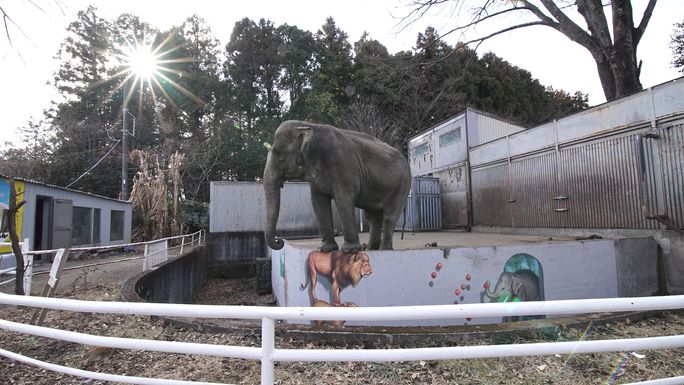
Miyako has been living a solitary existence in a zoo since she was six months old. (Photo Credit: Courtesy Elephants Japan)
Miyako's Fate
As
for Miyako, the elephant in Japan’s Utsunomiya Zoo, she continues to
pass days alone.
The solitary elephant spends six to seven hours per day
standing on a slab of concrete that’s 8.5 meters by 12 meters,
according to observations made by Lindsay for his report. There’s no
soil to soften the surface under her feet, no pool of water to occasionally cool herself in, and no
shade apart from one tree outside her enclosure that provides shade only on
those occasions when it is in bloom.
Each afternoon, Miyako is
locked inside in a 5 meter by 5 meter shed that has a concrete floor and
no skylight and she’s confined there for anywhere from 17 to 18 hours at a
time.
Her’s is a life defined by simply being put on display for humans to observe. Nothing more.
“Once
you see what her life is like there, you can’t un-see it,” says
Nakagawa, who has been working, without much luck, to try and get Miyako
transferred to a sanctuary.
In recent months, Miyako’s situation
has grown more dire than ever, according to Nakagawa. Footage of her,
gathered by Lindsay, shows alarming changes in her condition including
worsened foot abnormalities, potential swelling and deteriorated
physical health. She also shows signs of discomfort and her behavoir increasingly
demonstrates that she is not at ease in her situation. Lindsay says the
apparent decline in Miyako’s health is “significant and startling,” and
“a cause for serious concern.”
The best way you can help Miyako is by spreading the word about her plight using the hashtag, #HelpMiyako. You can also sign a petition demanding change for Miyako.
And
keep Miyako's case in mind when traveling, allowing it to inform and inspire your decisions. Search for
responsible ways to experience wildlife and support businesses that make the effort to do
the same.
For the latest travel news, updates and deals, subscribe to the daily TravelPulse newsletter.
Topics From This Article to Explore


