It feels like there's a consensus when it comes to banning voice calls on commercial flights.
Nonetheless, we've reached the age of Zoom meetings and the widespread rollout of ultra-fast Starlink Wi-Fi, and the powers that be have still failed to enforce this as a no-no.
Fortunately, U.S. Representatives Greg Stanton (D-AZ-04), Hillary Scholten (D-MI-03), Rick Crawford (R-AR-01), and Rob Bresnahan (R-PA-08) introduced the Quiet Skies Act (H.R. 9530) earlier this month in hopes of finally banning in-flight calls.
This latest effort comes eight years after Congress passed a law requiring the Federal Aviation Administration (FAA) to ban voice calls on commercial flights. We're talking back before the onset of the COVID-19 pandemic.
Fast forward nearly a decade, and still no ban.
This new bipartisan bill would give the FAA 180 days to finally implement a proper ban as airlines around the world enhance connectivity in their cabins.
"Millions of Americans are flying to be with family and friends this summer. The last thing anyone wants on a stressful travel weekend is to be trapped next to a passenger on a phone call for hours. It's annoying for passengers, and it's a dangerous distraction for flight attendants. Our bill gives the FAA a firm deadline to finish what Congress already directed," Stanton said in a statement.
"Our members manage travel for millions of employees, and they have been clear with us that the cabin should remain a place to work, rest and think, and not become a group phone booth for dozens of simultaneous private conversations at 35,000 feet," added Suzanne Neufang, CEO of the Global Business Travel Association (GBTA).
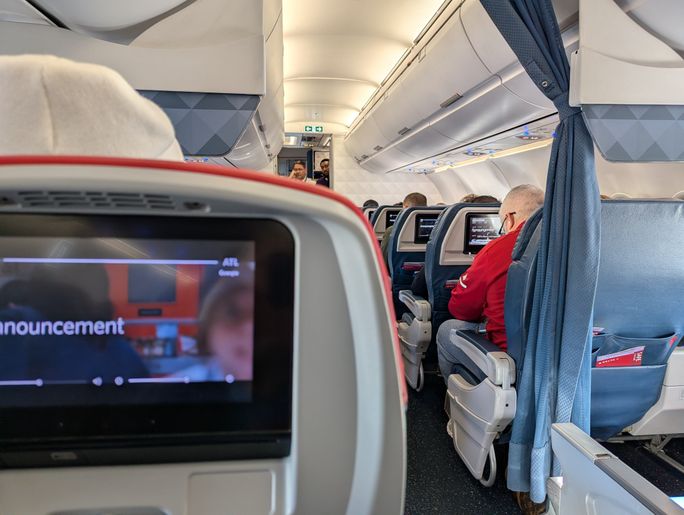
Delta Air Lines cabin interior (Photo Credit: Eric Bowman)
Banning voice calls feels like a no-brainer even as British Airways recently zagged in the other direction by permitting in-flight voice and video calls with the requirement that passengers use headphones and speak in a low voice.
Perhaps it's sad to have so little faith in the traveling public, but as common courtesy ventures the way of the dodo bird, it's unfair to ask flight attendants to referee passengers when it comes to voice calls and determine what constitutes an unacceptable annoyance or safety risk to fellow passengers.
Similar to smoking, an outright ban is something the vast majority of American travelers can get behind. Like a cigarette, that call can wait until after you land.
This seems pretty obvious, and after eight years of one-sided debate, it's safe to say it's the right time to make this important change to air travel.
For the latest travel news, updates and deals, subscribe to the daily TravelPulse newsletter.
Topics From This Article to Explore


