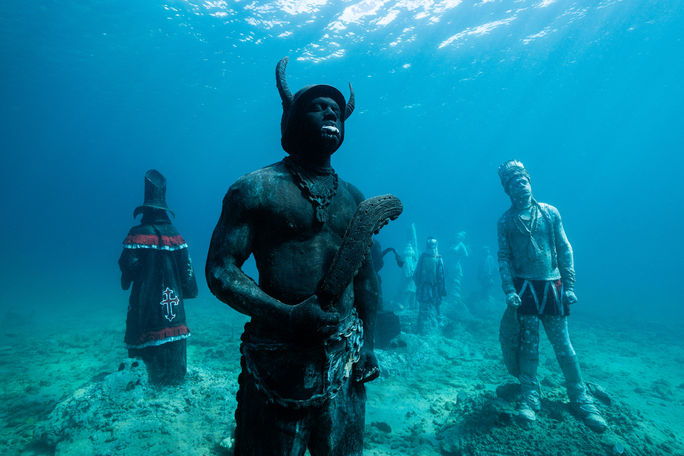
Grenada's famous underwater sculpture park looks to Carnival for inspiration. (Photo Credit: Jason deCaires Taylor)
While travelers often head to Grenada to sunbathe on Grand Anse Beach or tour the 300-acre Belmont Estate, one of Grenada’s most popular attractions is buried 15 feet underwater.
Installed in 2006, the island’s underwater sculpture park consists of 75 concrete sculptures built by British artist Jason deCaires Taylor—the first of its kind in the world.
Molinere Underwater Sculpture Park was created after 2004’s Hurricane Ivan to protect Grenada’s fragile reefs by diverting divers away from the damaged reefs while also serving as a marine life habitat.
One of Taylor’s most recognizable sculptures is The Vicissitudes, a sculpture of 26 children facing outward and holding hands, which many have adopted as a tribute to those thrown overboard during the Transatlantic Slave Trade. Though that may not have been Taylor’s original intent, the underwater park has served as a major attraction on the island and a source of pride for Grenadians.
Nearly 20 years after the first sculptures were submerged, officials unveiled 31 new sculptures, many created in collaboration with local Grenadian artists. I recently jetted down to Grenada to check out the sculpture park for myself and talk to one of the artists about the significance of the expansion.
Grenada’s Push to Showcase Local Talent
The expanded sculpture park ties into the country’s recent push to highlight local arts and culture and grow Grenada’s creative economy. Prioritizing in-country talent with projects like the underwater park expansion also boosts the profile of local artists, who are hoping to inspire the next generation of artists.
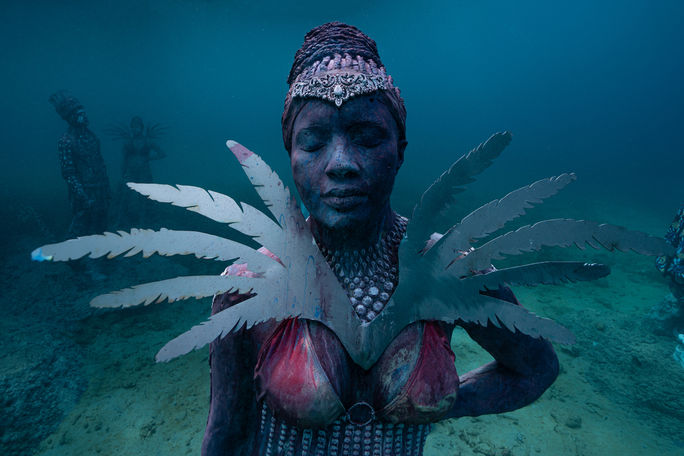
More than 30 new sculptures have been unveiled. (Photo Credit: Jason deCaires Taylor)
“People come to Grenada for the food, the warm hospitality, and to visit the first sculpture park in the Caribbean,” says Troy Lewis, one of the Grenadian sculptors who contributed to the expansion. “It’s pretty significant to include local artists like me in this project. It’s built my confidence as an artist, and it’s also enhanced the awareness of the arts and culture on the island so the coming generations of artists can carry on our traditions.”
The Story Behind the 'Coral Carnival' Expansion
Officially unveiled on August 22, 2023, the expanded park is partly a tribute to the island’s most popular festival, SpiceMas. Held every August, two of the most popular Spicemas celebrations are Jouvert, a pre-dawn parade featuring oil-covered revelers, and Traditional Mas, an all-day celebration of intricately costumed masqueraders parading in themed bands.
Called the “Coral Carnival”, the additional sculptures include some of the most well-known Spicemas characters like the horned Jab Jab with his signature chains and the feathered Pretty Mas dancer. Two of Lewis’s contributions to the park include sculptures of a giant leatherback turtle and a Belaire Dancer, or Caribbean folk dancer.
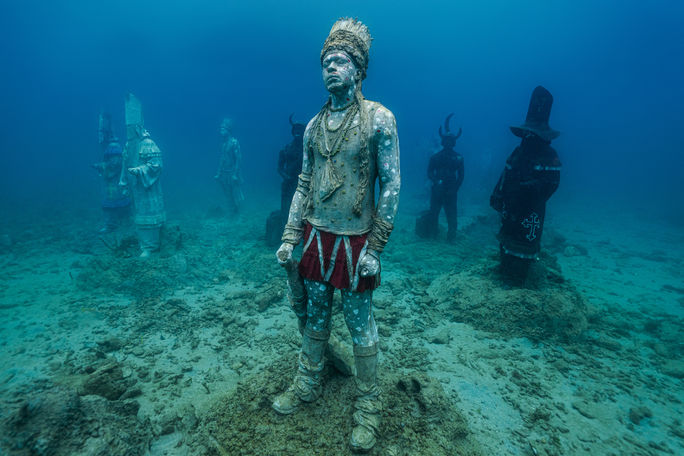
Coral Carnival includes well-known Spicemas characters. (Photo Credit: Jason deCaires Taylor)
“The sculptures are significant because they give Grenada exposure, but they’re also important for the next generation because they’re a way to defend the earth from global warming effects and save the reefs for aquatic life to continue,” Lewis says. “I’m proud of being Grenadian and doing the kind of work that helps boost my country's tourism.
How to Visit the Sculpture Park
The underwater park is located on the west coast of the island, only two miles from St. Georges and a 30-minute drive from the hotels along Grand Anse Beach. If you’re planning a trip to Grenada, visiting the underwater park is a “must-do” activity, and there are several ways to see the sculptures, each suitable for different activity levels.
I booked a glass-bottom boat trip with Wally’s Glass Bottom Boat, and during my ride, Captain Wally expertly guided our boat over the new and older sculptures, explaining the back story and significance of each one. If you’re traveling with small children or companions who’d rather stay dry, this is a great way to see the park.
If you take the glass bottom tour, you can also snorkel, which I opted to do. Most of the sculptures are submerged less than 15 feet deep, and snorkeling will give you a great aerial view of the sculptures. During our boat ride, we also saw a few divers exploring the park, and if you want to get up close to the life-size statues, diving tours can be arranged through Dive Grenada or Eco Dive Grenada.
While I enjoyed Grenada’s beaches, visiting the underwater park was the highlight of my recent stay. Grenada’s sculpture park is not only one of the top attractions on the island, but it's also symbolic of how Grenada is embracing its local culture and putting Grenadian artists at the forefront.
For the latest travel news, updates and deals, subscribe to the daily TravelPulse newsletter.
Topics From This Article to Explore


