
by Paul Heney
Last updated: 7:00 AM ET, Thu November 5, 2026
For LGBTQ travelers, Peru and its capital city, Lima, are safe and friendly options, and full of history, culture, and adventure. The country, while heavily Catholic and somewhat conservative, is at the same time reasonably progressive toward the queer community. Same-sex activity has been legal here for more than a century and gay and lesbians can serve openly in the military, although same-sex marriage is not recognized here, nor are civil unions.
Peru, with a population of roughly 11 million people, is the obvious choice for queer travelers looking for more of a nightlife scene. The trendy and luxe Miraflores district, fronting the Pacific Ocean, is the closest thing to a gayborhood that the city offers, along with the adjoining districts of Lince and Barranco. But even here, public displays of affection are rare; this is not Madrid or Berlin, and travelers should be respectful of the cultural norms.
Beyond the capital city, many queer travelers focus on Cusco, the historic city of 500,000 people that sits at 11,200 feet in elevation in the Peruvian Andes. Cusco, in addition to being a charming and colorful city, is known for great cuisine and being the gateway to Machu Picchu, one of the seven wonders of the world. And the hamlet of Aguas Caliente, right near the foot of Machu Picchu, is a fascinating crossroads of the world.
Luxury Stays
For our Peru trip, we decided to focus on luxury properties, as we’d heard excellent things from fellow travelers about Peru’s higher end hotels.
At the glassy, dramatic JW Marriott Lima, we loved our room’s expansive windows with gorgeous views of the Pacific Ocean and the city blocks that paralleled the coast. The property sits atop the cliffs of Miraflores, with a high-end shopping mall directly across the street. Rooms were expansive and modern, and the luxury shower with multiple rainfall options had us hooked from the start.
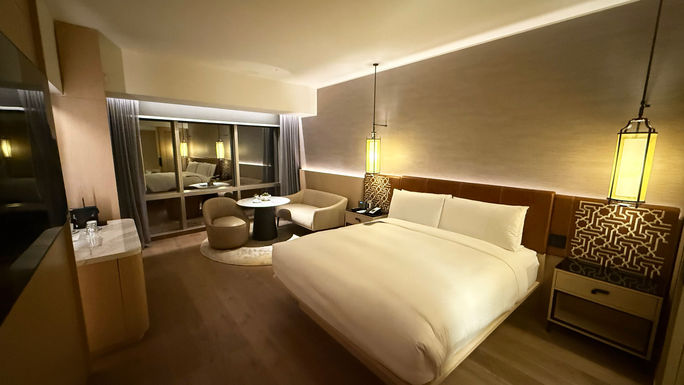
Guestroom at the JW Marriott Lima in Peru. (Photo Credit: Photo by Paul J. Heney.)
Food and drink are also stars here. We took a Pisco sour class, learning about Peru’s iconic cocktail from bartender Percy. We had a lovely time laughing with him about a variety of topics, from meeting famous rock stars to working on cruise ships, as he taught us about the history of the cocktail and how to properly make one. We also delved into pisco itself, a distilled fermented grape juice that is 42% to 45% alcohol and has several varieties. Finally, we made our cocktails with both the puro and acholado varieties, and both of us liked the acholado version better. Now the key will be whether we can replicate this at home!
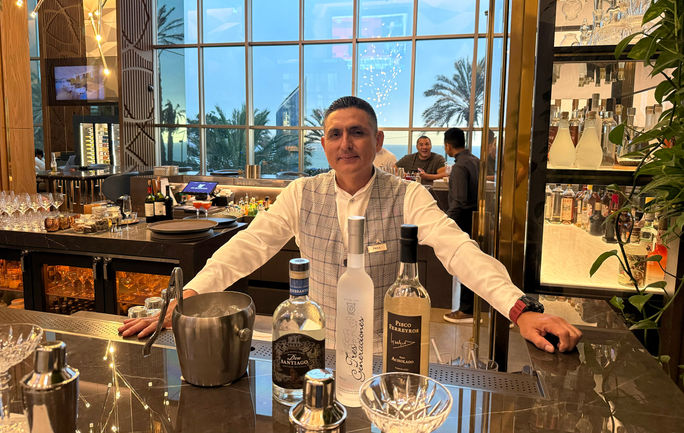
Bartender Percy at the JW Marriott Lima running the hotel's Pisco Sour class. (Photo Credit: Photo by Paul J. Heney.)
Japanese Influence
Peru has a large population of citizens of Japanese descent, due to migration in the early 1900s and demand for agricultural labor in the country. Today, Japanese-Peruvian fusion is a popular cuisine in Lima, and the JW celebrates it with a four-course Nikkei Style dinner at the classy JW Lounge on the hotel’s second floor. Our experience included a crispy whitefish with salmon appetizer, Wagyu and scallop nigiri (my personal favorites), rice with squid ink and octopus, and a wonderful dish with noodles and beef. Dessert included a variety of chocolates.
In Aguas Calientes, the Sumaq Machu Picchu Hotel is a stunner, nestled next to the Vilcanota River, a luxury boutique hotel that really feels at one with nature. From the welcome drink (an iced tea with hibiscus flower and lemongrass) to the design in the public spaces, we were enchanted. Art is ever-present here, with an Incan cross on the door handles, handmade Incan masks on one wall, and traditional chest necklaces on another wall near the bar. Sumaq has 62 rooms; 59 are Sumaq Deluxe and there are two Junior Suites and one incredible Imperial Suite, with gorgeous views and plenty of upgrades; it runs about $2,000 per night in the high season, and in the $1,600 range in low season, and would be great for families.
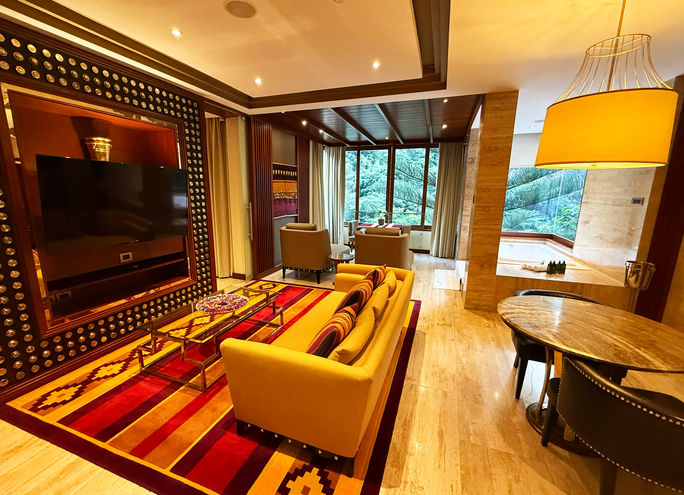
The Sumaq Machu Picchu Hotel's Imperial Suite. (Photo Credit: Photo by Paul J. Heney.)
Staying in Aguas Calientes is a smarter way to see Machu Picchu. Some travelers try to take the train in, bus up to the ancient city, walk around, and high-tail it back to the train back to Cusco. But the AC itself is charming (if touristically overloaded in places), and it’s worth spending a night or two here around your Machu Picchu adventure, to make it more of a relaxing journey.
The Sumaq has options for relaxation, too. The spa on the lower level is lovely, and we enjoyed a couples’ massage there, opting for a firmer deep tissue massage that was just what we needed. And the property has a memorable Romantic Dinner, hosted in the peaceful Terrace Salon, set apart from the main part of the hotel.
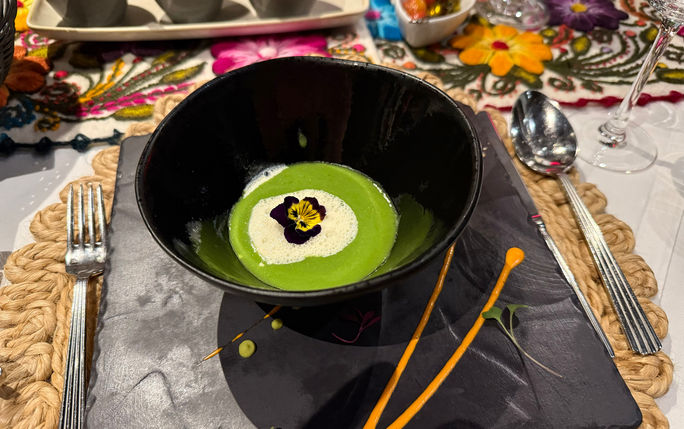
Corn crema appetizer at Sumaq Machu Picchu's Romantic Dinner experience. (Photo Credit: Photo by Paul J. Heney.)
The dinner is a multi-course extravaganza, and our servers, Katherine and Maria Jose, were so thoughtful and taught us so much about the ingredients and why they are important to the Andean people of the region. I particularly loved the corn crema appetizer, which was so flavorful and had plenty of cilantro. From the quinoa to the alpaca steak to the tomato confit, this was a memorable evening, full of discovery.
Cusco, located at 11,200 feet in the Andes, is one of the highest major cities in the world, and you need to come prepared. The kind staff at our hotel here, the JW Marriott El Convento Cusco, gave us plenty of tips: move slowly, eat slowly, drink plenty of the local coca tea, and drink plenty of water. As a bonus, each room at this luxury property has oxygen pumped into the space, helping guests get acclimated.
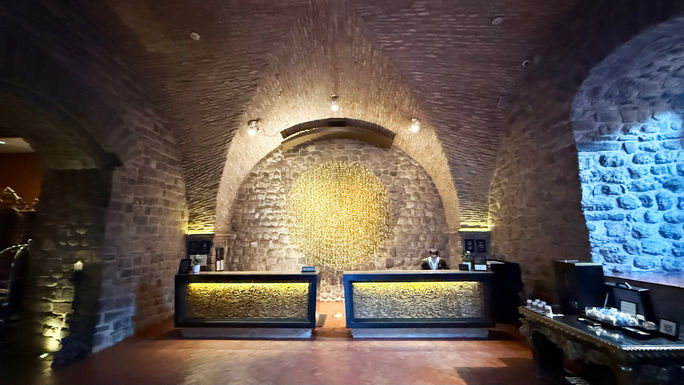
The JW Marriott El Convento Cusco's lobby includes artwork inspired by the Incan sun god. (Photo Credit: Photo by Paul J. Heney.)
This hotel is incredibly historic and set conveniently a couple of blocks from the main city square. A former convent for monks, the property has some amazing glassed in archeological displays on the lower floor, and a daily tour of the property, led by a monk, delves into the spectacular project of turning this building into a modern hotel. The public spaces here are jaw-dropping in places, such as the enormous piece of artwork hanging behind the front desk that represents the Incan sun god, made from 35,000 Swarovski crystals. But there’s plenty of fun here, as well, as we discovered when meeting the hotel’s baby alpaca, Panchita.
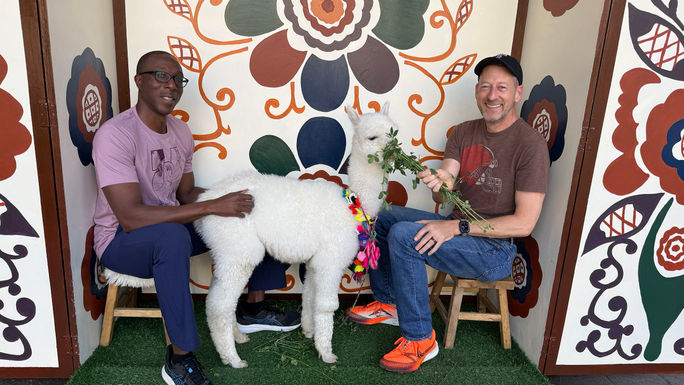
The baby alpaca, Panchita, at the JW Marriorr El Convento Cusco in Peru. (Photo Credit: Photo by Paul J. Heney.)
Food
Food here is an experience, and Qespi restaurant has two main seating areas, one with high-backed chairs and another adjacent to the bar. The effect is almost like two totally separate restaurants, which we appreciated; if we were feeling more formal or more casual, we could choose between the two options. The restaurant offers an “acclimation menu” of smaller, easily digestible plates, ideal for travelers’ first day in the city who are not used to the altitude. Some of our favorite dishes here were the duck gnocchi, spaghetti with prawns, the salmon trout filet stuffed with quinoa, and the salad with avocado, cashews, and passion fruit dressing.
For the latest travel news, updates and deals, subscribe to the daily TravelPulse newsletter.
Topics From This Article to Explore


