
by Lacey Pfalz
Last updated: 7:55 AM ET, Wed April 22, 2026
While we love animals all year long, this month's Earth Month, and that means we're taking a deep dive into how the travel industry supports conservation initiatives around the world, from restoring coral reefs in the Caribbean to protecting endangered and beloved species of animals.
From charitable foundations to citizen science programs, the travel industry provides an integral link in the chain of conservation, promoting and assisting in the protection of the wildlife and landscapes people love to experience firsthand when they travel.
Still, there's work to be done. Much of the conservation efforts within the travel industry are on a company-by-company basis, meaning companies that don't prioritize sustainability or conservation simply won't be doing anything to help.
The industry isn't united on the conservation forefront: instead, many individual companies, tour operators or resort companies take it upon themselves to fill a localized need, whether that means a resort in Mexico supporting turtle conservation along the beach where it's located, or an expedition cruise line directly taking part in preserving the destinations they visit.
As wildlife populations around the world have seen a 73 percent average decline since 1970, according to the World Wildlife Fund's Living Planet Report 2024, people must prioritize greater conservation funding and shift their business models to support the health of the world's ecosystems rather than profit.
The travel companies, tour operators and resorts below demonstrate that taking care of our environment is anything but a drain on a company's resources: it's a critical responsibility that actually pays off dividends as travelers feel like they're making a positive impact on the places they visit and the wildlife that makes each place so unique.
Directly Preserving Key Ecosystems
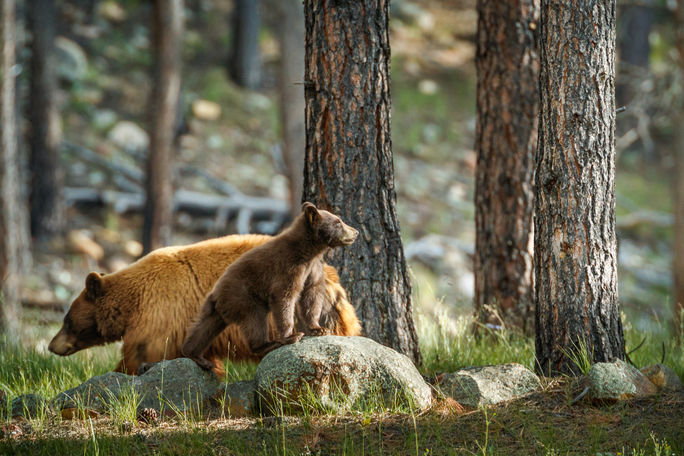
A bear with her cub at Vermejo, a Ted Turner Reserve. (Photo Credit: Sean Fitzgerald)
One way to support conservation is to preserve key ecosystems. This can be done in a variety of ways, from partnerships with conservation organizations to directly owning and stewarding a preserved area.
The latter is how Ted Turner Reserves functions. Far from integrating conservation initiatives, it considers itself a "conservation-first" collection of resorts that preserve over 1.1 million acres of New Mexico's wilderness.
Created by the founder of CNN and professional sports team owner, Ted Turner, the mission of his reserves was to "save everything," in which every stay helps fund the rewilding and preservation of the reserves.
Ted Turner Reserves offers four reserve-style accommodations across New Mexico, which it calls the "American Serengeti," rewilding and restoring land home to elk, local trout species, the largest private bison herd in the world, feral horses and more. Vermejo, one of the Ted Turner Reserves, is double the size of Grand Teton National Park, offering a thriving wilderness open only to guests.
"We're not in the luxury travel business; we're in the business of land health," said Jade McBride, President of Ted Turner Reserves. "When conservation comes first, you protect the integrity of the place, and that changes everything. The wildlife is healthier, the landscape is more resilient, and the experience becomes more real. That's what guests feel and carry with them. Luxury isn't the goal, it's the outcome."
Travelers heading to one of the reserves can enjoy tracking elk with expert biologists, fly-fishing in restored waterways and encountering bison and Mexican wolves. Guests provide active support for the reserve's conservation and rewilding programs.
Ted Turner Reserves demonstrate how individual resorts and hotels can provide critical destination stewardship when the destination or community might not prioritize it, with tourism dollars flowing directly from guests to the reserve to support its conservation mission.
Further away in Australia is Journey Beyond's Sal Salis Ningaloo Reef, an eco-luxury refuge offering just 16 safari tents constructed above the ground to preserve the region's local flora. Located next to the world's largest fringing reef, travelers can combine breathtaking nature activities like swimming with whale sharks or snorkeling the reef with a focus on responsible travel.

A tent at the Sal Salis Ningaloo Reef tented camp, by Journey Beyond. (Photo Credit: Journey Beyond)
Sal Salis operates under a lease agreement with Western Australia's Parks and Wildlife Service, so 5% of annual funds are directed to the service to help the government continue preserving Cape Range National Park. The resort also operates on a seasonal schedule to allow the destination to recover and live without humans for a time.
"Sal Salis is located directly along a major migratory pathway, the reef is a gathering point for whale sharks, humpback whales, manta rays and turtles as they feed, breed and travel along Australia's northwest coast," explained Niko Peranovic, General Manager of Sal Salis Ningaloo Reef.
"By spending time in the water and on the coastline with expert guides, guests gain a rare insight and deep appreciation of the reef's role in these species' lifecycles and why long-term protection of this environment is essential," continued Peranovic. "Our aim is for guests to leave informed, connected to land and sea, and more conscious of the impact we all have on places like Ningaloo."
Thoughtful design, approach and partnerships can make all the difference in the world to the flora and fauna of a destination—and the guests who leave with a newfound understanding of the importance of conservation can create ripples of change that extend beyond the resort's boundaries.
SCP Hotels (Soul Community Planet) is a responsible hotel brand that builds doing good into its entire business model. Every guest stay contributes to environmental and social initiatives worldwide.
With its Every Stay Does Good program, it has funded the planting of over 243,000 trees, the removal of over 123,000 pounds of waste from beaches and the restoration of over 12,000 kelp trees.
"Soul Community Planet started from a simple idea that travel should be good for you and good for the world around you. The name reflects that balance, grounded in three core pillars: wellness, connection, and sustainability," explained SCP Hotels' Founder and CEO, Ken Cruse. "Soul is about personal well-being and living with intention. Community is about connection and supporting the places where we operate. Planet is about doing our part to protect and restore the environment.
"We set out to create a holistic hospitality model that brings those ideas together in a real, tangible way," Cruse continued. "The goal is to create an experience where people can fully immerse themselves in a destination, with the confidence that their stay is making a positive impact. We work with organizations like One Tree Planted to support global reforestation, SeaTrees to restore kelp forests and marine ecosystems, and groups like Innoceana, Pristine Playa, and the Hawaii Wildlife Fund to help remove waste from coastlines and protect ocean habitats. We also partner with We Well-being to expand access to mental health tools for young people."
Beyond this, its special SCP Corcovado Wilderness Lodge in Costa Rica is part of Preferred Hotels & Resorts' Beyond Green, recognized for its high level of stewardship and sustainability. Guests of the jungle lodge can participate in conservation experiences through a partnership with Innoceana, helping biologists with coral reef monitoring, tracking sea turtle migrations and conducting ocean research.
Protecting Species Around the World
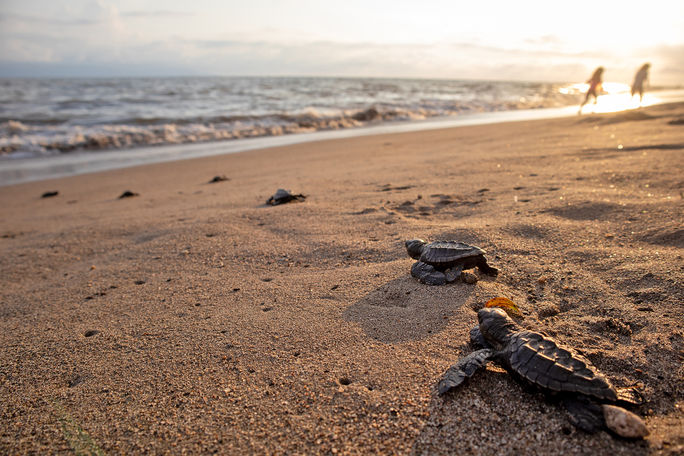
Newly hatched sea turtles make their way to the sea at Marriott Puerto Vallarta Resort & Spa. (Photo Credit: Marriott Puerto Vallarta Resort & Spa)
Some individual hotels and resorts undertake destination-specific conservation projects, recognizing that there's greater benefit in living with local wildlife than in letting numbers decline.
Marriott Puerto Vallarta Resort & Spa has been protecting the Olive Ridley sea turtle since 2005, when it dedicated a section of its beach as a permanent nursery and employed a biologist to protect nests and educate guests.
Today, guests of the resort can learn about the special sea turtle, help release newly hatched sea turtles into the Pacific (there are about 60,000 of them that are released each year!), and more. The program, and many others like it, have so improved the Olive Ridley sea turtle population that it's now listed as vulnerable, rather than endangered.
Other hotels and resorts might participate in coral restoration, like Le Barthélemy Hotel & Spa in sunny St. Barths. The Caribbean hotel has been partnering with Coral Restoration St. Barth since 2016, offering both financial support and opportunities for guests to participate in hands-on restoration programs. The program is monitored by Reef Check In and the St. Barth's Environmental Agency.
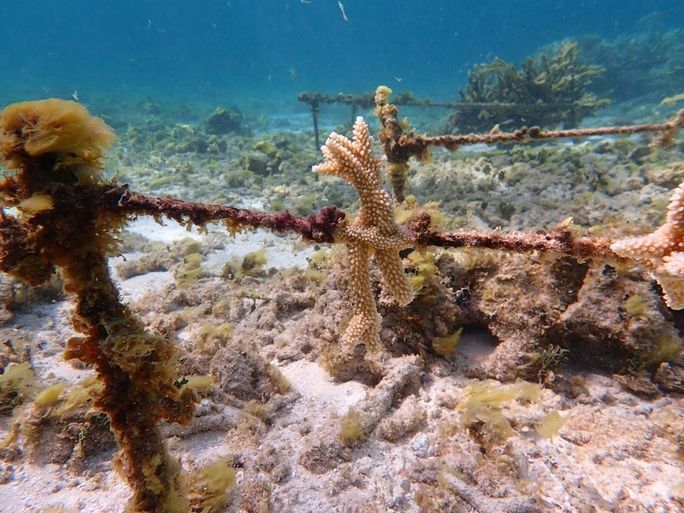
Replanted coral in the waters of St. Barths. (Photo Credit: Le Barthélemy Hotel & Spa)
"As one of the most biodiverse ecosystems on the planet, coral reefs are often called the 'rainforests of the sea,'" said David Blanchard, President of Coral Restoration St. Barth. "They are vital habitats, providing shelter, protection, and sustenance to countless marine species, from sea turtles to crustaceans and fish. At Coral Restoration St. Barth, in partnership with Le Barthélemy, our mission is to develop effective, affordable strategies to protect and restore the island's reefs, while also training and empowering coastal communities to do the same."
Travelers visiting the hotel can adopt and replant coral fragments with marine specialists, helping keep the island's coral reefs alive. As corals provide habitat and shelter for over a quarter of marine life, coral conservation and restoration are critically important for the health of our oceans.
Sometimes, it's not just a hotel or resort helping preserve a keystone species or an environment: it's the local community.
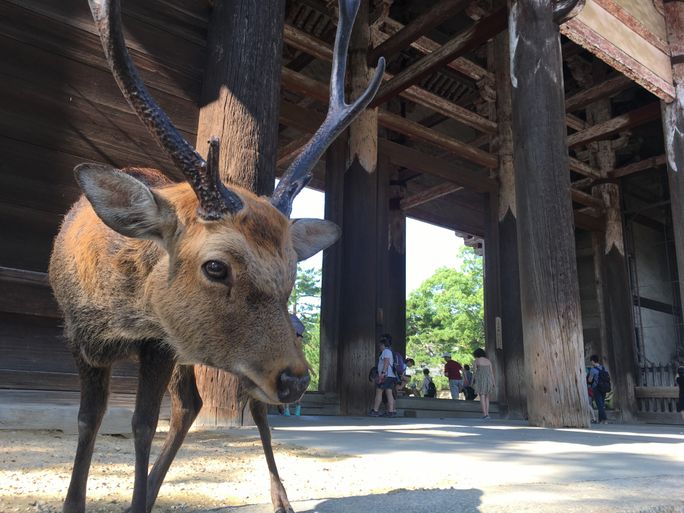
A friendly deer at a temple in Nara, Japan. (Photo Credit: Nara Park)
The Nara Deer Preservation Foundation in Nara, Japan, raises funds to protect and preserve the special sika deer at Kasuga Shrine, Kofuku-ji Temple, Todai-ji Temple, Nara Park and surrounding areas.
They have over a thousand years of history in the region, especially through their living within its shrines and temples. Japan designated them as a natural monument in 1957 for their special connection to Japan's spiritual places, which are considered messengers of the divine.
The deer, which are popular with visitors, have become adapted to living among human populations but remain wild. The foundation also has a long-standing treatment center for the deer.
Today, over a thousand free-roaming deer live in Nara, attracting around 13 million annual visitors, and the Nara Deer Preservation Foundation uses funds raised to support them, funding clean-up initiatives, rescuing injured deer and ensuring fawns receive the best care.
Tour Operators & Cruise Lines Taking Part
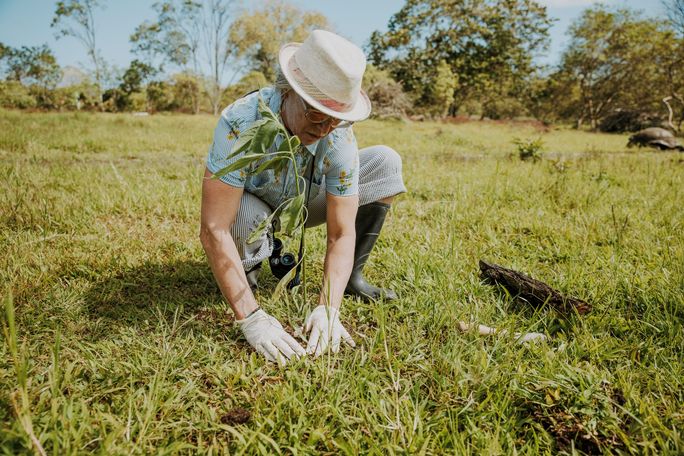
Ecoventura is helping fund a reforestation project on Santa Cruz Island in the Galapagos. (Photo Credit: Brooke Pyke for Ecoventura)
Ecoventura, recognized by the luxury hospitality collection Relais & Châteaux, is the Galapagos Islands' most sustainable cruise line, becoming the first recipient of the ecological verification SmartVoyager in 2000 for its conservation standards, which were later adopted into local regulations. It became the first carbon-neutral operation in the islands back in 2006.
Ecoventura supports the biodiversity of the Galapagos Islands in various ways. It helps fund the Charles Darwin Foundation, which conducts scientific research on the islands; it became a founding member of the Galapagos Biodiversity & Education for Sustainability Fund (GBESF) in 2017; established the Galapagos Marine Biodiversity Fund in partnership with the World Wildlife Fund and much more.
In 2024, it launched a new initiative to restore Santa Cruz Island's natural areas and protect the critically endangered Giant Tortoise population through a plant-a-tree program. Over 1,200 new trees were planted by passengers, rewilding an environment critical to the tortoises.
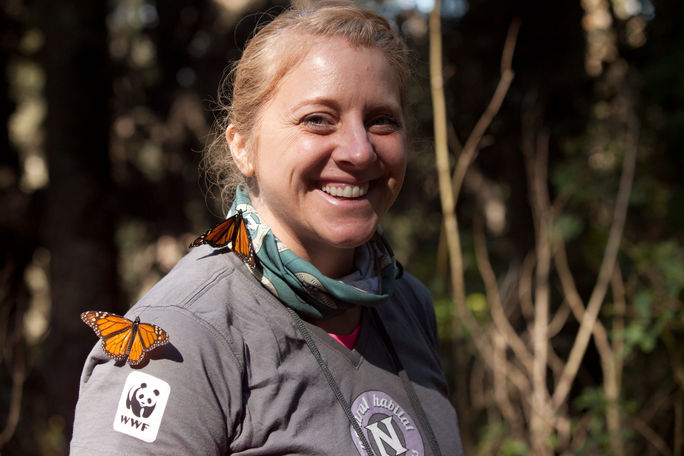
A Nat Hab Adventures guide with monarch butterflies. (Photo Credit: Court Whelan/Natural Habitat Adventures)
Natural Habitat Adventures was created forty years ago with a vision for conservation through exploration. It became the world's first 100% carbon-neutral travel company and has been the travel partner of the World Wildlife Fund since 2003.
But how does it support conservation? Since its founding, it's generated $50 million in contributions to global biodiversity protection and has partnered with organizations to support reforestation initiatives.
For example, it partnered with WWF in 1998 to offer an itinerary visiting key monarch butterfly ecosystems in Mexico, generating $5.6 million for the local economy and supporting reforestation, which planted over 20 million oyamel fir trees since 2013. In 2025, the WWF reported a 99% year-over-year increase in acres occupied by eastern monarch butterflies, a great rebound after declining numbers put them in the endangered category.
Natural Habitat Adventures has personally donated $345,000 since 2017, funding 47 community-led conservation projects protecting 71 species, from river dolphins in Peru to anti-poaching efforts in South Africa.
"At Nat Hab, supporting conservation is at the core of everything we do. In fact, our mission is 'conservation through exploration,'" explained Founder and CEO, Ben Bressler. "Our passion is helping travelers forge a meaningful connection with the natural world while fostering a deep commitment to protecting it. Since our founding in 1985, we've sought to inspire travelers through intimate wildlife encounters, supporting local communities, and taking the lead on sustainability innovations as we influence the broader travel industry to do the same.
"As the conservation travel partner of World Wildlife Fund, we've seen firsthand how tourism dollars can transform at-risk places and species, helping communities protect their natural resources and improve their livelihoods. It's not enough to simply explore nature. We have a crucial responsibility to protect it."
Exodus Adventure Travels, another expedition-focused tour and cruise operator, supports conservation in various ways.
Its Wild at Heart commitment directly funds conservation programs across Exodus's destinations, from preserving key tiger habitats in India to helping Italy's native bear population survive. In 2025, it expanded the program to protect endangered primates in Vietnam and jaguars in Costa Rica.
The operator committed to rewilding 100 square meters of land in Italy's Apennines region, in partnership with Rewilding Apennines, restoring five critical nature corridors where Marsican brown bears live.
Exodus is also supporting ocean health with the Blue Marine Foundation, restoring mangroves and seagrass ecosystems in the Dutch Caribbean, Kenya, Greece and the Maldives. Through the foundation's work, 56 hectares of habitat have been restored since 2024, and 60,000 mangrove and seagrass seedlings have been planted.
The tour operator is now also leading citizen science departures through a partnership with iNaturalist, helping the platform and supporting biodiversity research. Travelers will be able to use iNaturalist to photograph and identify animal, plant and insect species on such trips, which are then added to the app's global database to support global conservation and biology research, filling in critical observation gaps in remote regions.
"In the face of accelerating biodiversity loss, travel companies have a unique opportunity and responsibility to protect our destinations. At Exodus Adventure Travels, we have increasingly been embedding conservation at the heart of the travel experience," said Kasia Morgan, Head of Sustainability & Community at Exodus Adventure Travels. "Partnerships like this one with iNaturalist allow us to offer extraordinary experiences which make a positive contribution - enabling our customers to support real conservation science simply by engaging more closely with nature while they travel."
Preserving the World Through Travel
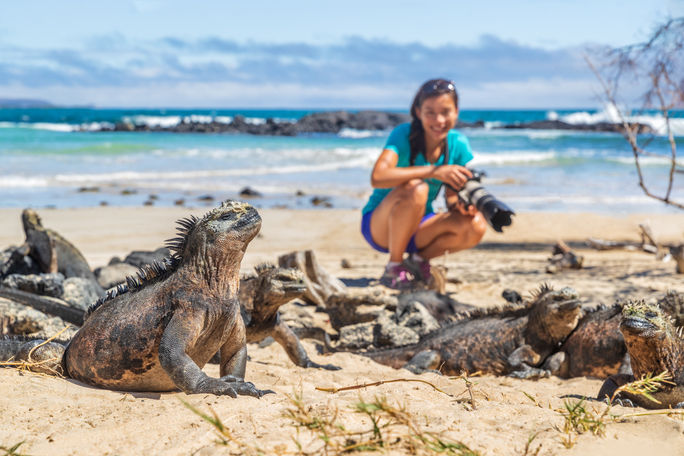
Woman photographing a marine iguana in the Galapagos, Ecuador. (Photo Credit: Adobe Stock/Maridav)
While there is no one-size-fits-all program or plan to preserve the world's natural wonders, the travel industry does play a significant role in conservation, specifically by using tourism dollars to support community-led projects worldwide.
Traveling with companies that prioritize or allocate funds to conservation initiatives can literally put travelers' money where their mouth is, helping to preserve keystone species, critically important habitats and beautiful natural places around the world.
As travelers become more eco-conscious and interested in creating positive change with their travel experiences, travel and tourism companies also have a unique opportunity to increase sales and popularity for their experiences by supporting conservation and preservation programs, or starting their own.
Travelers want to know they're making a positive impact on the world around them, and slowly but surely, travel companies are taking note.
Whether you're a traveler, a travel agent or an executive of a travel company, you can be part of the circle of conservation. Let's support the world's natural beauty and its many incredible wonders together.
For the latest travel news, updates and deals, subscribe to the daily TravelPulse newsletter.
Topics From This Article to Explore


