
by Mia Taylor
Last updated: 3:15 PM ET, Fri September 27, 2024
Employing one in every 10 people on Earth, tourism is among the world’s most significant economic industries.
In fact, for some countries, tourism amounts to more than 20 percent of the GDP, according to the World Tourism Organization (WTO).
For economic reasons alone, it’s an industry worthy of an annual day of recognition.
But as we mark annual World Tourism Day today, September 27, there’s yet another critical reason to reflect upon the tourism industry and its global role.
Tourism is also incredibly important to fostering peace, says the WTO.
“On a global level, where nations are interconnected and interdependent, Tourism, an industry made by people and for people, emerges as a compelling and dynamic force to defy stereotypes and challenge prejudices,” says the WTO’s World Tourism Day website.
The tourism industry offers the “epitome of intercultural dialogue,” adds the WTO. It accomplishes this in so many ways — the interactions travelers have with individuals from other cultures, experiencing other ways of life, indulging in global cuisines, and most importantly growing to understand people from other cultures on a deeper level.
The theme for World Tourism Day 2024 is “Tourism and Peace.” And to mark the occasion, TravelPulse reached out to a variety of travel industry representatives to gather their thoughts on the travel industry’s critically important participation in fostering peace and justice, particularly this year, as the world grapples with multiple wars, climate change and enormous upheaval.
We also asked industry leaders to look beyond current events and discuss what the industry’s role should be in fostering justice in the years to come.
The answers are both deeply inspiring and offer hope in the face of the many challenges impacting the planet. Here are some of the outtakes from those conversations.
Alexis Bowen, Co-founder, Elsewhere by Lonely Planet
Does tourism have a role in promoting peace globally?
“Travel is one of the most powerful tools for peacemaking because it opens travelers' eyes to different ways of life, value systems, and experiences, and encourages travelers to have a wider and more inclusive view of the world.
Traveling reinforces our shared humanity and how interconnected we all are,” says Bowen.

A young woman walks by the Eiffel Tower in Paris. (Photo Credit: Contiki)
“And as tourism professionals, we are stakeholders and change makers in making this happen. It is our role to promote a more peaceful and interconnected world through socially conscious travel.
Is the role of promoting peace as an industry more important than ever in 2024 and if so, why?
“There’s a lot happening right now in the world that makes promoting peace particularly impactful right now, but it has always been important, and will always be important,” continues Bowen. “We are lucky to live in an era where we discuss social consciousness and think about our impact, but the travel industry’s ability to promote peace should be a perpetual topic.”
What are some of the ways the tourism industry, in practice on a daily basis, can promote justice both now and moving forward?
“Travel should be about perspective shifting moments,” explains Bowen. “As travel professionals, we should be encouraging authentic, reciprocal exchange, and allowing local people to tell their their story. At Elsewhere we are always trying to shift our travelers goals away from bucket lists and toward these curated, life-altering moments.”
Aside from giving the microphone back to local communities and allowing them to share their life and history from their perspective, Bowen says it’s also important “to show dual narratives.”
“For example, on a trip to Northern Ireland you meet Catholics and Protestants and let them each share their community history and stories,” adds Bowen.
“Looking at the conflict between Israel and Palestine, bringing communities, expert, and families on both sides to share their story. Travel that allows space for dual narratives aims to transcend headlines and give people a better grasp of the human experience on both sides," says Bowen.
Jessica Blotter, CEO & Co-Founder of Kind Traveler
Does tourism have a role in promoting peace globally?
“Tourism has a significant role in promoting peace globally. When done responsibly, tourism fosters cross-cultural understanding and empathy, breaking down barriers and stereotypes that can lead to conflict,” begins Blotter.
“By bringing people together from diverse backgrounds, tourism creates opportunities for meaningful exchanges that celebrate our shared humanity,” Blotter adds. “This cultural diplomacy is a powerful tool in promoting peace because it helps people see beyond differences and connect on a human level, ultimately building bridges of understanding and respect.”
Is the role of promoting peace as an industry more important than ever in 2024 and if so, why?
“The role of tourism in promoting peace is more critical than ever in 2024,” continues Blotter. “We are living in a time marked by global challenges such as climate change, political instability, and social inequalities. Tourism, when practiced responsibly, can be a force for kindness by empowering communities, supporting local economies, and preserving cultural heritage.”
Traveling responsibly and kindly can contribute to global stability and peace, fostering a more connected and compassionate world, adds Blotter.
“In an increasingly divided world, the tourism industry has a unique opportunity to be a catalyst for unity and positive change,” she says.
What are some of the ways the tourism industry, in practice on a daily basis, can promote justice both now and moving forward?
Blotter offered numerous ways the tourism industry can promote justice. Her thoughts included:
Empowering Local Communities: “Tour operators and hotels can create economic opportunities by hiring locally, sourcing products and services from small, locally-owned businesses, offering skill development and training programs to community members, and through charitable giving back programs,” she said.
Supporting Fair Trade and Ethical Products: “The tourism industry can prioritize fair trade practices by offering travelers access to ethically made, locally sourced products that support artisans and entrepreneurs, ensuring fair compensation and sustainable practices,” Blotter added.
Promoting Inclusivity: “Tourism businesses can make efforts to be inclusive by creating welcoming environments for travelers of all backgrounds, abilities, and identities and by offering experiences that are accessible to everyone,” said Blotter.
Advocating for Environmental Justice: “The tourism industry can take a stand against practices that harm local ecosystems and communities by supporting conservation efforts, reducing carbon footprints, and promoting eco-friendly travel options that prioritize the health and sustainability of the destinations they operate in,” Blotter explained.
“These actions, implemented with intention and consistency, can help the tourism industry play a meaningful role in promoting both peace and justice globally,” says Blotter.
Hernan Acevedo, Intrepid Country General Manager, Columbia
Does tourism have a role in promoting peace globally?
"Tourism has the power to change the lives, communities and trajectory of people in our country,” says Acevedo. “Tourism can heal worlds of people who have never known peace. It's tourism that can be the greatest catalyst for change."
"You have to understand this in real terms,” adds Acevedo. “In Medellin, an Intrepid tour guide can make $70 for a couple of hours. $70 is a life changing amount of money. Without tourism, the options are a store clerk, a street beggar, a thief, or joining the cartel. Tourism literally keeps the peace."
Duncan Greenfield-Turk, CEO of Global Travel Moments
Does tourism have a role in promoting peace globally?
“Tourism is a powerful tool for promoting peace,” says Greenfield-Turk. “By facilitating cultural exchange and mutual understanding, tourism helps break down barriers between people of different nationalities, religions, and ethnicities.”
“When travelers engage with new cultures, they develop empathy and a greater appreciation for diversity. This fosters global solidarity and helps reduce the misconceptions that can lead to conflict,” adds Greenfield-Turk.
Is the role of promoting peace more important than ever in 2024?
“In today’s divided world, tourism’s role in promoting peace is more critical than ever,” continues Greenfield-Turk. “With the rise of nationalism and polarization, tourism serves as a vital bridge between cultures.”
“As international travel resumes post-pandemic, there’s a unique opportunity for the industry to actively promote peace by encouraging dialogue and understanding among travelers and host communities,” Greenfield-Turk adds. ”In 2024, when the world is still recovering from global crises, tourism can help restore connections and offer hope for a more harmonious future.”
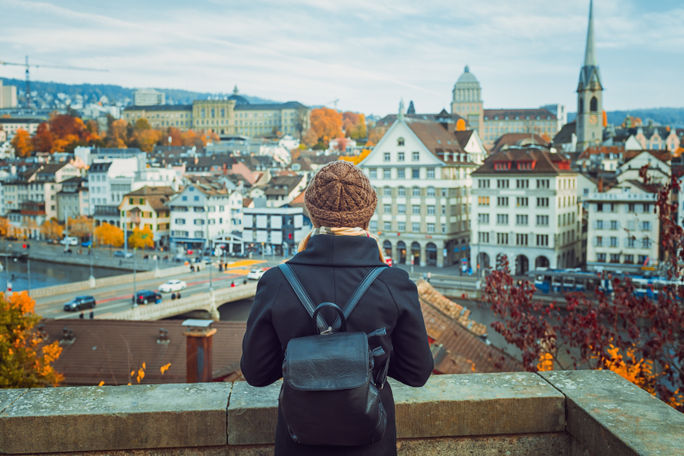
Traveler backpacking through Zurich, Switzerland. (Photo Credit: Vasily Makarov/Adobe)
Shannon Guihan, The Travel Corporation’s Chief Sustainability Officer and Head of TreadRight
Does tourism have a role in promoting peace globally?
“It certainly can and should have a role,” says Guihan. “While it is a privilege, the opportunity to travel can offer the greatest education.”
When travelers explore the world with an open mind, ready to learn about the differences between how communities operate globally, that’s power, suggests Guihan.
“The power in that knowledge is empathy, and that is my concern which is greatly lacking today,” says Guihan. “With the polarization that many communities are facing today, despite our access to knowledge, many have lost the ability to identify with others – and so yes, tourism has a role in promoting peace.”
What are some of the ways the tourism industry, in practice on a daily basis, can promote justice both now and moving forward?
“The role that tourism can play in promoting justice goes beyond the understanding that it brings to the traveler,” says Guihan.
Of greater importance, adds Guihan, is the opportunity tourism can offer to the visited – through the development of small businesses by marginalized communities and the potential for new business practices such as fair wages, and gender equality.
“Community-led tourism offers representation, and this is critical as it empowers those who live in a place to ensure that tourism is governed rather than simply ‘happening’ to them,” she says.
For the latest travel news, updates and deals, subscribe to the daily TravelPulse newsletter.
Topics From This Article to Explore


